


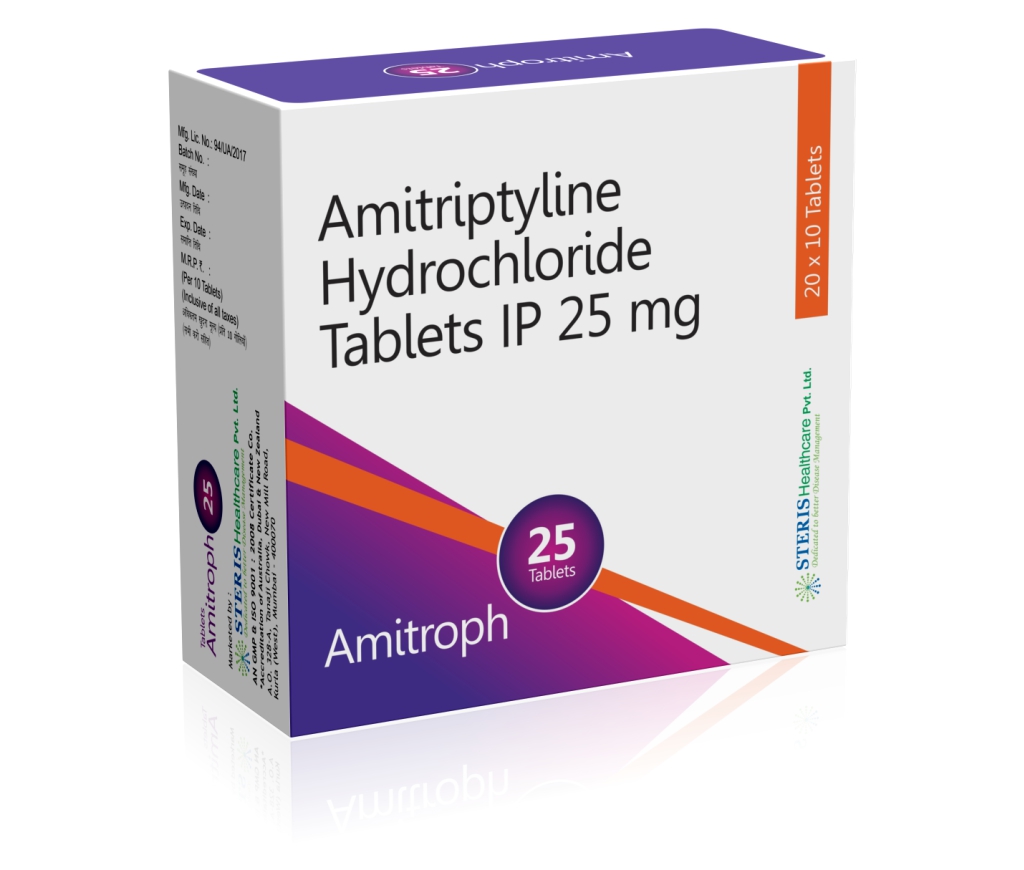
AMITROPH 25
 Item requires a valid prescription
Manufactured By Steris Healthcare Pvt Ltd
Composition Amitriptyline HCI (25mg)
Rs 16.76
MRP Rs 23.94
(30% OFF)
Includes all taxes
Package SIZE
( For 10 Tablets )

100% Authentic
Products

Free
Shipping*

Products
Return Policy
Description:
Amitriptyline HCl 25 mg is a prescription medicine containing amitriptyline hydrochloride, a tricyclic antidepressant (TCA). Depending on the clinical indication and country-specific prescribing information, amitriptyline may be prescribed for depression and is also widely used at lower doses for nerve pain and long-lasting pain and to help prevent migraine.
If you are searching for amitriptyline HCl 25 mg, you may be comparing its uses, expected benefits, possible side effects, or dosage information or looking for a reliable way to purchase it. This guide provides a buyer-focused overview while emphasizing an important point: amitriptyline is a prescription medicine and should be taken only according to advice from a qualified healthcare professional.
What Is Amitriptyline HCl 25mg?
Amitriptyline HCl 25 mg contains 25 mg of amitriptyline hydrochloride. It belongs to the tricyclic antidepressant class and affects the reuptake of neurotransmitters, including norepinephrine and serotonin. Its pharmacological activity also produces sedative effects, which can be relevant when it is prescribed for pain or at bedtime.
The 25 mg strength is one of the commonly available tablet strengths. However, the appropriate dose depends on why the medicine has been prescribed, a person's age, medical history, other medicines, response to treatment, and tolerance.
Amitriptyline HCl 25 mg should not be treated as an over-the-counter sleep aid or painkiller. It requires appropriate medical evaluation and, in many markets, a prescription.
What Is Amitriptyline HCl 25mg Used For?
The approved uses can vary by country and product. In U.S. prescribing information, amitriptyline hydrochloride tablets are indicated for the relief of symptoms of depression.
In UK clinical practice, amitriptyline is also prescribed for nerve pain, persistent pain, and migraine prevention, generally at lower doses than those used for depression.
Common therapeutic uses include:
-
Depression, when prescribed for an appropriate patient
-
Nerve pain or neuralgia
-
Certain types of persistent or chronic pain
-
Prevention of migraine
-
Pain that interferes with sleep, when a clinician considers amitriptyline appropriate
Because indications and licensing differ between countries, always check the product leaflet supplied with your specific medicine.
How Does Amitriptyline HCl 25mg Work?
Amitriptyline affects the way certain neurotransmitters are handled by nerve cells. It inhibits the reuptake of norepinephrine and serotonin, increasing their activity in the nervous system. The precise mechanism responsible for its antidepressant effects is not completely established.
For pain management, amitriptyline can alter how pain signals are processed by the nervous system. This is one reason a doctor may prescribe a relatively low dose for neuropathic pain even when the medicine is also classified as an antidepressant.
Key Benefits of Amitriptyline HCl 25 mg
1. May help manage depression
When appropriately prescribed, amitriptyline can relieve symptoms of depression. It is a well-established tricyclic antidepressant, although doctors consider individual circumstances before selecting it because newer antidepressants may be preferred for some patients.
2. Can be useful for nerve pain
Amitriptyline is commonly prescribed for neuropathic pain, including pain described as burning, shooting, stabbing, or similar nerve-related sensations.
3. May help prevent migraine
Amitriptyline is also used to help prevent migraine attacks. This is a preventive treatment rather than an immediate medicine for stopping an acute migraine attack.
4. May improve sleep when pain disrupts rest
One practical benefit is its sedating effect. When amitriptyline is prescribed for pain, it is commonly taken in the evening or before bedtime because it can cause sleepiness.
This does not mean that 25 mg should be taken solely as a self-treatment for insomnia.
Amitriptyline HCl 25 mg Dosage
There is no single correct amitriptyline HCl 25 mg dosage for everyone.
For depression, NHS guidance notes that adult treatment may involve 50mg per day, while some people start at 10–25mg daily to reduce the likelihood of side effects, with the dose subsequently adjusted by the prescriber.
For pain, the usual adult starting dose is often lower—NHS guidance gives 10 mg once daily, generally taken before bedtime—with increases made when clinically appropriate. The maximum dose for pain is generally 75 mg daily under that guidance.
Therefore, 25 mg should not automatically be interpreted as the starting dose, ideal dose, or maximum dose.
Your doctor may consider:
-
The condition being treated
-
Age
-
Other medicines
-
Heart health
-
Liver health
-
Seizure history
-
Response to treatment
-
Side effects and tolerance
Never increase your dose because you feel the medicine is not working quickly enough.
How Long Does Amitriptyline HCl 25mg Take to Work?
The time required depends on the reason for treatment.
For depression, NHS information states that some people begin feeling better after 2–4 weeks, while full effects can take approximately 4–6 weeks.
For pain, improvement may begin after 1–2 weeks, while the full pain-relieving effect can take around 4–6 weeks.
This means you should not assume the medicine has failed simply because there is no immediate improvement.
Amitriptyline HCl 25 mg Side Effects
Like all medicines, amitriptyline can cause side effects. Many people experience mild effects that improve as the body adjusts, but some reactions require medical attention.
Common side effects may include:
-
Sleepiness or tiredness
-
Dry mouth
-
Constipation
-
Dizziness
-
Headache
-
Difficulty urinating
-
Blurred vision
-
Increased sensitivity to some effects of alcohol
-
Changes in blood pressure when standing
NHS guidance notes that sleepiness, dizziness, dry mouth, and constipation are among the commonly reported effects.
Because amitriptyline can cause drowsiness or dizziness, avoid driving, cycling, or operating machinery until you know how the medicine affects you.
Serious side effects
Serious reactions are uncommon but can occur. Urgent medical attention may be required for symptoms such as a fast or irregular heartbeat, seizure, severe chest pain, fainting, significant vision or eye problems, or signs of a serious allergic reaction.
Amitriptyline overdose can be particularly dangerous and can cause serious heart rhythm abnormalities, seizures, severe drowsiness, breathing problems, and other potentially life-threatening effects.
Who Should Be Careful With Amitriptyline HCl 25mg?
Amitriptyline may not be suitable for everyone. Before treatment, tell your doctor if you have heart problems, liver disease, epilepsy, glaucoma, difficulty emptying your bladder, diabetes, or a history of mental-health symptoms involving self-harm. Pregnancy and breastfeeding should also be discussed with a healthcare professional.
Amitriptyline also has important medicine interactions. For example, it should not be taken together with monoamine oxidase inhibitors (MAOIs), and appropriate precautions are required when switching between certain antidepressants.
Give your doctor or pharmacist a complete list of prescription medicines, non-prescription medicines, and supplements before starting treatment.
Can You Buy Amitriptyline HCl 25mg Online?
If your search is transactional—such as “buy amitriptyline HCl 25mg,” “amitriptyline HCl 25mg price,” or “amitriptyline 25mg tablets online”—verify the pharmacy and prescription requirements before purchasing.
Amitriptyline is a prescription medicine.
For safer purchasing, look for:
-
A legitimate, regulated pharmacy
-
Clear manufacturer and product information
-
Correct 25 mg strength
-
Appropriate expiry and batch details
-
Secure packaging
-
A prescription requirement where legally applicable
-
Transparent pharmacist or healthcare support
Be cautious of websites promising amitriptyline without appropriate medical oversight or making claims that it is completely risk-free.
Amitriptyline HCl 25 mg and alcohol
Alcohol can increase the sedating effects of amitriptyline, potentially making you more sleepy or dizzy. NHS guidance recommends avoiding excessive alcohol and being particularly cautious until you understand how the medicine affects you.
Can Amitriptyline HCl 25mg Be Stopped Suddenly?
Stopping amitriptyline abruptly can cause withdrawal symptoms. These can include headache, anxiety, tiredness, sleep difficulties, nausea, flu-like symptoms, restlessness, and other symptoms depending on the individual and duration of treatment.
If treatment needs to be discontinued, your doctor will generally determine whether the dose should be reduced gradually.
Conclusion
Amitriptyline HCl 25 mg is a well-established prescription medicine that can have different clinical applications depending on the country, product labeling, and reason for treatment. It may be prescribed for depression and is also used clinically for nerve pain, persistent pain, and migraine prevention.
Its potential benefits need to be balanced against side effects such as sleepiness, dry mouth, constipation, and dizziness, as well as less common but potentially serious reactions.
Frequently Asked Questions
1. What is amitriptyline HCl 25 mg used for?
Amitriptyline HCl 25mg may be prescribed for depression and, depending on local prescribing practices, for nerve pain, persistent pain, and migraine prevention. The appropriate use depends on the patient's condition and medical assessment.
2. Is amitriptyline HCl 25 mg used for nerve pain?
Yes. Amitriptyline is commonly prescribed for nerve pain and certain persistent pain conditions. Pain treatment generally uses lower doses than treatment for depression.
3. What are the most common side effects of amitriptyline HCl 25 mg?
Common side effects include sleepiness, dry mouth, constipation, and dizziness. Difficulty urinating and blurred vision can also occur. Many mild side effects improve as the body becomes accustomed to treatment.
4. Does amitriptyline HCl 25 mg make you sleepy?
It can. Amitriptyline has sedative effects, which is why it is often taken in the evening when prescribed for pain. Do not drive or operate machinery if it makes you sleepy or affects your alertness.
5. How long does Amitriptyline HCl 25 mg take to work?
The timeframe depends on the condition. Some people experience improvement in mood within 2–4 weeks, while full antidepressant effects may take 4–6 weeks. For pain, improvement may begin within 1–2 weeks, with full benefit potentially taking several weeks.
6. Can I take amitriptyline HCl 25 mg every night?
Some patients are prescribed amitriptyline once daily in the evening, particularly when it is being used for pain. However, the correct schedule depends on the indication and prescription. Do not establish a nightly dose yourself.
7. Can I buy amitriptyline HCl 25 mg without a prescription?
Amitriptyline is prescription-only in markets such as the UK. Legal requirements vary by country, but consumers should obtain it through an appropriately regulated pharmacy and use it under professional medical guidance.
8. Can amitriptyline HCl 25 mg be used for sleep?
Although its sedating effects can make some people sleepy, amitriptyline should not be self-used simply as a sleeping pill. It should be taken for an appropriate medical indication and at a dose selected by a healthcare professional.
9. Can I drink alcohol while taking amitriptyline HCl 25 mg?
Alcohol can increase sleepiness and other sedating effects. It is safest to avoid excessive alcohol and ask your doctor or pharmacist about your individual circumstances.
10. Can I stop taking amitriptyline HCl 25mg suddenly?
You should not stop amitriptyline suddenly without medical advice. Gradual dose reduction may be recommended to reduce withdrawal symptoms.

