


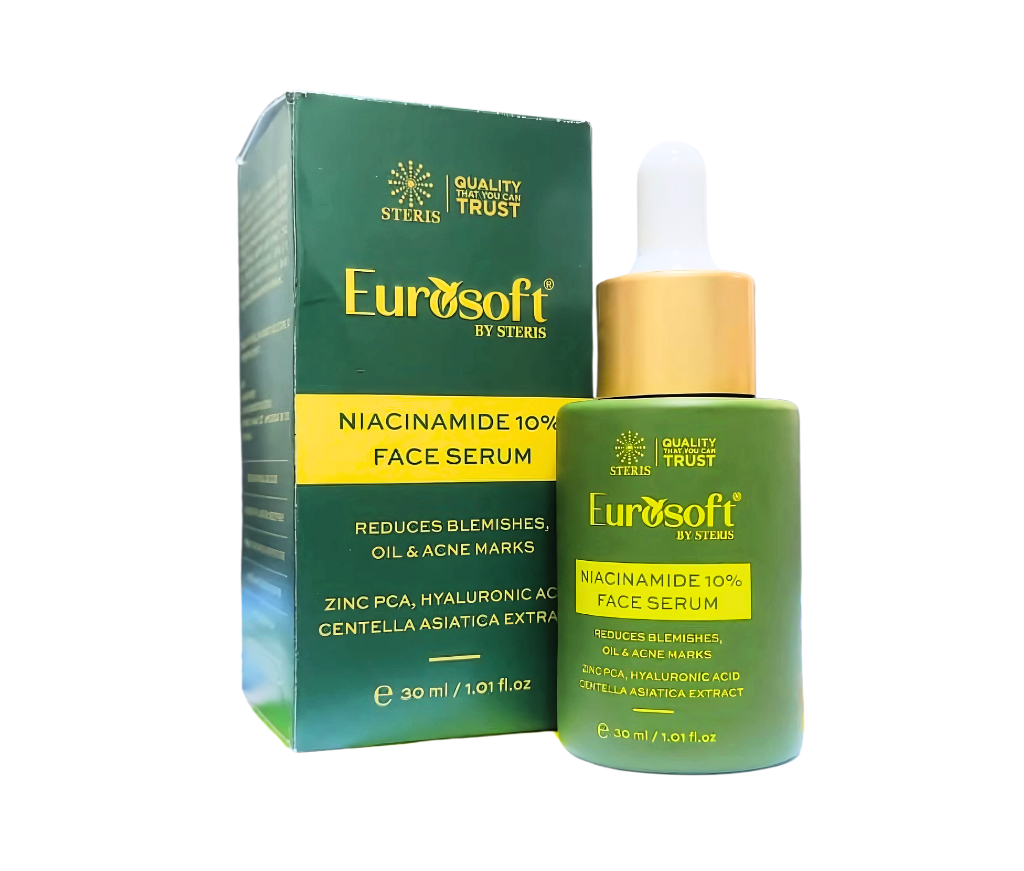
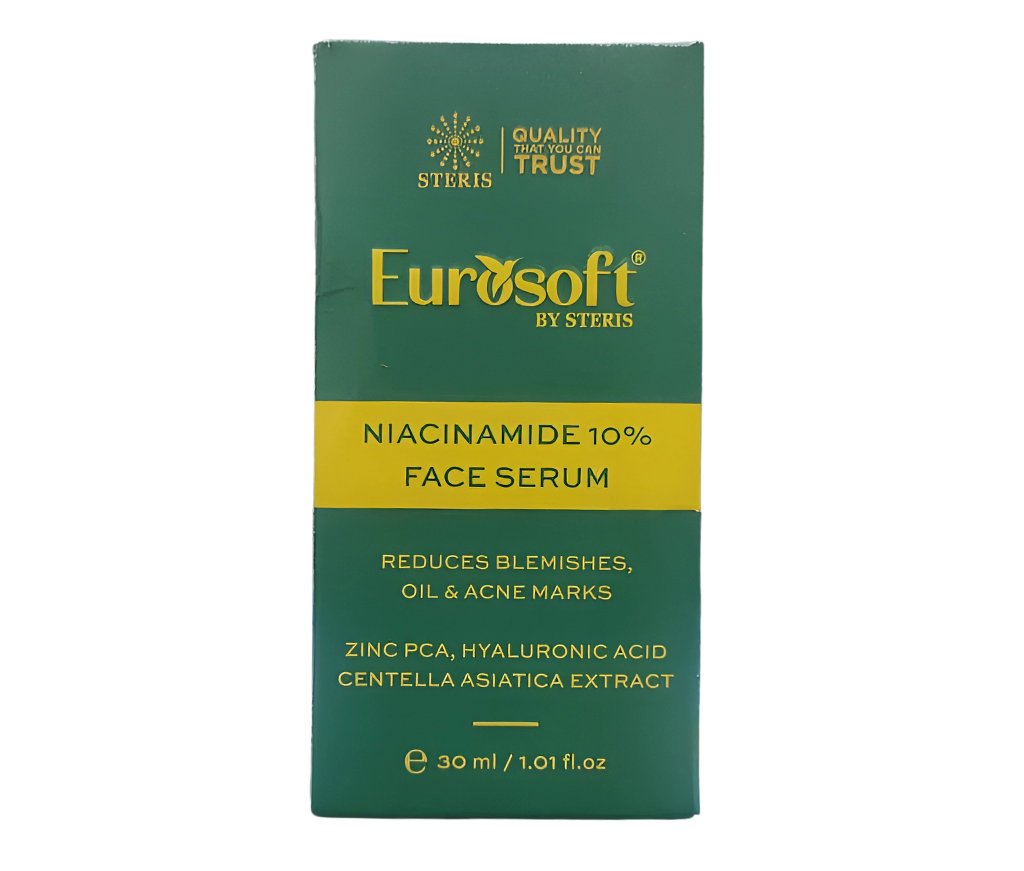
EUROSOFT NIACINAMIDE 10% FACE SERUM
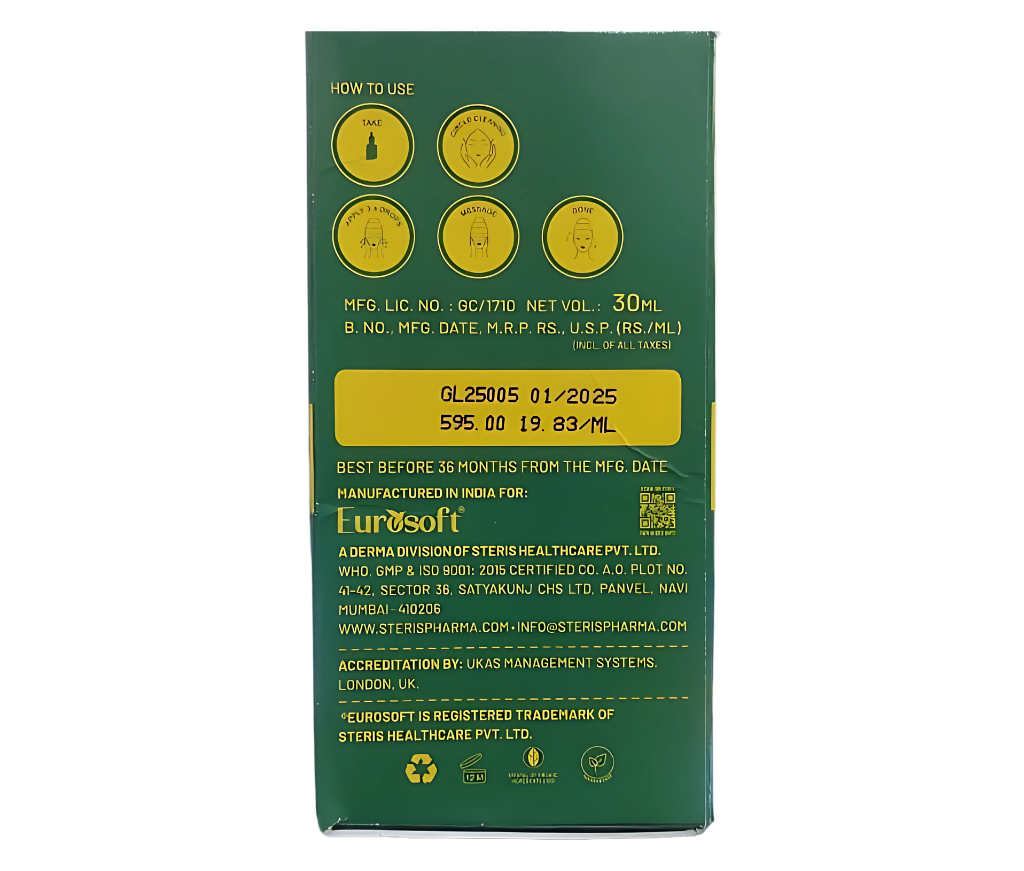
Manufactured By Steris Healthcare Pvt Ltd
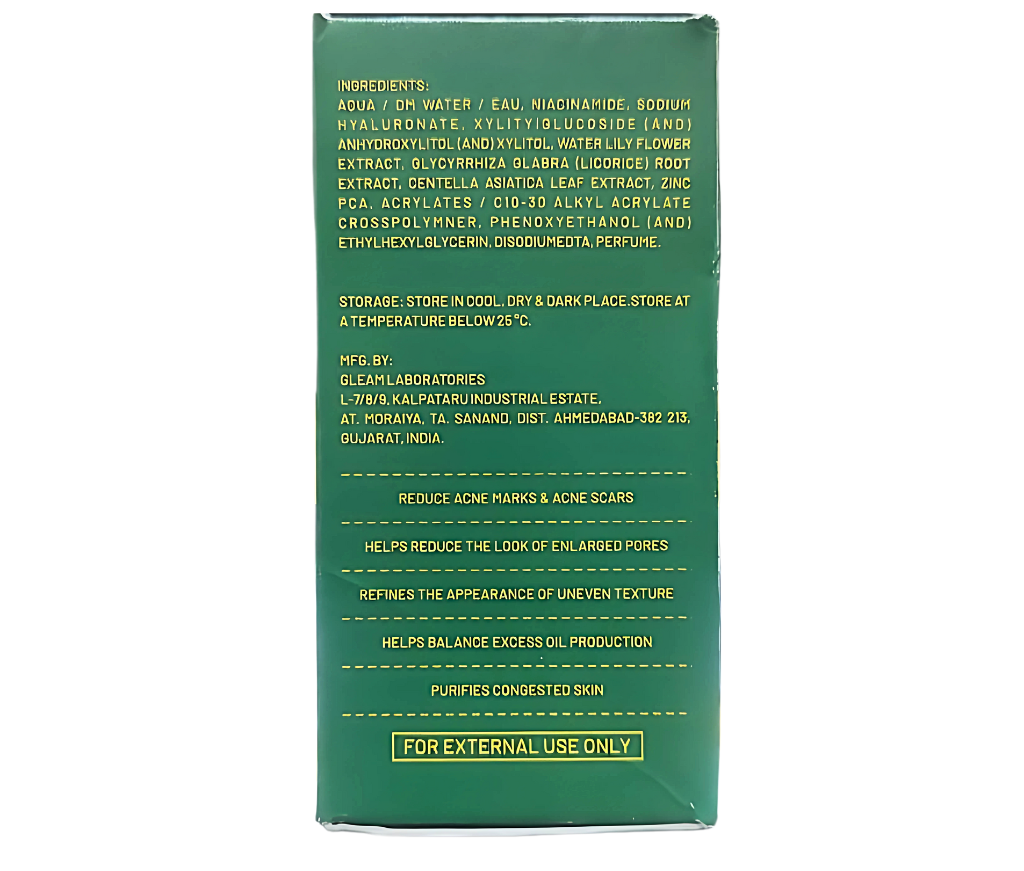
Composition AQUA / DM WATER / EAU, NIACINAMIDE, SODIUM HYALURONATE, XYLITYIGLUCOSIDE (AND) ANHYDROXYLITOL (AND) XYLITOL, WATER LILY FLOWER EXTRACT, GLYCYRRHIZA GLABRA (LICORICE) ROOT EXTRACT, CENTELLA ASIATICA LEAF EXTRACT, ZINC PCA. ACRYLATES/C10-30 ALKYL ACRYLATE CROSSPOLYMNER, PHENOXYETHANOL (AND) ETHYLHEXYLGLYCERIN, DISODIUMEDTA, PERFUME.
Rs 358.23
MRP Rs 511.75
(30% OFF)
Includes all taxes
Package SIZE
( FOR 30 ML )

100% Authentic
Products

Free
Shipping*

Products
Return Policy
Description:
Primary keyword: AQUA / DM WATER / EAU, NIACINAMIDE, SODIUM HYALURONATE, XYLITYIGLUCOSIDE (AND) ANHYDROXYLITOL (AND) XYLITOL, WATER LILY FLOWER EXTRACT, GLYCYRRHIZA GLABRA (LICORICE) ROOT EXTRACT, CENTELLA ASIATICA LEAF EXTRACT, ZINC PCA, ACRYLATES/C10-30 ALKYL ACRYLATE CROSSPOLYMER, PHENOXYETHANOL (AND) ETHYLHEXYLGLYCERIN, DISODIUM EDTA, PERFUME
Hydrating Face Serum: What Is It Used For?
A hydrating face serum formulated with Aqua/DM Water/Eau, Niacinamide, Sodium Hyaluronate, Xylitylglucoside, Anhydroxylitol, Xylitol, Water Lily Flower Extract, Licorice Root Extract, Centella Asiatica Leaf Extract and Zinc PCA is primarily designed to increase skin moisture and leave the complexion feeling softer, smoother and more comfortable.
This type of serum combines humectants, skin-conditioning ingredients, vitamin B3, botanical extracts and formulation-support ingredients. Sodium hyaluronate, the sodium salt of hyaluronic acid, is particularly relevant to hydration because hyaluronic acid is highly associated with water retention and skin moisture. Current cosmetic research continues to support topical hyaluronic-acid-containing formulations for improving skin hydration and overall skin appearance.
Niacinamide, also known as nicotinamide or vitamin B3, adds another important dimension. Dermatological references report that topical nicotinamide can support the skin barrier and reduce transepidermal water loss, helping maintain skin hydration.
The result is a serum aimed at people who want daily hydration without relying solely on a heavy cream or moisturizer.
Key Benefits of This Hydrating Serum
1. Helps Improve Skin Hydration
The most obvious purpose of this formula is hydration. Sodium hyaluronate acts as a water-attracting ingredient, while the xylitol-based moisturizing complex—Xylitylglucoside, Anhydroxylitol and Xylitol—is commonly used in cosmetic formulations to support moisturization.
Regular use may make dehydrated skin feel:
-
Softer
-
Smoother
-
More supple
-
Less tight
-
More comfortable
-
Visibly fresher and plumper from improved surface hydration
Topical hyaluronic acid is widely used in skincare because of its hygroscopic properties and its ability to contribute to skin hydration.
2. Supports the Skin Barrier
Niacinamide is one of the better-studied ingredients in this formula. It can support normal skin-barrier function and help reduce water loss from the skin. Dermatology literature also describes topical niacinamide as generally well tolerated and useful in cosmetic skincare.
A healthier moisture barrier can help skin retain water more effectively, which is especially useful for people experiencing dryness or dehydration.
3. Provides a Smoother-Looking Skin Texture
When skin is dehydrated, fine surface lines and rough texture can appear more noticeable. By improving hydration, a serum containing sodium hyaluronate and other moisturizing agents can make the skin surface appear smoother.
This does not mean the serum permanently removes wrinkles. Rather, adequate hydration can temporarily improve the look and feel of dehydrated skin.
4. Contains Centella Asiatica Leaf Extract
Centella asiatica, commonly called gotu kola, is a botanical ingredient frequently used in skincare. Research reviews have investigated its triterpenes—including asiaticoside, madecassoside, asiatic acid and madecassic acid—in relation to skin biology and dermatological applications. However, the strength of evidence varies depending on the specific preparation and intended use.
In a cosmetic serum, Centella asiatica is best described as a skin-conditioning and soothing-support botanical ingredient, rather than a treatment for a medical skin condition.
5. Includes Licorice Root Extract
Glycyrrhiza glabra (Licorice) Root Extract is another botanical commonly incorporated into cosmetic formulas.
Licorice-derived compounds have been investigated for various biological and skin-related properties. However, the performance of a cosmetic licorice extract depends on its concentration, standardization, extraction method and the complete formulation.
Therefore, it is more accurate to describe this ingredient as providing skin-conditioning and antioxidant-support properties rather than promising that it will erase pigmentation or treat a dermatological disorder.
6. Contains Water Lily Flower Extract
Water Lily Flower Extract adds a botanical component to the formulation. It is generally used in cosmetics for its skin-conditioning properties and can complement a hydration-focused skincare routine.
Because the exact composition and concentration of botanical extracts are not provided by an ingredient list alone, specific clinical claims should not be assumed.
7. Zinc PCA for Skin Conditioning
Zinc PCA combines zinc with PCA (pyrrolidone carboxylic acid) and is used in skincare formulations for its conditioning properties.
It can be particularly appealing in hydration products intended for combination or oily skin because a hydrating serum does not necessarily need to be rich or occlusive.
What Does Each Ingredient Do?
| Ingredient | Main cosmetic role |
|---|---|
| Aqua / DM Water / Eau | Solvent and primary water base |
| Niacinamide | Skin-conditioning, barrier-support and moisturizing support |
| Sodium Hyaluronate | Humectant; supports skin hydration |
| Xylitylglucoside, Anhydroxylitol & Xylitol | Moisturizing/humectant complex |
| Water Lily Flower Extract | Botanical skin-conditioning ingredient |
| Glycyrrhiza Glabra (Licorice) Root Extract | Botanical skin-conditioning ingredient |
| Centella Asiatica Leaf Extract | Botanical skin-conditioning/soothing-support ingredient |
| Zinc PCA | Skin-conditioning ingredient |
| Acrylates/C10-30 Alkyl Acrylate Crosspolymer | Texture, viscosity and formulation stabilizing support |
| Phenoxyethanol & Ethylhexylglycerin | Preservative system |
| Disodium EDTA | Chelating/stability-support ingredient |
| Perfume | Fragrance |
How to Use a Hydrating Face Serum
For best cosmetic results, use the serum consistently as part of a simple skincare routine.
Recommended routine:
-
Cleanse your face with a gentle cleanser.
-
Pat the skin dry, leaving it slightly damp if comfortable.
-
Apply a small amount of the hydrating serum to the face and neck.
-
Gently spread or pat it into the skin.
-
Follow with a moisturizer if your skin needs additional moisture.
-
During the daytime, finish with a broad-spectrum sunscreen.
A serum is generally a lightweight treatment step, while a moisturizer can provide additional emollient or occlusive support. Using both can be useful when the skin is particularly dry or dehydrated.
Who Can Use This Serum?
A hydration-focused serum with sodium hyaluronate and niacinamide may be suitable for many skin types, including:
-
Normal skin
-
Dry skin
-
Dehydrated skin
-
Combination skin
-
Oily skin that still feels dehydrated
-
Mature-looking skin
-
Skin exposed to dry indoor environments
However, skin type is not the only factor that determines tolerance. People with highly reactive or fragrance-sensitive skin should pay particular attention to the presence of perfume and botanical extracts.
Possible Side Effects and Precautions
Most cosmetic ingredients are intended to be safe when used as directed, but no skincare product is guaranteed to suit everyone.
Potential reactions can include:
-
Temporary stinging or burning
-
Redness
-
Itching
-
Dryness or irritation
-
Breakouts in susceptible individuals
-
Contact dermatitis or fragrance sensitivity
The formula contains Perfume, which is important for fragrance-sensitive users. Dermatology guidance notes that fragrance and preservatives can occasionally cause allergic contact dermatitis in susceptible individuals.
Niacinamide is generally well tolerated topically, although individual sensitivity can occur.
Is a Patch Test Recommended?
Yes. Before applying a new serum extensively to the face, apply a small amount to a limited area and observe the skin. If significant irritation, swelling, persistent burning or another concerning reaction occurs, discontinue use.
Avoid applying the serum to damaged or severely irritated skin unless a qualified healthcare professional advises otherwise.
Important: The ingredient list alone cannot establish the exact concentration, pH, molecular weight of sodium hyaluronate, extraction specifications of the botanicals, or the finished product's clinical performance.
Is This Serum Good for Dry or Dehydrated Skin?
It can be a useful option for dehydrated skin, particularly because the formula contains multiple moisture-supporting ingredients.
There is an important distinction between dry skin and dehydrated skin. Dry skin generally refers to a lack of lipids/oil, whereas dehydrated skin lacks water. A hydrating serum is especially targeted toward the latter.
If your skin is genuinely dry, applying a moisturizer over the serum can provide additional barrier-supporting and moisture-locking benefits.
Is This Serum Suitable for Oily Skin?
Potentially, yes. Oily skin can still be dehydrated. In fact, adding lightweight hydration can be preferable to avoiding moisturizing products altogether.
The suitability will depend on the serum's actual texture, concentration and your individual response. If you are prone to acne or clogged pores, introduce the product gradually and monitor your skin.
Can Niacinamide and Hyaluronic Acid Be Used Together?
Yes. Niacinamide and sodium hyaluronate can be complementary skincare ingredients.
Sodium hyaluronate primarily contributes to hydration, while niacinamide can support the skin barrier and hydration. Dermatological evidence supports topical niacinamide's role in improving barrier function and hydration, while topical hyaluronic-acid formulations are widely studied for their moisturizing effects.
Final Verdict: Is This Hydrating Face Serum Worth Using?
If your main skincare goal is hydration and moisture, the ingredient profile is well aligned with that purpose.
The standout ingredients are Sodium Hyaluronate, Niacinamide and the Xylitylglucoside/Anhydroxylitol/Xylitol moisturizing complex, supported by Centella asiatica, licorice, water lily and Zinc PCA.
The strongest evidence-backed positioning is therefore daily hydration, skin-conditioning, improved moisture retention and a smoother-feeling complexion—not treatment of acne, pigmentation, eczema, scars or other medical conditions.
For E-E-A-T-conscious product content, the most responsible approach is to evaluate the ingredients without promising results that cannot be established from the INCI list alone. The available literature supports hydration and barrier-related roles for key ingredients such as topical hyaluronic acid and niacinamide, while botanical ingredients should be described more conservatively because outcomes depend heavily on the extract and formulation.
Frequently Asked Questions
1. What is this face serum used for?
This face serum is primarily designed to provide hydration and moisture while helping the skin feel softer, smoother and more comfortable.
2. What are the main ingredients in this hydrating serum?
The key ingredients include niacinamide, sodium hyaluronate, Xylitylglucoside, Anhydroxylitol, Xylitol, Centella asiatica, licorice root extract, water lily flower extract and Zinc PCA.
3. Is sodium hyaluronate good for dry skin?
Yes. Sodium hyaluronate is a water-binding ingredient commonly used in skincare to support skin hydration and improve the feel of dry or dehydrated skin.
4. What does niacinamide do in a face serum?
Niacinamide, or vitamin B3, can support the skin barrier, help maintain hydration and improve the overall appearance and feel of the skin.
5. Can I use niacinamide and sodium hyaluronate together?
Yes. They are commonly used together because sodium hyaluronate focuses on hydration while niacinamide can support barrier function and moisture retention.
6. Is this serum suitable for dehydrated skin?
Yes. Its combination of sodium hyaluronate and moisturizing ingredients makes it particularly relevant for dehydrated skin.
7. Can oily skin use a hydrating serum?
Yes. Oily skin can still lack water. A lightweight hydrating serum may provide moisture without requiring a heavy cream.
8. Can I use this serum every day?
If your skin tolerates the product, it can generally be incorporated into a daily skincare routine according to the manufacturer's directions.
9. Should I apply serum before or after moisturizer?
Apply a serum before moisturizer. The moisturizer can then provide additional conditioning and help support the skin's moisture barrier.
10. Should I apply this serum to wet or dry skin?
It can be applied to clean, slightly damp skin if that texture works well for you. Avoid applying it to dripping-wet skin if that causes the product to run or become difficult to distribute.
11. Does this serum remove wrinkles?
It should not be marketed as permanently removing wrinkles. Hydration can make dehydrated fine lines look less noticeable, while niacinamide has evidence for improving several signs of skin aging with continued topical use.
12. Can this serum brighten the skin?
The formula contains niacinamide and licorice root extract, ingredients frequently used in cosmetic brightening formulations. However, the actual brightening effect depends on concentrations, formulation and consistent use, so a guaranteed pigmentation-removal claim would not be appropriate from the ingredient list alone.
13. What are the side effects of this face serum?
Possible reactions include irritation, redness, itching, stinging or sensitivity. The fragrance component may be particularly relevant for people who are sensitive to fragranced skincare.
14. Is this serum suitable for sensitive skin?
It may be tolerated by some sensitive-skin users, but the formula contains perfume and botanical extracts, so people with very reactive or fragrance-sensitive skin should patch test first.
15. Can I use this serum with other skincare products?
Generally, a hydration-focused serum can be incorporated into a broader routine. Introduce new products one at a time if your skin is sensitive so you can identify the cause of any reaction.
16. Is Centella asiatica good for the skin?
Centella asiatica is a widely studied botanical containing compounds such as asiaticoside and madecassoside. Research has explored its skin-conditioning and dermatological applications, although more high-quality clinical research is needed for specific cosmetic claims.
17. What is Zinc PCA used for in skincare?
Zinc PCA is primarily used as a skin-conditioning ingredient and is often included in formulas designed for balanced, fresh-feeling skin.
18. Is this serum a moisturizer?
It is best described as a hydrating serum, not necessarily a complete replacement for moisturizer. Depending on your skin type, you may still benefit from applying a moisturizer afterward.
19. How long does a hydrating serum take to work?
The immediate effect is generally related to how hydrated and smooth the skin feels. Longer-term appearance changes depend on consistent use, the complete formulation and individual skin characteristics.
20. Who should avoid this serum?
Anyone who has previously reacted to one of its ingredients should avoid it. People with known fragrance sensitivity should exercise particular caution because the formula contains perfume.
21. Can I use this serum in the morning?
Yes, if the product directions permit it. For daytime skincare, follow the serum with moisturizer as needed and sunscreen.
22. Is this serum good for combination skin?
It can be. Combination skin may benefit from lightweight hydration, especially when some areas are oily while other areas feel dry or dehydrated.
23. Does this serum contain hyaluronic acid?
It contains Sodium Hyaluronate, which is a form of hyaluronic acid used in cosmetic formulations for its water-binding and hydrating properties.
24. What is the biggest benefit of this serum?
The primary benefit is skin hydration and moisture support, with niacinamide providing additional barrier-support benefits and botanical extracts contributing skin-conditioning properties.
25. What should I do if the serum irritates my skin?
Stop using it and allow the skin to recover. If the reaction is severe, persistent or concerning, seek advice from a qualified dermatologist or healthcare professional.

