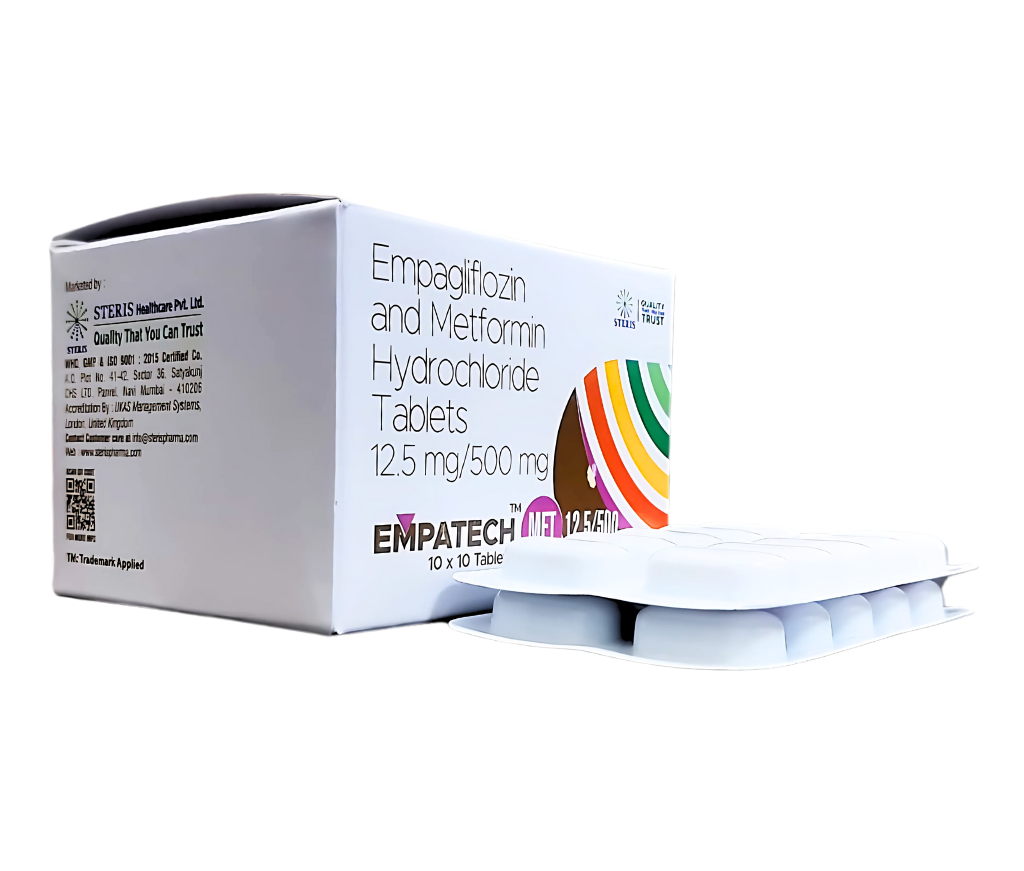


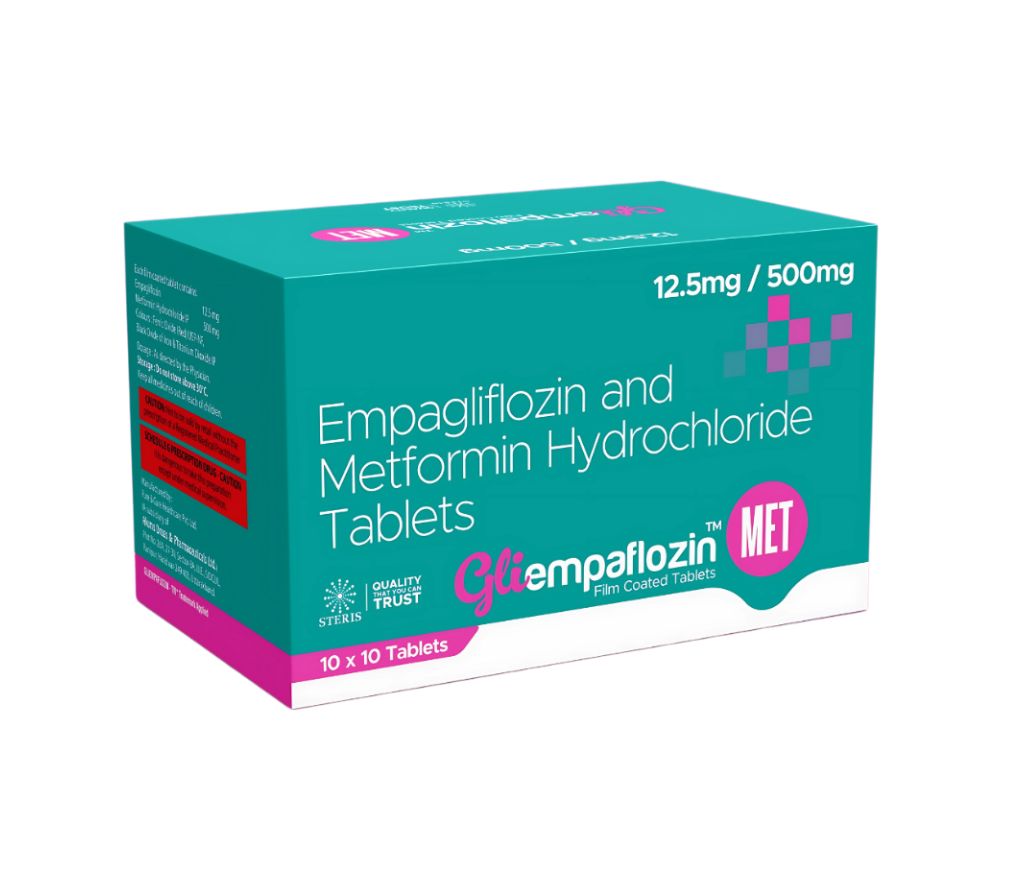

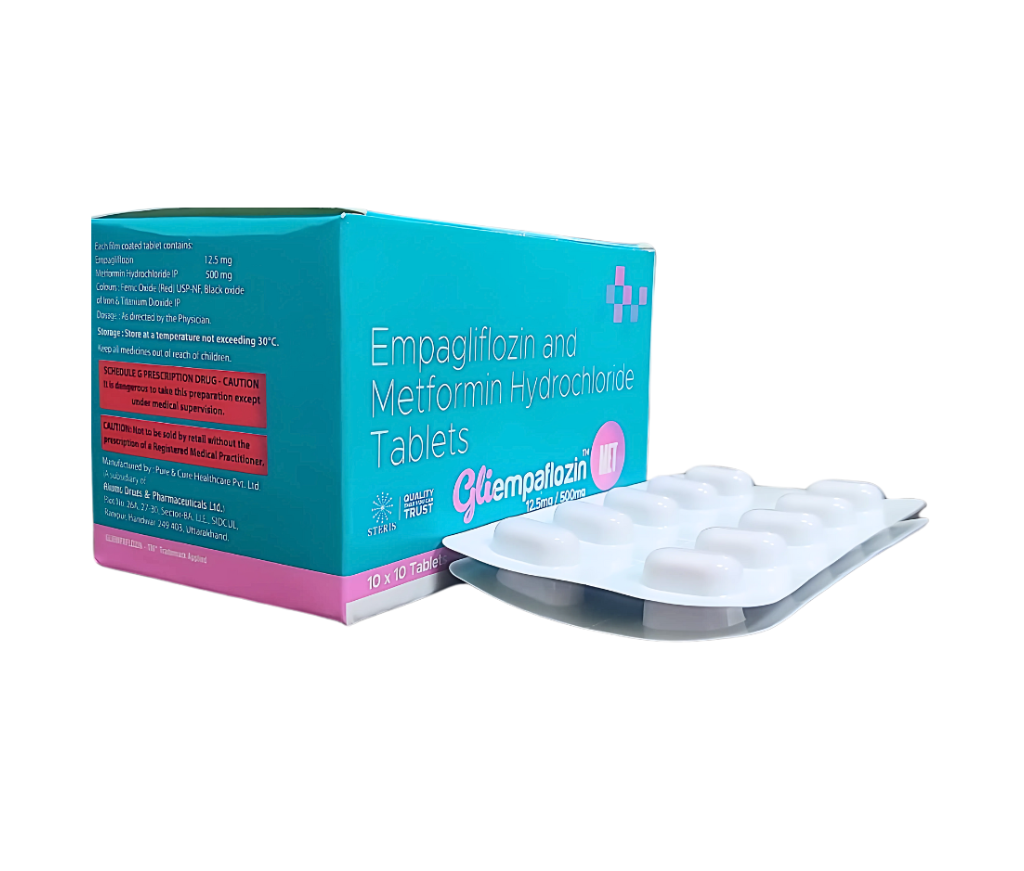
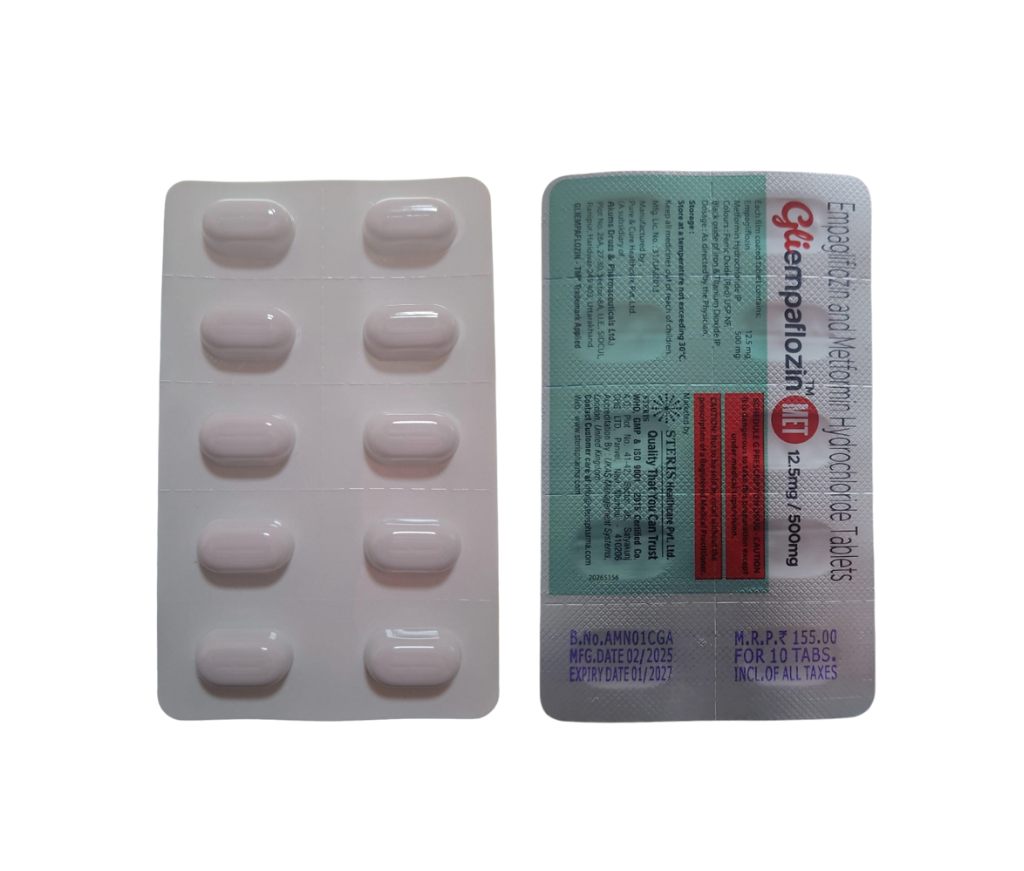
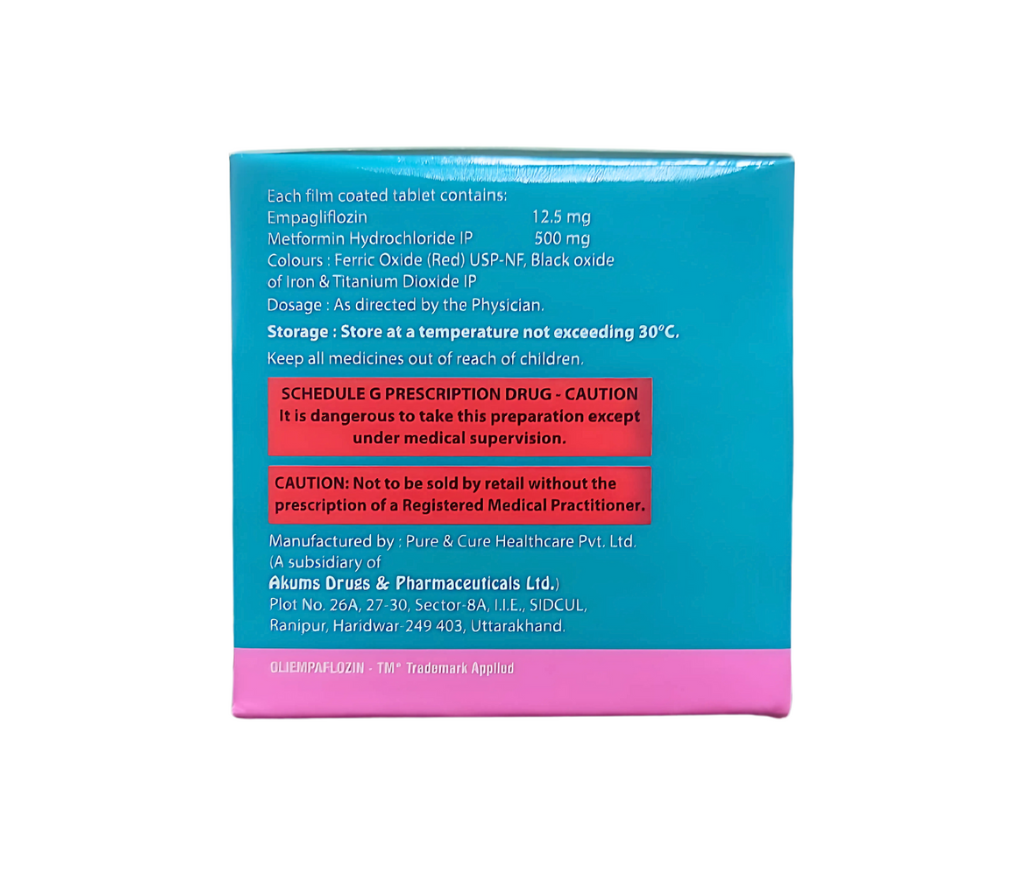
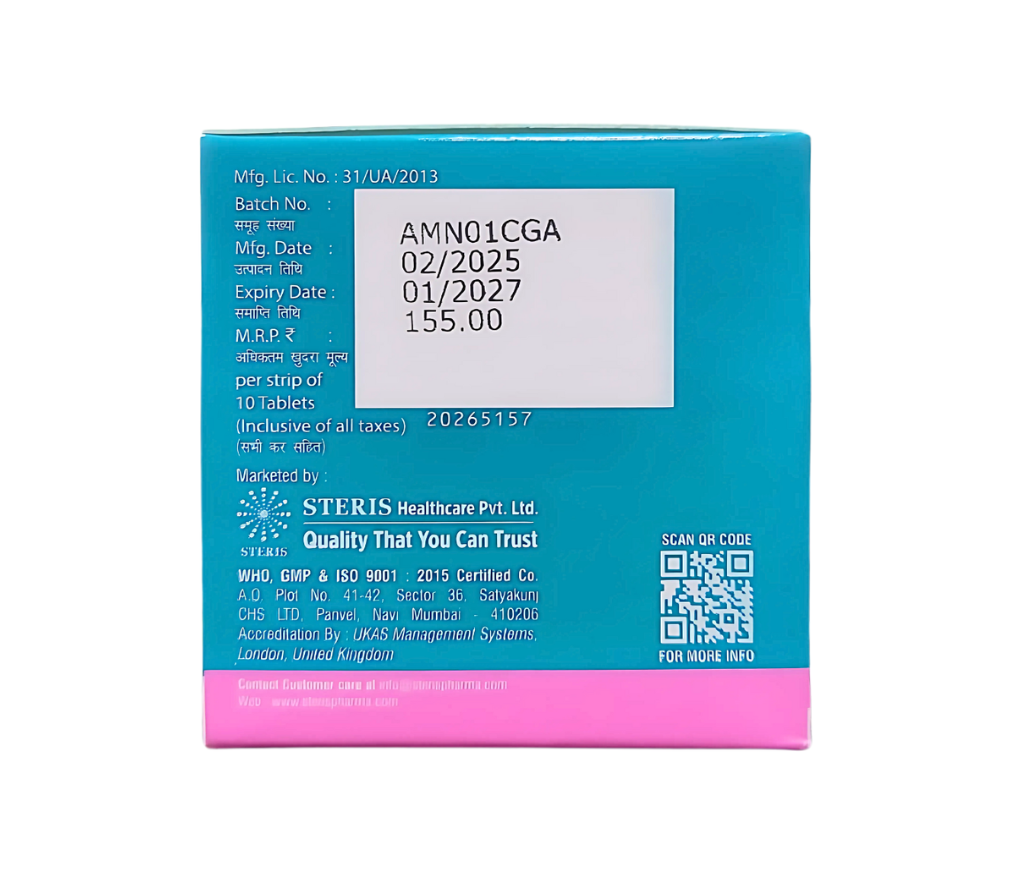
GLIEMPAFLOZIN MET 12.5mg/ 500mg
 Item requires a valid prescription
Manufactured By Steris Healthcare Pvt Ltd
Composition Empagliflozin (12.5mg), Metformin Hydrochloride (500mg)
Rs 101.99
MRP Rs 145.70
(30% OFF)
Includes all taxes
Package SIZE
( for 10 tablets )

100% Authentic
Products

Free
Shipping*

Products
Return Policy
Description:
It is a fixed-dose combination antidiabetic tablet for adults with type 2 diabetes, used along with diet and exercise.
- Empagliflozin (12.5mg) is an SGLT2 (sodium-glucose co-transporter 2) inhibitor. It helps the kidneys remove excess glucose through urine, and it works independently of insulin.
- Metformin hydrochloride (500mg) is a biguanide. It reduces the glucose released by the liver and helps the body respond better to its own insulin.
Because the two act through different pathways, together they can improve blood sugar control more than either alone for many patients.
Product Information
| Detail | Information |
|---|---|
| Brand Name | GLIEMPAFLOZIN MET 12.5mg/500mg |
| Composition | Empagliflozin 12.5mg + Metformin Hydrochloride 500mg |
| Salt Class | SGLT2 inhibitor + Biguanide |
| Dosage Form | Tablet |
| Pack Size | Strip of 10 tablets |
| Manufacturer / Marketer | Steris Healthcare Pvt. Ltd. |
| Therapeutic Use | Type 2 diabetes mellitus in adults |
| Prescription Status | Prescription required (Schedule H) |
| Storage | Store in a cool, dry place below 30°C, away from light and moisture. Follow the pack label. |
| Availability | India |
Why Is the Empagliflozin Metformin Combination Important?
Long-term high blood sugar can damage the heart, kidneys, eyes, nerves and feet. Staying within the HbA1c target your doctor sets is one of the best ways to lower that risk. This combination is important for several reasons:
- It targets two problems at once. Metformin addresses insulin resistance and liver glucose output, while empagliflozin removes glucose through the kidneys.
- It reduces pill burden. One tablet in place of two can make it easier to take medicine regularly, and consistency strongly affects long-term control.
- It rests on solid evidence. Metformin has decades of use and remains a foundation of type 2 diabetes care. Empagliflozin has been studied in large outcome trials, and in adults with type 2 diabetes and established heart disease it has been associated with a lower risk of cardiovascular death.
- It fits common Indian health profiles. Many Indian patients live with diabetes alongside high blood pressure, excess weight or early kidney changes, where doctors favour medicines with benefits beyond glucose lowering.
- The 500mg strength offers flexibility. A lower metformin dose can suit patients who are sensitive to metformin’s stomach effects, who have reduced kidney function (as judged by their doctor), or who are being titrated upward. The right strength is always your doctor’s decision.
Key Benefits
1. Better Blood Sugar Control: The dual mechanism helps lower fasting glucose, after-meal glucose and HbA1c when used with a healthy lifestyle.
2. Lower Metformin Load per Tablet: With 500mg of metformin per tablet, your doctor can fine-tune the total daily dose, which may help with stomach tolerance.
3. Low Risk of Hypoglycaemia on Its Own: Neither ingredient typically causes low blood sugar when used alone. Risk rises if combined with insulin or sulfonylureas, so your doctor may adjust those doses.
4. Possible Modest Weight Reduction: Empagliflozin removes calories as glucose in urine, so some patients see a small drop in weight. Results vary, and this is not a weight-loss medicine.
5. Possible Blood Pressure Benefit: Empagliflozin’s mild diuretic effect may lower blood pressure slightly.
6. Potential Heart and Kidney Support: Empagliflozin is recognised in international guidelines for certain patients with type 2 diabetes who have cardiovascular disease, heart failure or chronic kidney disease. Whether this applies to you is a decision for your doctor.
7. Convenience: A fixed-dose tablet in a compact 10-tablet strip is easy to carry and track.
Who Should Take This Medicine?
Your doctor may prescribe it if:
- You are an adult with type 2 diabetes
- Your blood sugar is not controlled with diet, exercise and one medicine
- You already take empagliflozin and metformin separately and a combination at this strength is suitable
It is not for type 1 diabetes or diabetic ketoacidosis, and not for children unless a doctor specifically advises it.
How to Take GLIEMPAFLOZIN MET
- Take it exactly as prescribed. Do not change the dose or timing on your own.
- Take it with meals to reduce stomach upset from metformin.
- Swallow the tablet whole with water unless your doctor or the pack says otherwise.
- If you miss a dose, take it when you remember unless the next dose is almost due. Never double up.
- Drink enough fluids unless your doctor has restricted them, as empagliflozin increases urination.
- Continue your diet, exercise and scheduled blood sugar, HbA1c and kidney tests.
Precautions: What to Know Before and While Taking It
Do Not Use If You Have
- Type 1 diabetes or diabetic ketoacidosis
- Severe kidney impairment or are on dialysis
- Severe liver disease
- Metabolic acidosis or a history of lactic acidosis
- An allergy to empagliflozin, metformin or any ingredient
Tell Your Doctor Before Starting If You
- Have kidney, liver or heart problems
- Get repeated urinary tract or genital infections
- Drink alcohol regularly, which raises the risk of lactic acidosis
- Are dehydrated, or have ongoing vomiting or diarrhoea
- Are on a very low-calorie or low-carbohydrate diet
- Are pregnant, planning pregnancy or breastfeeding, as this medicine is generally not recommended
- Take insulin, sulfonylureas, diuretics, topiramate, cimetidine, lithium or any other medicine or supplement
Possible Side Effects
Not everyone gets side effects, and many mild ones settle within a few weeks.
Common
- Increased urination
- Genital yeast infections (itching, redness, discharge)
- Urinary tract infection
- Nausea, vomiting, diarrhoea or stomach discomfort
- Loss of appetite or a metallic taste
- Increased thirst
- Dizziness when standing up
Frequently Asked Questions
1. Can I take Empagliflozin and Metformin tablets with food?
Yes. Empagliflozin and Metformin combination tablets are generally taken with meals to help reduce stomach-related side effects, such as nausea and diarrhoea. Follow your doctor's instructions and the directions for your specific formulation.
2. Can I order Empagliflozin and Metformin tablets online?
Yes, they may be available through authorised online pharmacies and pharmaceutical suppliers. Check the product's strength, formulation, seller credentials, and prescription requirements before ordering.
3. Is Empagliflozin and Metformin a prescription medicine in India?
Yes. This combination should be used under the supervision of a qualified healthcare professional. Consult your doctor before starting treatment or changing your dose.
4. Is Empagliflozin and Metformin safe for kidney patients?
It depends on the patient's kidney function and overall health. Metformin may not be suitable in severe kidney impairment, and kidney function should be assessed before and during treatment. Do not start this medicine without your doctor's advice if you have kidney disease.
5. Is Empagliflozin and Metformin available in India?
Empagliflozin and Metformin combination products are available in India under various brand names and strengths. Availability may vary by location, pharmacy, and product. Confirm the exact formulation with a licensed pharmacy.
6. Does Empagliflozin and Metformin cause weight loss?
Some people may experience modest weight loss while taking this combination. Empagliflozin helps the body remove glucose through urine, while Metformin affects glucose production and insulin sensitivity. Weight loss is not guaranteed, and the medicine should not be used solely for weight management.
7. Does Empagliflozin and Metformin cause frequent urination?
Yes. Empagliflozin increases the amount of glucose removed through urine, which may lead to more frequent urination and increased thirst. Drink fluids as advised by your healthcare professional. If you experience painful urination, fever, severe dizziness, or signs of dehydration, contact your doctor.
8. What are the side effects of Empagliflozin and Metformin?
Common side effects include nausea, diarrhoea, stomach discomfort, increased urination, genital fungal infections, and dizziness related to dehydration. Low blood sugar may occur, especially when the medicine is combined with insulin or certain other diabetes medicines.
Rare but serious risks include lactic acidosis and diabetic ketoacidosis. Seek urgent medical attention for symptoms such as severe weakness, persistent vomiting, abdominal pain, or rapid or difficult breathing.
9. What should I avoid while taking Empagliflozin and Metformin?
Avoid excessive alcohol consumption, prolonged fasting, crash diets, and becoming dehydrated. Do not change your dose or take extra tablets without medical advice. Inform your healthcare team if you are seriously ill, unable to eat or drink normally, or scheduled for surgery or an imaging procedure involving contrast dye, as your medicine may need temporary adjustment.
10. How should I take Empagliflozin and Metformin safely?
Take the medicine exactly as prescribed, usually with meals, and follow the instructions for your specific formulation. Attend recommended blood glucose and kidney-function checks, maintain a balanced diet, and follow your doctor's exercise and hydration advice. Do not stop or adjust treatment without medical guidance.
Available Substitutes