


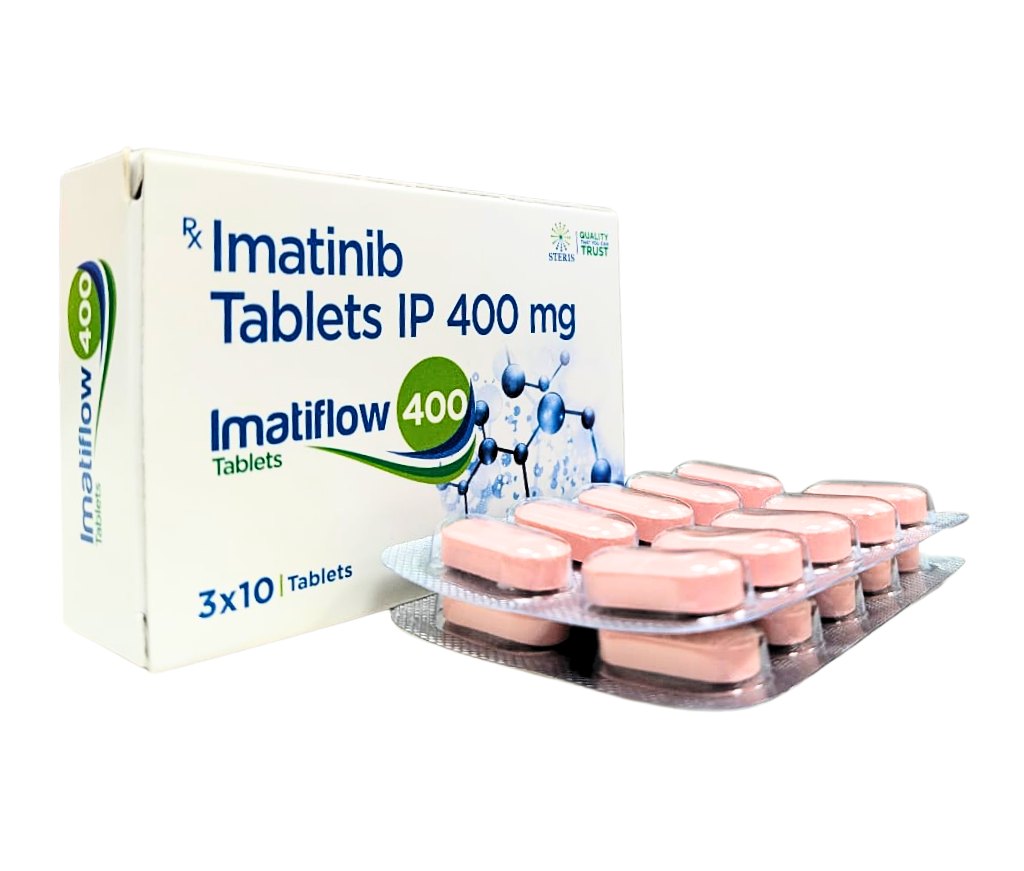
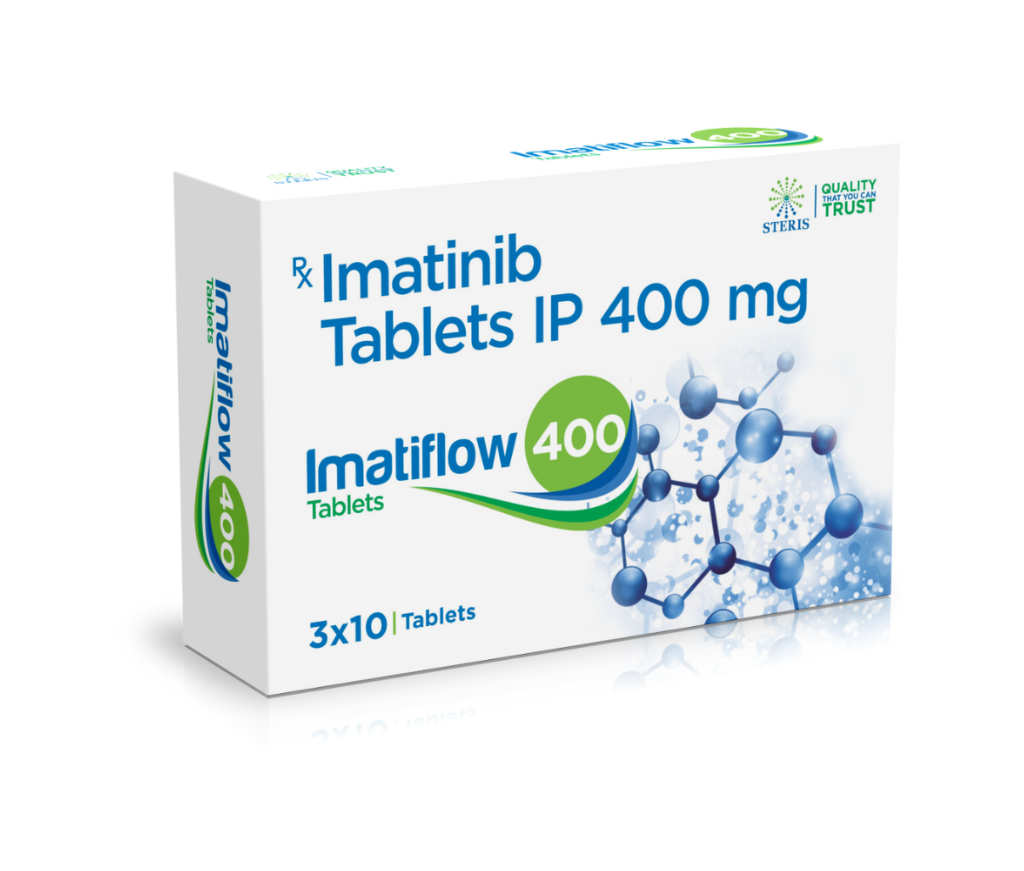
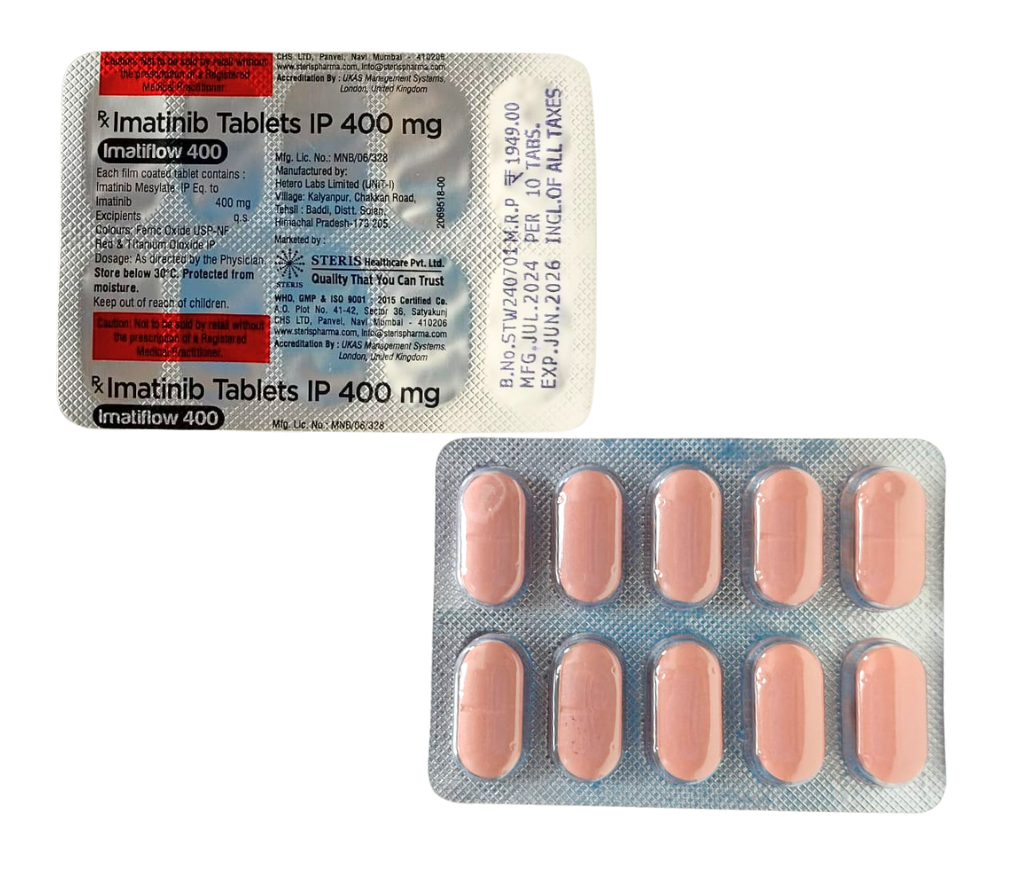
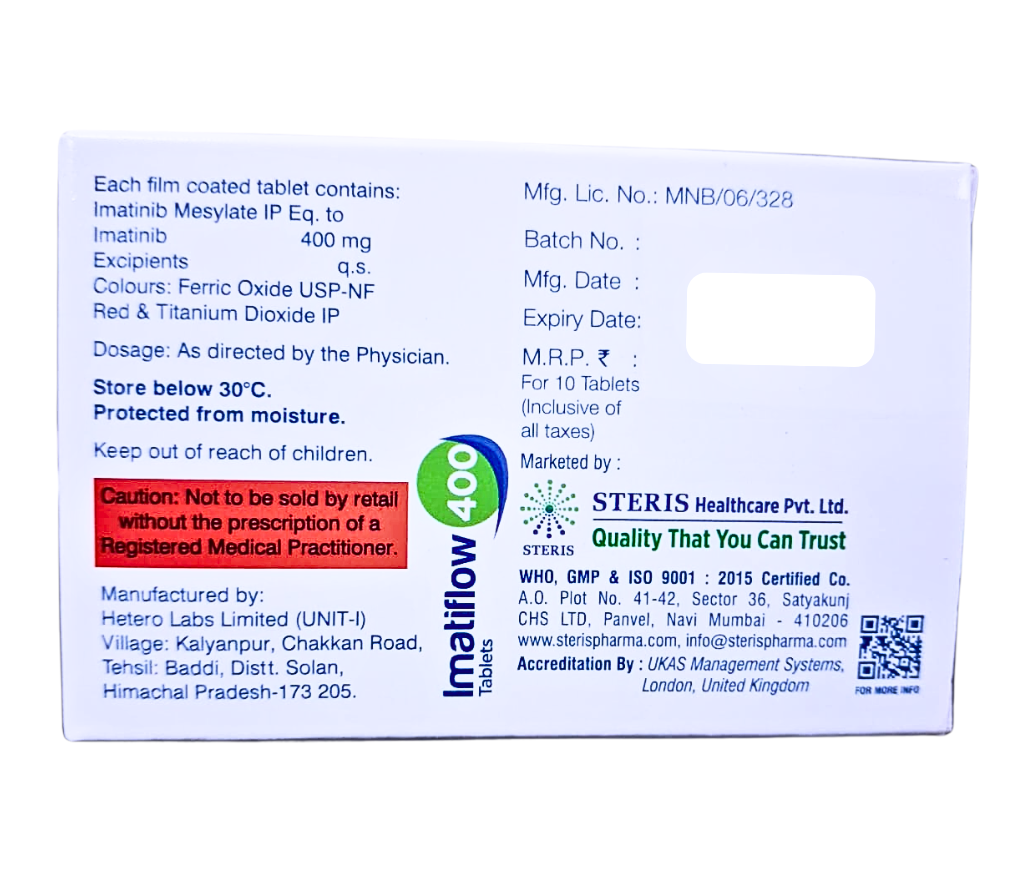
IMATIFLOW 400
 Item requires a valid prescription
Manufactured By Steris Healthcare Pvt Ltd
Composition Imatinib IP (400mg)
Rs 1278.90
MRP Rs 1827.00
(30% OFF)
Includes all taxes
Package SIZE
( For 10 Tablet )

100% Authentic
Products

Free
Shipping*

Products
Return Policy
Description:
Imatinib 400 mg is an oral targeted cancer medicine belonging to the tyrosine kinase inhibitor (TKI) class. It is available as imatinib mesylate and is used for several cancers and blood disorders in which abnormal tyrosine-kinase signaling contributes to disease growth.
Unlike conventional chemotherapy, which can affect many rapidly dividing cells, imatinib is designed to block specific abnormal signaling proteins. Depending on the disease, important targets include BCR-ABL, KIT and PDGFRA. This targeted mechanism is one reason imatinib became an important treatment for diseases such as Philadelphia chromosome-positive chronic myeloid leukemia (Ph+ CML) and certain gastrointestinal stromal tumors (GISTs).
Current U.S. prescribing information lists 100 mg and 400 mg tablets among available dosage forms. The prescribing information was revised in 2026 and continues to emphasize monitoring for fluid retention, blood-count abnormalities, cardiac problems, liver toxicity and kidney effects.
What is imatinib 400 mg used for?
Depending on the patient's diagnosis and treatment plan, imatinib may be prescribed for:
-
Philadelphia chromosome-positive chronic myeloid leukemia (Ph+ CML)
-
Philadelphia chromosome-positive acute lymphoblastic leukemia (Ph+ ALL) in appropriate treatment settings
-
Certain KIT-positive gastrointestinal stromal tumors (GIST)
-
Certain dermatofibrosarcoma protuberans (DFSP)
-
Certain myelodysplastic/myeloproliferative neoplasms involving abnormal PDGFR signaling
-
Certain forms of systemic mastocytosis
-
Certain chronic eosinophilic leukemia or hypereosinophilic syndrome cases
The exact indication matters because 400 mg is not automatically the correct dose for every condition. NCI's current drug information identifies several approved disease settings for imatinib, while disease-specific treatment guidelines determine how it should be dosed and combined with other treatments.
How Does Imatinib 400 mg Work?
Imatinib works by inhibiting particular tyrosine kinases—enzymes that can send signals encouraging abnormal cells to survive and multiply.
For example, in Ph+ CML, the Philadelphia chromosome produces an abnormal BCR-ABL tyrosine kinase. Imatinib inhibits this abnormal signaling pathway, helping control the growth of leukemia cells.
In many GISTs, abnormal KIT or PDGFRA signaling can drive tumor growth. Imatinib can inhibit susceptible forms of these kinases. NCI describes imatinib as first-line therapy for most KIT- or PDGFRA-variant GISTs, although certain molecular subtypes, including PDGFRA D842V, are generally resistant to imatinib and may require another targeted therapy.
This molecular specificity is important: imatinib is not a general-purpose cancer medicine for every tumor. Its usefulness depends substantially on the biological characteristics of the disease.
Key Benefits of Imatinib 400 mg
1. Targeted treatment
One of the major benefits of imatinib is its targeted mechanism. By inhibiting specific kinase proteins involved in cancer-cell signaling, it can suppress disease-driving pathways rather than relying solely on nonspecific cell killing.
2. Important treatment option for CML
Imatinib has an established role in the treatment of Philadelphia chromosome-positive CML. NCI lists it among approved treatments for adults and children with appropriate Ph+ CML settings.
3. First-line role in many GIST cases
For most advanced or recurrent GISTs with susceptible KIT or PDGFRA alterations, imatinib remains an important first-line TKI. NCI's professional treatment information notes that most patients with GIST begin treatment at 400 mg daily, although molecular findings can affect the appropriate dose or choice of treatment.
4. Oral administration
Imatinib is taken by mouth, which can make long-term treatment more convenient than therapies requiring repeated intravenous administration.
5. Can be used for long-term disease control
Some patients remain on imatinib for extended periods when their cancer remains controlled and treatment remains appropriate. For GIST, for example, NCI notes that targeted therapy may continue while the tumor is not growing and serious toxicity does not occur.
Imatinib 400 mg Dosage: What Patients Should Know
The phrase “imatinib 400 mg dosage” does not mean every patient should take one 400 mg tablet daily.
The correct dose depends on:
-
Cancer or blood-disorder diagnosis
-
Disease phase or stage
-
Molecular/genetic characteristics
-
Previous treatment
-
Response to treatment
-
Side effects and laboratory results
-
Liver and kidney function
-
Other medicines being taken
-
Age and, in pediatric patients, body size and development
For many adults with certain indications, 400 mg once daily is a commonly used regimen. However, some conditions require different doses, and some patients may require dose interruption or reduction because of toxicity.
In GIST specifically, NCI reports that most patients start at 400 mg daily, while patients with certain KIT exon 9 variants may benefit from a higher dose. Conversely, some molecular subtypes are unlikely to respond adequately to imatinib.
Do not increase, decrease, split, stop or restart imatinib 400 mg without your prescribing clinician's instructions.
How to Take Imatinib 400 mg
Patient information recommends taking imatinib with a meal and a large glass of water. It should generally be taken around the same time each day. Your doctor may change the dose according to treatment response and tolerability.
If you miss a dose, follow the instructions provided by your doctor or pharmacist. MedlinePlus advises taking the missed dose when remembered unless it is nearly time for the next dose; patients should not double the next dose.
Avoid grapefruit and grapefruit juice unless your healthcare professional specifically tells you otherwise, because grapefruit can affect medicine metabolism.
Imatinib 400 mg Side Effects
Like all anticancer medicines, imatinib can cause adverse effects. The severity varies between individuals.
According to current U.S. prescribing information, commonly reported adverse reactions include:
-
Edema or swelling
-
Nausea
-
Vomiting
-
Muscle cramps
-
Musculoskeletal pain
-
Diarrhea
-
Rash
-
Fatigue
-
Abdominal pain
These are among the adverse reactions reported most frequently in the prescribing information.
Other possible effects include headache, changes in taste, mouth irritation, joint or bone pain, dry skin, itching and sleep problems.
Imatinib 400 mg and swelling
Swelling around the eyes, ankles, feet or other parts of the body can occur because of fluid retention. Mild edema is relatively common, but rapid weight gain or severe swelling requires medical assessment.
The current prescribing information specifically warns about potentially severe fluid retention and recommends monitoring weight and investigating unexpected rapid weight gain.
Serious side effects requiring medical attention
Contact your healthcare team promptly if you experience symptoms such as:
-
Severe or rapidly increasing swelling
-
Sudden weight gain
-
Shortness of breath
-
Chest pain
-
Unusual or severe bleeding
-
Significant bruising
-
Yellowing of the skin or eyes
-
Severe abdominal symptoms
-
Markedly reduced urine output
-
Severe weakness or symptoms suggesting infection
Imatinib can cause clinically important cytopenias, severe liver toxicity, fluid retention and, in susceptible patients, serious cardiac problems. Kidney toxicity and tumor lysis syndrome are also recognized warnings in current prescribing information.
Imatinib 400 mg Safety Monitoring
Long-term treatment requires appropriate medical follow-up.
Blood counts
Imatinib can cause anemia, neutropenia and thrombocytopenia. Current prescribing information recommends complete blood-count monitoring, particularly during the early stages of treatment.
Liver function
Liver injury can occur, including severe hepatotoxicity. The prescribing information recommends assessing liver function before treatment and monitoring it during therapy.
Kidney function
A decline in renal function has been reported, so kidney function should be evaluated at baseline and during treatment when clinically appropriate.
Heart health
Severe congestive heart failure and left-ventricular dysfunction have been reported, particularly among patients with existing risk factors or comorbidities. Patients with relevant cardiac risk factors may therefore require closer monitoring.
Imatinib 400 mg Drug Interactions
Tell your doctor and pharmacist about every prescription medicine, over-the-counter product, vitamin, supplement and herbal product you take.
Imatinib is metabolized through pathways involving CYP3A4, and medicines that strongly induce or inhibit CYP3A4 can alter imatinib exposure. Imatinib can also affect the metabolism of other medicines through CYP3A4 and CYP2D6.
Particular attention may be necessary with:
-
Certain antibiotics and antifungal medicines
-
Some seizure medicines
-
Certain HIV medicines
-
Anticoagulants
-
Other anticancer treatments
-
Herbal products and supplements
The current U.S. label specifically addresses interactions involving CYP3A4 and anticoagulation.
Imatinib 400 mg, Pregnancy and Breastfeeding
Imatinib can cause fetal harm. Anyone who is pregnant, planning pregnancy or capable of becoming pregnant should discuss the medicine with their healthcare professional before treatment.
Breastfeeding is also an important consideration. MedlinePlus advises against breastfeeding while taking imatinib and for one month following the final dose.
Individual recommendations can differ based on the cancer, treatment urgency and reproductive circumstances, so this should be discussed directly with the oncology team.
Imatinib 400 mg for GIST
GIST is one of the most important uses of imatinib 400 mg.
GIST is a tumor arising in the gastrointestinal tract and related tissues. Many GISTs are driven by mutations involving KIT or PDGFRA. Imatinib inhibits susceptible kinase signaling and can be used for unresectable, metastatic, recurrent or selected high-risk resected GISTs.
For high-risk GIST after complete surgical removal, three years of adjuvant imatinib has demonstrated better recurrence-free and overall survival outcomes than one year in the SSG XVIII trial. NCI reports a 5-year overall survival rate of 92% in the three-year treatment arm versus 81.7% in the one-year arm.
However, treatment duration is individualized. Molecular testing is particularly relevant because certain mutations predict sensitivity or resistance to imatinib.
Imatinib 400 mg for CML
CML is a blood cancer characterized in many cases by the Philadelphia chromosome and the resulting BCR-ABL abnormality.
Imatinib targets the abnormal BCR-ABL tyrosine kinase. It therefore represents a disease-directed targeted therapy rather than a nonspecific cytotoxic drug.
The exact treatment strategy depends on disease phase, molecular response, prior therapies and individual patient factors. Patients should not stop treatment simply because they feel well or because blood counts improve unless their specialist has established a supervised treatment plan.
Buying or Ordering Imatinib 400 mg: What to Check
People searching for “buy imatinib 400 mg”, “imatinib 400 mg price” or “imatinib 400 mg online” should prioritize medicine authenticity and prescription safety over price alone.
Imatinib is a prescription anticancer medicine. Before purchasing, check:
-
Whether a valid prescription is required.
-
Whether the pharmacy is appropriately licensed in your jurisdiction.
-
The exact generic name and strength.
-
Manufacturer and batch information.
-
Expiry date and packaging integrity.
-
Whether the product is supplied in its original, properly labeled packaging.
-
Whether the pharmacy provides appropriate pharmacist support.
-
Whether the medicine matches the prescription issued by your oncology team.
Prices can vary substantially by manufacturer, country, pack size, pharmacy and insurance or assistance arrangements. Therefore, a single “current imatinib 400 mg price” is not reliable for every buyer.
Do not choose an imatinib product solely because it is the cheapest online listing. Counterfeit, improperly stored or incorrectly labeled medicines can create serious risks, particularly during cancer treatment.
Imatinib 400 mg: Brand vs Generic
Imatinib is available as a generic medicine as well as under brand names in different markets. NCI lists imatinib mesylate products including Gleevec and Imkeldi among approved medicines.
When comparing products, the important considerations are the prescribed active ingredient and strength, regulatory authorization, legitimate supply chain, appropriate storage and professional guidance.
Your doctor or pharmacist can advise whether a particular generic product is appropriate and available in your country.
Why Molecular Testing Matters
A major advantage of modern cancer treatment is that the medicine can sometimes be selected according to the molecular driver of the disease.
This is particularly important in GIST. NCI notes that molecular genotyping can affect both imatinib selection and dosing. For example, KIT exon 9 tumors may benefit from higher-dose imatinib in some settings, while PDGFRA D842V tumors are generally resistant to imatinib and are treated differently.
Consequently, a patient should not assume that a 400 mg tablet is appropriate merely because another patient with cancer is taking it.
Frequently Asked Questions
1. What is imatinib 400 mg used for?
Imatinib 400 mg is used for several cancers and blood disorders, including appropriate cases of Ph+ CML, certain Ph+ ALL settings, KIT-positive GIST and selected other diseases involving susceptible kinase abnormalities.
2. Is imatinib 400 mg a chemotherapy medicine?
Imatinib is generally classified as a targeted therapy and tyrosine kinase inhibitor rather than traditional cytotoxic chemotherapy. It targets specific signaling proteins involved in abnormal cell growth.
3. Is imatinib 400 mg used for leukemia?
Yes. Imatinib is used in appropriate patients with Philadelphia chromosome-positive CML and certain Ph+ ALL treatment settings.
4. Is imatinib 400 mg used for GIST?
Yes. It is a major first-line targeted treatment for most susceptible KIT- or PDGFRA-driven GISTs, although molecular subtype can change treatment recommendations.
5. How should I take imatinib 400 mg?
It is generally taken orally with food and a large glass of water, at approximately the same time each day. Follow your individual prescription rather than relying on a general dosage schedule.
6. What are the most common imatinib 400 mg side effects?
Common adverse effects include edema, nausea, vomiting, muscle cramps, musculoskeletal pain, diarrhea, rash, fatigue and abdominal pain.
7. Does imatinib 400 mg cause swelling?
Yes. Edema and fluid retention are recognized adverse effects. Rapid weight gain, severe swelling or shortness of breath should be reported promptly.
8. Can imatinib 400 mg cause liver problems?
Yes. Severe hepatotoxicity has been reported, including rare fatal cases. Liver function monitoring is therefore an important part of treatment.
9. Can imatinib 400 mg affect blood counts?
Yes. It can cause anemia, neutropenia and thrombocytopenia, which is why blood-count monitoring is recommended.
10. Can I stop imatinib 400 mg when I feel better?
Do not stop it on your own. Feeling better does not necessarily mean that the underlying cancer or abnormal cells have been eliminated. Any treatment interruption should be supervised by your oncology team.
11. What happens if I miss an imatinib 400 mg dose?
Follow your prescription instructions. MedlinePlus advises taking a missed dose when remembered unless it is nearly time for the next dose; do not take a double dose to compensate.
12. Can I drink grapefruit juice while taking imatinib?
MedlinePlus advises avoiding grapefruit and grapefruit juice while taking imatinib.
13. Can imatinib 400 mg be taken during pregnancy?
Imatinib may harm a developing fetus. Pregnancy, pregnancy planning and contraception should be discussed with the treating specialist before and during therapy.
14. Can I breastfeed while taking imatinib 400 mg?
MedlinePlus advises that patients should not breastfeed while taking imatinib and for one month after the final dose.
15. Is imatinib 400 mg available as a generic?
Yes. Generic imatinib mesylate products are available in addition to branded products in various markets. NCI lists both generic and branded imatinib products.
16. Is imatinib 400 mg the same dose for everyone?
No. The correct dose depends on the disease, disease phase, molecular characteristics, response and tolerability. Some patients require a different dose or another medicine entirely.
17. How long do patients take imatinib 400 mg?
Treatment duration varies considerably. Some patients receive prolonged treatment, while adjuvant GIST treatment and other disease settings have specific treatment-duration considerations. The treating specialist determines the appropriate duration.
18. Can imatinib 400 mg cure cancer?
The word “cure” should not be assumed. Imatinib can produce profound and durable disease control in appropriate cancers, but whether treatment is potentially curative depends on the specific disease, stage, molecular characteristics and treatment strategy.
19. Can imatinib 400 mg stop working?
Yes. Some cancers can develop resistance to targeted therapy. In GIST, for example, resistance mechanisms and tumor mutations can affect treatment response, and alternative TKIs may be considered when appropriate.
20. Is imatinib 400 mg safe for long-term use?
It can be used long term when clinically appropriate, but “safe” depends on the individual patient. Long-term therapy requires monitoring for blood-count abnormalities, fluid retention, liver toxicity, kidney effects and other adverse reactions.
21. Should imatinib 400 mg be taken with food?
Patient information recommends taking imatinib with a meal and a large glass of water.
22. Can imatinib 400 mg interact with other medicines?
Yes. Imatinib interacts with medicines affecting CYP3A4 and can influence the metabolism of other medicines. Give your healthcare team a complete list of everything you take.
Conclusion:
Imatinib 400 mg is an established targeted therapy with an important role in several cancers and blood disorders, particularly appropriate cases of Ph+ CML and susceptible GIST. Its principal advantage is its ability to inhibit disease-driving tyrosine-kinase signaling rather than acting as a nonspecific chemotherapy drug.
However, the most important point for patients and buyers is that imatinib 400 mg is not a one-size-fits-all medicine. The diagnosis, molecular profile, treatment stage, previous therapies, other medicines and individual tolerability all influence whether it is appropriate and what dose should be used.

