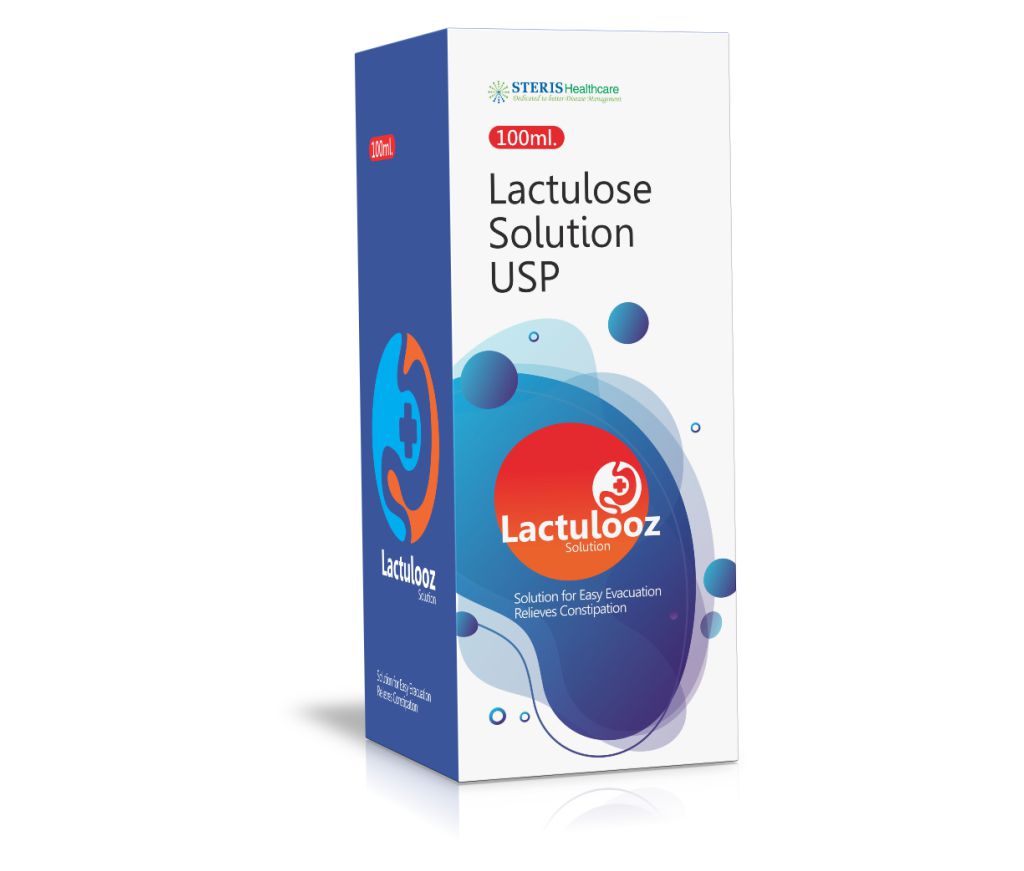


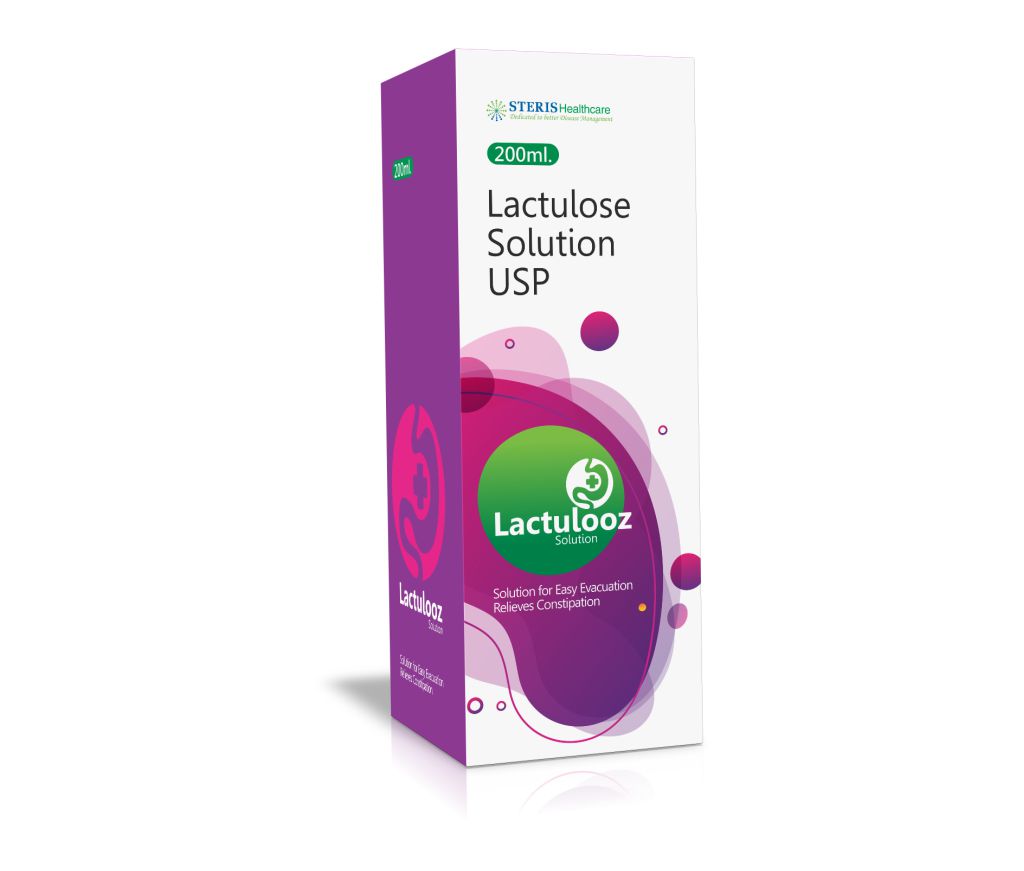
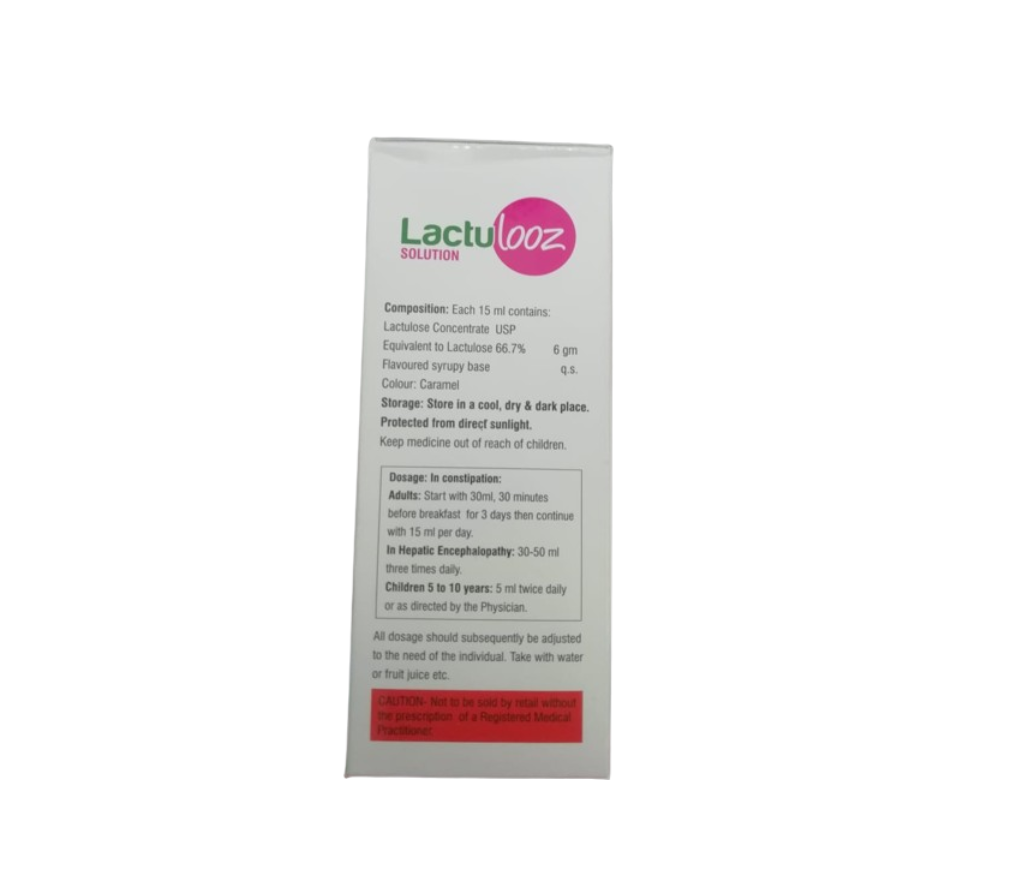
LACTULOOZ 200
 Item requires a valid prescription
Manufactured By Steris Healthcare Pvt Ltd
Composition Lactulose (3.33)/10ml
Rs 250.26
MRP Rs 258.00
(3% OFF)
Includes all taxes
Package SIZE
( For 200 ml )

100% Authentic
Products

Free
Shipping*

Products
Return Policy
Description:
Lactulose solution USP is a liquid medicine containing lactulose, a synthetic disaccharide that acts primarily in the colon. USP indicates that the product conforms to applicable United States Pharmacopeia standards for identity, strength, quality, and purity.
A commonly labeled formulation contains 10 g of lactulose in every 15 mL of solution. However, concentrations, inactive ingredients, flavoring, pack sizes, and labeling can differ between manufacturers, so buyers should always check the actual product label. Current DailyMed labeling confirms lactulose solution USP products at 10 g/15 mL and describes both their laxative action and use in portal-systemic encephalopathy.
Lactulose is poorly absorbed from the gastrointestinal tract. It reaches the colon largely unchanged, where intestinal bacteria break it down into acids. This increases osmotic pressure and draws water into the stool, helping soften bowel movements. Depending on intestinal transit, the laxative effect may take 24 to 48 hours.
Lactulose Solution USP Uses
People commonly search for “lactulose solution USP uses” because lactulose has more than one important clinical application.
1. Treatment of constipation
Lactulose is used as an osmotic laxative for constipation. It increases the water content of stool, making stools softer and easier to pass. Current labeling specifically identifies lactulose solution as a treatment for constipation and reports that it can increase bowel-movement frequency in people with chronic constipation.
It may be considered when lifestyle measures alone, such as adequate fluid intake and dietary fiber, are insufficient or when a healthcare professional recommends an osmotic laxative.
2. Prevention and treatment of hepatic encephalopathy
Lactulose also has an important specialist use in portal-systemic encephalopathy, commonly referred to as hepatic encephalopathy. In this setting, its action is different from simply relieving constipation.
Lactulose acidifies colonic contents and promotes conversion of ammonia to ammonium, reducing ammonia absorption. The laxative effect then helps remove the trapped ammonium from the bowel. Current labeling identifies lactulose for prevention and treatment of portal-systemic encephalopathy, including severe stages.
This use requires medical supervision because hepatic encephalopathy is a serious complication of liver disease.
How Does Lactulose Solution Work?
Lactulose is not significantly digested or absorbed in the upper gastrointestinal tract. Once it reaches the colon, bacteria metabolize it into smaller organic acids.
For constipation, this process:
-
Increases osmotic pressure in the colon.
-
Increases stool water content.
-
Softens hard stool.
-
Promotes bowel movement.
The effect is not usually immediate. Current prescribing information states that 24–48 hours may be required to produce the desired bowel movement.
For hepatic encephalopathy, the acidification of the colon helps retain ammonia as ammonium, reducing its absorption and helping lower blood ammonia levels. DailyMed labeling reports that lactulose therapy reduced blood ammonia concentrations by approximately 25% to 50% in controlled studies of portal-systemic encephalopathy.
Key Benefits of Lactulose Solution USP
Helps relieve constipation
The principal benefit for constipation is softer stool and easier bowel movements. This can be particularly useful when hard or infrequent stools are associated with chronic constipation.
Works through the colon
Because lactulose reaches the colon largely unchanged, its laxative effect occurs locally in the large intestine rather than requiring substantial systemic absorption.
Can support bowel regularity
When correctly dosed, lactulose can increase bowel movements and help establish a softer stool consistency.
Important role in hepatic encephalopathy
For patients with appropriate liver-related indications, lactulose can help reduce ammonia absorption and is an established component of treatment for portal-systemic encephalopathy.
Available as an oral liquid
The liquid formulation can be useful for people who have difficulty swallowing tablets or capsules. However, the dose should be measured accurately using an appropriate measuring device rather than an ordinary household spoon.
Lactulose Solution USP Dosage: What Buyers Should Know
One of the most common search questions is “How much lactulose solution should I take?”
There is no single dose that is correct for everyone.
The appropriate amount depends on the indication, age, medical history, response to treatment, and the particular formulation. For hepatic encephalopathy, dosing is generally individualized to achieve the clinical treatment target specified by the prescriber. For constipation, the dose may also be adjusted according to stool response.
For example, one current DailyMed label for lactulose solution USP 10 g/15 mL gives a specific adult regimen for portal-systemic encephalopathy and describes adjustment to produce two or three soft stools daily. This is not a recommendation for self-treatment; it demonstrates why dosing should follow the indication and prescriber's instructions.
Do not increase the dose simply because the medicine has not worked immediately. Lactulose can take 24–48 hours to produce the desired bowel movement.
Lactulose Solution USP Side Effects
Lactulose is generally used as directed, but side effects can occur.
Common or possible side effects include:
-
Gas
-
Flatulence
-
Bloating
-
Abdominal discomfort
-
Abdominal cramps
-
Nausea
-
Vomiting
-
Diarrhea
Current labeling reports gas, abdominal discomfort, and cramping in approximately 20% of patients in the cited prescribing information. Excessive dosing can cause diarrhea and potentially lead to fluid loss, hypokalemia (low potassium), and hypernatremia (high sodium).
Why too much lactulose can be a problem
The objective is not necessarily to produce frequent watery diarrhea. Excessive bowel movements can cause dehydration and electrolyte abnormalities.
Contact a healthcare professional if severe or persistent diarrhea, significant abdominal pain, weakness, dizziness, or symptoms of dehydration develop.
Who Should Avoid or Use Lactulose Carefully?
Lactulose solution contains small amounts of sugars such as galactose and lactose, depending on the formulation. Current product labeling states that lactulose solution is contraindicated in patients who require a low-galactose diet.
Before using lactulose, discuss your medical history with your doctor or pharmacist if you have:
-
Diabetes
-
Significant electrolyte abnormalities
-
Severe gastrointestinal symptoms
-
Suspected intestinal obstruction
-
Galactose intolerance or a condition requiring a low-galactose diet
-
Chronic diarrhea
-
Significant kidney or liver-related medical issues
People being treated for hepatic encephalopathy require particular medical supervision because the underlying liver disease can be serious.
Lactulose and Diabetes
Because some lactulose formulations contain small quantities of other sugars, people with diabetes should check the product label and discuss its use with their healthcare professional.
This does not mean that every person with diabetes cannot use lactulose. Rather, the specific formulation, dose, dietary intake, and overall medical situation should be considered.
How to Take Lactulose Solution USP
Follow the instructions on your prescription or product label.
For oral use:
-
Measure the prescribed amount accurately.
-
Take it according to the recommended schedule.
-
If the taste is unpleasant, ask your pharmacist whether the specific product can be mixed with water, milk, or juice.
-
Maintain appropriate fluid intake unless your doctor has prescribed a fluid restriction.
-
Do not repeatedly increase the dose because bowel movement has not occurred immediately.
Some current product labeling notes that lactulose may be mixed with certain beverages to improve acceptability.
Buying Lactulose Solution USP: What Should You Check?
If your search intent is “buy lactulose solution USP,” do not choose a product based solely on the lowest advertised price.
Before purchasing, verify:
-
Active ingredient: Lactulose.
-
Strength/concentration: For example, 10 g/15 mL where applicable.
-
Dosage form: Oral solution or the formulation prescribed for you.
-
Manufacturer: Clearly identified on the packaging.
-
Batch number: Should be present and readable.
-
Expiry date: Do not purchase or use expired medicine.
-
Pack integrity: Avoid leaking, opened, or damaged bottles.
-
Storage instructions: Follow the manufacturer's label.
-
MRP and pack size: Compare like-for-like products.
-
Pharmacy authenticity: Purchase from a legitimate pharmacy.
A product described simply as “lactulose syrup” should not automatically be assumed to have the same concentration or inactive ingredients as every lactulose solution USP product.
Lactulose Solution USP Price and Online Buying
The price of lactulose solution can vary depending on the manufacturer, concentration, bottle size, location, pharmacy, taxes, and current pricing policies.
For a transactional purchase, compare the price per bottle and concentration, rather than comparing only the headline price. A larger bottle may have a higher total price but a lower cost per milliliter.
When buying online, check whether the seller identifies the manufacturer, formulation, batch, expiry, and applicable prescription requirements. Avoid websites making unrealistic claims such as “instant cure,” “zero side effects,” or guaranteed results.
Lactulose vs Other Laxatives
Lactulose is an osmotic laxative, but it is not interchangeable with every other constipation medicine.
Different laxatives have different mechanisms, onset times, dosing considerations, and safety profiles. A healthcare professional can recommend the most appropriate option based on the reason for constipation and the patient's medical history.
Lactulose may be particularly relevant when a clinician wants an osmotic laxative or when it is being used for hepatic encephalopathy.
E-E-A-T: Why Source Quality Matters for Lactulose Information
Health-related product content should be based on reliable regulatory and prescribing information rather than unsupported marketing claims.
Current DailyMed labeling provides detailed information about lactulose composition, mechanism, indications, contraindications, adverse reactions, and administration. Recent labeling revisions also demonstrate that product information can be updated, so buyers should check the current label for the exact product they receive.
A trustworthy product page should therefore:
-
Clearly state the active ingredient and concentration.
-
Separate constipation use from hepatic encephalopathy use.
-
Explain that dosage depends on the indication.
-
Discuss common and serious risks.
-
Avoid promising a guaranteed result.
-
Encourage buyers to verify packaging and expiry.
-
Use current product information instead of outdated claims.
Frequently Asked Questions
1. What is lactulose solution USP used for?
Lactulose solution USP is primarily used to treat constipation and, under medical supervision, to prevent and treat portal-systemic encephalopathy associated with liver disease. For constipation, it increases stool water and softens the stool; for hepatic encephalopathy, it helps reduce intestinal ammonia absorption.
2. How long does lactulose solution take to work?
For constipation, lactulose may take approximately 24 to 48 hours to produce the desired bowel movement because it must reach the colon and undergo bacterial metabolism.
3. What are the common side effects of lactulose solution USP?
The most common problems include gas, bloating, abdominal cramps, abdominal discomfort, nausea, and diarrhea. Excessive dosing can cause dehydration and electrolyte disturbances.
4. Can lactulose solution be taken every day?
It may be prescribed for regular or long-term use in certain conditions, but daily use should follow a healthcare professional's instructions. The appropriate dose depends on why it is being used and the patient's response.
5. Can I buy lactulose solution USP online?
Lactulose products may be available through online pharmacies, depending on local regulations and the specific product. Buy only from a legitimate pharmacy and verify the concentration, manufacturer, batch number, expiry date, packaging, and applicable prescription requirements.
6. Is lactulose solution the same as a regular laxative?
Lactulose is an osmotic laxative, but it also has a specific medical role in hepatic encephalopathy. It should not be considered interchangeable with every other laxative because different products work differently and have different safety considerations.
7. Can lactulose cause diarrhea?
Yes. Diarrhea can occur, particularly when the dose is too high. Excessive diarrhea can result in fluid and electrolyte loss, so persistent or severe diarrhea should be discussed with a healthcare professional.
8. Can lactulose be used for hepatic encephalopathy?
Yes. Lactulose is an established treatment for prevention and management of portal-systemic encephalopathy, including hepatic encephalopathy. The dosing and treatment target should be managed by a healthcare professional because this condition is associated with significant liver disease.
9. Does lactulose work immediately for constipation?
No. It generally does not provide immediate relief. Current labeling indicates that 24–48 hours may be required for the desired bowel movement.
Conclusion
Lactulose solution USP is a clinically established liquid medicine with two important applications: treatment of constipation and medically supervised prevention or treatment of portal-systemic encephalopathy. For constipation, lactulose reaches the colon and increases stool water, helping soften stools and promote bowel movements. For hepatic encephalopathy, it helps reduce intestinal ammonia absorption through acidification of colonic contents.
For buyers, the most important considerations are the exact lactulose concentration, manufacturer, bottle size, batch number, expiry date, packaging condition, and legitimate pharmacy source. Do not assume that every lactulose syrup or solution has the same strength.
The key takeaway is simple: lactulose solution USP can be effective when used for the right indication and at the right dose, but excessive use can cause diarrhea, dehydration, and electrolyte disturbances. Always follow the product label or your healthcare professional's instructions, especially when lactulose is being used for liver-related complications.
Available Substitutes