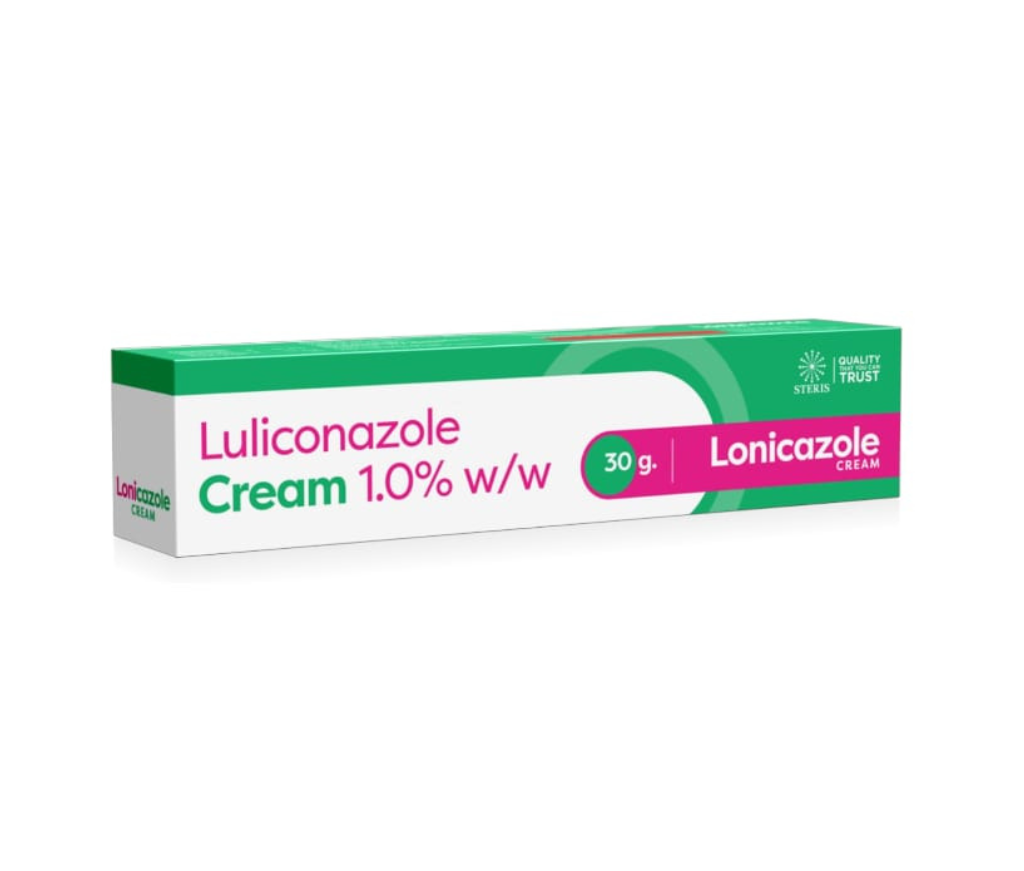


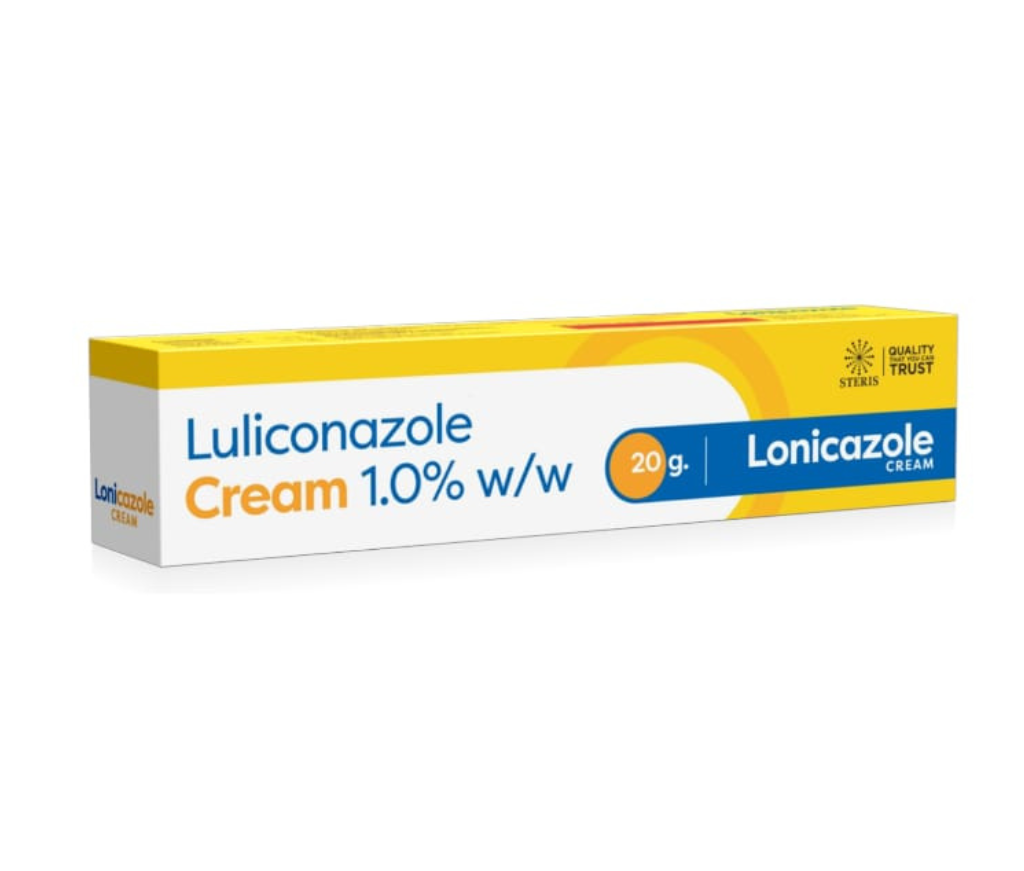
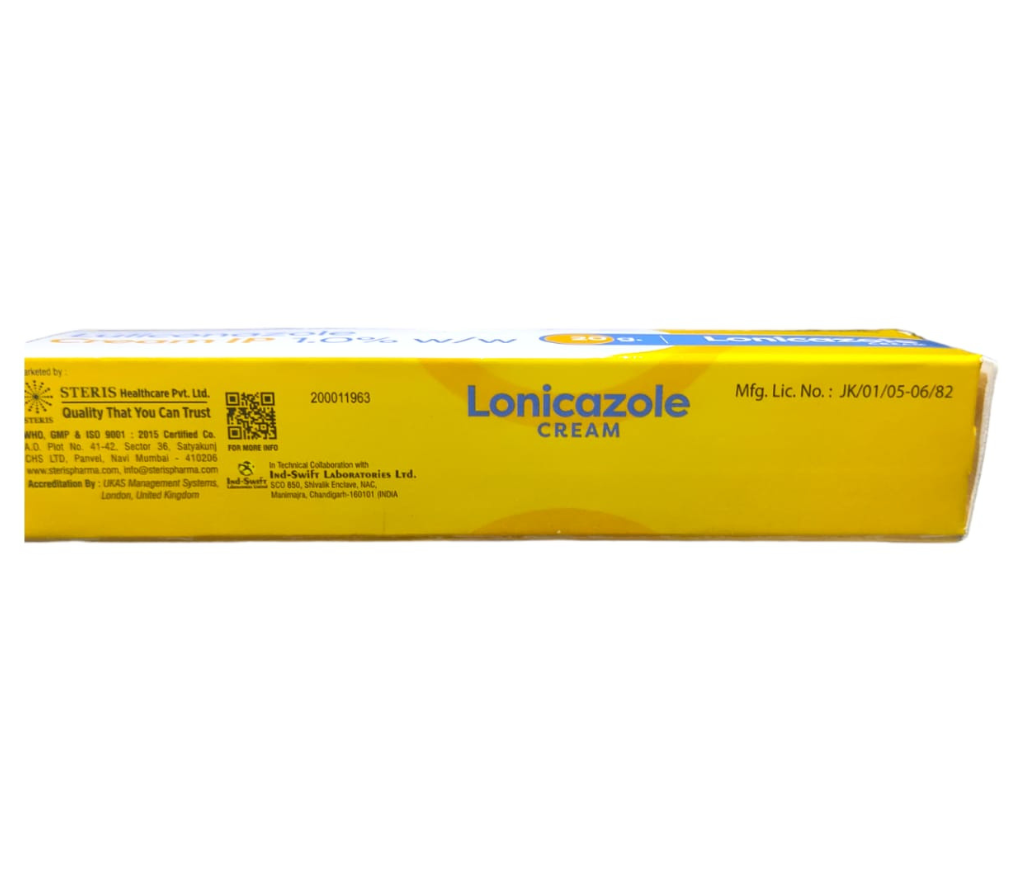
LONICAZOLE 20 (Gram)
Manufactured By Steris Healthcare Pvt Ltd
Composition Luliconazole Cream 1.0% w/w
Rs 124.03
MRP Rs 177.19
(30% OFF)
Includes all taxes
Package SIZE
( For 20g )

100% Authentic
Products

Free
Shipping*

Products
Return Policy
Description:
Luliconazole Cream is a prescription topical antifungal medicine used to treat common fungal skin infections such as ringworm (tinea corporis), athlete's foot (tinea pedis), and jock itch (tinea cruris). Dermatologists often recommend this medicine because it offers effective treatment with the convenience of once-daily application. Luliconazole Cream is a topical antifungal medication used to treat superficial fungal skin infections, including ringworm (tinea corporis), jock itch (tinea cruris), and athlete’s foot (tinea pedis). It works by stopping fungal growth and helps relieve symptoms such as itching, redness, irritation, and skin scaling.
Fungal skin infections can cause itching, redness, burning, scaling, peeling, and discomfort that may interfere with daily activities. If left untreated, these infections may spread to nearby skin or recur. Luliconazole Cream works by stopping fungal growth at the source, helping relieve symptoms while supporting healthy skin recovery.
Whether you have recently been diagnosed with a fungal infection or are looking for reliable information before starting treatment, this guide explains everything you need to know about Luliconazole Cream, including its uses, benefits, dosage, precautions, possible side effects, and frequently asked questions.
What is luliconazole cream?
Luliconazole Cream is a topical antifungal medication belonging to the imidazole class of antifungal drugs. It is commonly available as Luliconazole 1% cream and is intended for external use only.
The medicine is designed to treat fungal infections affecting the outer layer of the skin. Unlike antibiotics, which target bacteria, luliconazole specifically targets fungi responsible for common skin infections. It is effective against many dermatophytes—the fungi that commonly cause ringworm, athlete's foot, and jock itch.
Because of its strong antifungal activity, convenient once-daily application, and good tolerability, Luliconazole cream has become a widely prescribed option for superficial fungal skin infections.
How Does Luliconazole Cream Work?
Luliconazole works by blocking the production of ergosterol, an essential component of the fungal cell membrane.
Without ergosterol:
- The fungal cell membrane becomes weak.
- Fungal growth stops.
- The fungus gradually dies.
- Redness and itching improve.
- Healthy skin begins to recover.
Since the medicine acts directly on the affected skin, only a very small amount is absorbed into the bloodstream when used as directed.
Uses of Luliconazole Cream
Doctors commonly prescribe Luliconazole Cream for treating several fungal skin conditions.
1. Ringworm
Ringworm is a contagious fungal infection that appears as circular, itchy, red patches with clearer skin in the center. Luliconazole Cream helps eliminate the fungus and reduces inflammation, allowing the skin to heal.
2. Athlete's Foot
Athlete's foot affects the skin between the toes and sometimes the soles of the feet. Common symptoms include itching, burning, cracking, peeling, and redness. Regular application of Luliconazole Cream helps clear the infection and relieve discomfort.
3. Jock Itch
Jock itch develops in warm, moist areas such as the groin and inner thighs. It causes itching, redness, and irritation. Luliconazole Cream targets the fungus responsible for the infection and promotes healing.
4. Other Superficial Fungal Skin Infections
Healthcare professionals may prescribe Luliconazole Cream for other superficial fungal skin infections caused by susceptible fungi, depending on the diagnosis.
Key Benefits of Luliconazole Cream
Luliconazole Cream offers several important advantages over many traditional antifungal creams.
Fast Relief from Symptoms
Many people notice improvement in itching, redness, and irritation within the first week of treatment.
Once-Daily Application
One of the biggest advantages is its convenient once-daily use, making it easier to follow the prescribed treatment plan.
Effective Against Common Fungal Infections
Luliconazole Cream is active against fungi responsible for ringworm, athlete's foot, and jock itch, making it a versatile treatment option.
Short Treatment Duration
For many infections, the recommended treatment period is shorter than with some older antifungal creams, depending on the infection and medical advice.
Helps Reduce Recurrence
Completing the prescribed course may help lower the chance of the infection returning.
Well Tolerated
Most users tolerate the cream well, with only mild local skin reactions reported in some cases.
How to Apply Luliconazole Cream
Using the cream correctly improves treatment success.
Follow these steps:
- Wash the affected area gently with mild soap and water.
- Dry the skin completely before applying the medicine.
- Apply a thin layer over the affected skin and a small area around it.
- Rub it in gently until absorbed.
- Wash your hands after application unless your hands are being treated.
- Use the medicine exactly as prescribed.
- Complete the full treatment course, even if symptoms improve early.
Avoid covering the treated area with airtight dressings unless instructed by your healthcare provider.
Dosage
The dosage depends on the type of fungal infection and your healthcare provider's instructions.
General recommendations include:
- Apply once daily unless directed otherwise.
- Use only the amount needed to cover the affected area.
- Do not apply more often than prescribed.
- If you miss a dose, apply it as soon as you remember. Skip it if it is almost time for your next application. Do not use extra cream to make up for a missed dose.
Side Effects of Luliconazole Cream
Like all medications, Luliconazole Cream may cause side effects, although most people use it without serious problems. The majority of side effects are mild and temporary.
Common Side Effects
You may experience:
- Mild burning or stinging after application
- Itching at the application site
- Skin redness
- Dryness or peeling of the skin
- Mild irritation
These effects often disappear as your skin adjusts to the medication. If they persist or become severe, contact your healthcare provider.
Rare Side Effects
Although uncommon, some people may develop:
- Skin rash
- Swelling
- Blistering
- Severe allergic reactions
- Intense itching
Stop using the cream and seek immediate medical attention if you notice signs of a serious allergic reaction, such as swelling of the face, lips, tongue, or difficulty breathing.
Precautions Before Using Luliconazole Cream
To ensure safe and effective treatment, keep the following precautions in mind:
- Use the cream only on the skin.
- Avoid contact with the eyes, mouth, nose, or other mucous membranes.
- Do not apply to open wounds unless advised by a healthcare professional.
- Inform your doctor if you have a known allergy to antifungal medicines.
- Tell your healthcare provider if you are pregnant, planning pregnancy, or breastfeeding before starting treatment.
- Do not stop treatment early, even if symptoms improve, unless advised by your doctor.
Following these precautions helps maximize the effectiveness of the treatment while reducing the risk of recurrence.
Drug Interactions
Because Luliconazole Cream is applied topically, it has a low potential for interactions with oral medications. However, you should still inform your healthcare provider if you:
- Use other antifungal creams
- Apply corticosteroid creams to the same area
- Use medicated skin lotions or ointments
- Are receiving treatment for chronic skin disorders
Avoid using multiple topical medicines on the same area unless instructed by your healthcare provider.
Storage Instructions
Proper storage helps maintain the medicine's effectiveness.
- Store at room temperature.
- Keep away from excessive heat and direct sunlight.
- Do not freeze.
- Keep the tube tightly closed after each use.
- Keep out of reach of children and pets.
- Do not use the cream after its expiry date.
Tips for Faster Recovery
To achieve the best results from Luliconazole Cream, follow these practical tips:
- Keep the affected skin clean and dry.
- Wear loose-fitting, breathable clothing.
- Change socks and undergarments daily if treating athlete's foot or jock itch.
- Avoid sharing towels, shoes, or clothing.
- Wash hands before and after applying the cream.
- Complete the full treatment course, even if symptoms improve.
- Maintain good personal hygiene to reduce the risk of reinfection.
These habits can improve treatment success and help prevent fungal infections from returning.
Why Choose Luliconazole Cream?
Healthcare professionals often recommend Luliconazole Cream because it offers several advantages:
- Once-daily application for convenience
- Effective treatment for common fungal infections
- Fast relief from itching and redness
- Good skin tolerability
- Short treatment duration for many infections
- Easy topical application with minimal systemic absorption
These benefits make it a reliable option for treating superficial fungal skin infections when used according to medical advice.
Conclusion
Luliconazole Cream is a trusted topical antifungal medication that effectively treats common fungal skin infections such as ringworm, athlete's foot, and jock itch. Its once-daily application, proven antifungal action, and generally good tolerability make it a convenient treatment choice for many patients.
For the best outcome, use the cream exactly as prescribed, maintain proper hygiene, and complete the entire treatment course. If symptoms do not improve or worsen, consult a qualified healthcare professional for further evaluation. With proper use and preventive care, Luliconazole Cream can help restore healthy skin and reduce the risk of recurring fungal infections.
Frequently Asked Questions
1. What is Luliconazole Cream used for?
It is used to treat fungal skin infections such as ringworm, athlete's foot, and jock itch.
2. How does Luliconazole Cream work?
It stops the growth of fungi by disrupting the formation of the fungal cell membrane.
3. How often should I apply Luliconazole Cream?
Most patients apply it once daily, or as directed by their healthcare provider.
4. Is Luliconazole Cream effective for ringworm?
Yes, it is commonly prescribed to treat ringworm caused by dermatophyte fungi.
5. Can Luliconazole Cream treat athlete's foot?
Yes. It helps relieve itching, burning, and scaling associated with athlete's foot.
6. Can I stop using the cream when symptoms improve?
No. Complete the full treatment course unless your healthcare provider advises otherwise.
7. What happens if I miss a dose?
Apply it as soon as you remember. If it's nearly time for the next dose, skip the missed application.
8. Can children use Luliconazole Cream?
Use in children should follow the product labeling and the advice of a healthcare professional.
9. Is Luliconazole Cream safe during pregnancy?
Consult your healthcare provider before using it during pregnancy or breastfeeding.
10. Can I use Luliconazole Cream on my face?
Only if your healthcare provider specifically recommends it.
11. Does Luliconazole Cream treat nail fungus?
It is intended for skin infections. Nail fungal infections often require different treatment approaches.
12. How long does Luliconazole Cream take to work?
Many people notice symptom improvement within the first week, but complete the prescribed treatment.
13. Can I use moisturizers with Luliconazole Cream?
Ask your healthcare provider before applying other products to the treated area.
14. What are the most common side effects?
Mild burning, redness, itching, dryness, and skin irritation at the application site.
15. How can I prevent fungal infections from coming back?
Keep the skin clean and dry, avoid sharing personal items, wear breathable clothing, and complete the full treatment course.
Available Substitutes