


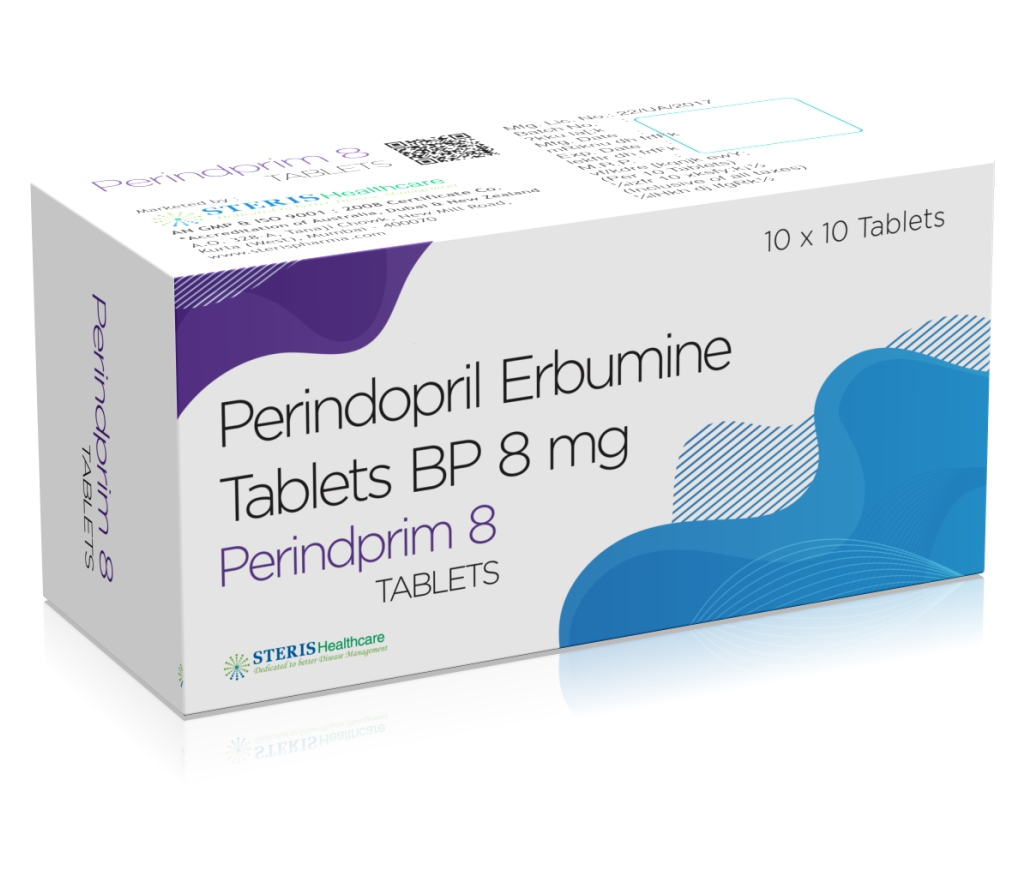
PERINDPRIM 8
 Item requires a valid prescription
Manufactured By Steris Healthcare Pvt Ltd
Composition Perindopril Erbumine BP(8mg)
Rs 144.59
MRP Rs 149.06
(3% OFF)
Includes all taxes
Package SIZE
( For 10 Tablet )

100% Authentic
Products

Free
Shipping*

Products
Return Policy
Description:
Perindopril erbumine tablets are prescription medicines belonging to a group of drugs called angiotensin-converting enzyme (ACE) inhibitors. They are primarily used to treat high blood pressure (hypertension) and, depending on the prescribing indication and country, may also be used for certain cardiovascular conditions, including stable coronary artery disease and heart failure.
Perindopril works by reducing the formation of substances that cause blood vessels to tighten. As the blood vessels relax and widen, blood can flow more easily and blood pressure can decrease.
If you are searching for perindopril erbumine tablets, it is important to understand that this is a prescription medicine and should be taken only according to a healthcare professional's instructions. The appropriate strength and dose depend on the patient's condition, kidney function, blood pressure, other medicines, and individual risk factors.
What Are Perindopril Erbumine Tablets Used For?
The main use of perindopril erbumine tablets is the treatment of essential hypertension, commonly known as high blood pressure. The current U.S. prescribing information also lists treatment of patients with stable coronary artery disease to reduce the risk of cardiovascular mortality or nonfatal myocardial infarction.
Perindopril is also used clinically for heart failure in some healthcare settings. NHS guidance lists perindopril as a medicine used for high blood pressure and heart failure and notes that it may also be prescribed after a heart attack. The exact indication depends on the patient's circumstances and local prescribing guidance.
Common uses include:
-
Managing high blood pressure
-
Supporting cardiovascular risk reduction in appropriate patients
-
Treatment of certain patients with stable coronary artery disease
-
Supporting treatment of heart failure when prescribed for that purpose
-
Cardiovascular protection in selected patients following appropriate medical assessment
High blood pressure may not cause noticeable symptoms, but over time it can increase the risk of heart disease, stroke, kidney disease, and other complications. Effective blood-pressure management is therefore an important part of long-term cardiovascular care.
How Does Perindopril Erbumine Work?
Perindopril is an ACE inhibitor.
The renin-angiotensin system plays an important role in regulating blood pressure and fluid balance. Angiotensin-converting enzyme contributes to the formation of angiotensin II, a substance that causes blood vessels to constrict.
By inhibiting ACE, perindopril reduces the formation of angiotensin II. This allows blood vessels to relax and widen, helping lower blood pressure and reducing the workload on the heart.
Perindopril is converted in the body to its active form, perindoprilat. The resulting ACE inhibition contributes to the medicine's blood-pressure-lowering and cardiovascular effects.
Key Benefits of Perindopril Erbumine Tablets
1. Helps Lower High Blood Pressure
The primary benefit of perindopril is its ability to lower elevated blood pressure. Lowering blood pressure can reduce the strain placed on the heart and blood vessels.
Because hypertension often has no obvious symptoms, you may not feel a noticeable difference after taking the medicine even when it is working. This is why regular blood-pressure monitoring and consistent treatment are important.
2. Supports Cardiovascular Health
For appropriately selected patients, perindopril can contribute to cardiovascular risk reduction. U.S. prescribing information specifically indicates perindopril erbumine for patients with stable coronary artery disease to reduce the risk of cardiovascular mortality or nonfatal myocardial infarction.
3. May Reduce the Workload on the Heart
By relaxing blood vessels and lowering blood pressure, ACE inhibition can make it easier for the heart to pump blood through the body.
Perindopril is also used for heart failure in clinical practice, although the exact indication and regimen should be determined by the treating healthcare professional.
4. Convenient Once-Daily Treatment for Many Patients
Perindopril is commonly taken once daily, although the prescribed regimen can vary. NHS guidance notes that the dose is selected according to the reason for treatment and may be increased gradually.
The medicine should be taken consistently at approximately the same time each day according to the prescription.
Perindopril Erbumine Dosage
There is no single dose that is appropriate for everyone.
The prescribed dose can depend on the following:
-
The condition being treated
-
Blood-pressure response
-
Kidney function
-
Age and overall health
-
Other medicines being taken
-
Previous treatment with blood-pressure medicines
-
Potassium levels
-
Individual tolerance
Healthcare professionals may start treatment at a lower dose and increase it gradually when appropriate. NHS guidance explains that blood pressure, kidney function, and potassium may be assessed when determining treatment.
Perindopril erbumine products may be available in different strengths. For example, U.S. labeling includes 4 mg and 8 mg tablets, while other products and markets may have different presentations.
Do not change your dose, take an extra tablet, or stop treatment without speaking with your doctor or pharmacist.
How to Take Perindopril Erbumine Tablets
Take perindopril exactly as prescribed.
The tablet should generally be swallowed with water. Depending on the prescription and product instructions, it may be taken at a particular time in relation to food. NHS guidance recommends following the specific directions provided for your medicine.
When beginning treatment, some people experience dizziness because blood pressure may fall. For this reason, a healthcare professional may recommend taking the first dose at bedtime.
Do not discontinue long-term treatment simply because your blood pressure has improved. Perindopril controls hypertension but does not cure the underlying tendency toward high blood pressure. Stopping treatment without medical advice can allow blood pressure to rise again.
Common Side Effects of Perindopril
Like other medicines, perindopril can cause side effects, although not everyone experiences them.
Commonly reported effects include:
-
Dry or persistent cough
-
Dizziness
-
Lightheadedness
-
Headache
-
Feeling weak or tired
-
Low blood pressure, particularly after starting treatment or increasing the dose
NHS information identifies dry cough and dizziness among common side effects and notes that some effects may improve as the body becomes accustomed to treatment.
If a cough becomes persistent, troublesome, or interferes with sleep, contact your healthcare professional. An alternative medicine may sometimes be considered.
Serious Side Effects and Warning Signs
Some adverse reactions require prompt medical attention.
One important ACE-inhibitor reaction is angioedema, which can cause sudden swelling of the lips, mouth, tongue, or throat and may interfere with breathing. This can be a medical emergency.
Seek urgent medical help if you experience:
-
Sudden swelling of the face, lips, tongue or throat
-
Difficulty breathing or swallowing
-
Severe weakness or fainting
-
Chest pain or significant breathing difficulty
-
Symptoms suggesting a severe allergic reaction
Perindopril can also affect kidney function and potassium levels in some patients, which is why healthcare professionals may use blood tests during treatment.
Perindopril and Pregnancy
Perindopril should not be used during pregnancy.
The FDA/DailyMed prescribing information carries a boxed warning concerning fetal toxicity and states that perindopril should be discontinued as soon as possible when pregnancy is detected. MedlinePlus likewise warns that perindopril can harm the fetus.
If you are pregnant, planning a pregnancy, or think you may be pregnant, contact your healthcare professional promptly.
Perindopril Drug Interactions
Perindopril can interact with other medicines and supplements.
Important examples include medicines or products that can increase potassium, such as potassium supplements and certain potassium-sparing diuretics. Other medicines that may require review include some diuretics, lithium, diabetes medicines, allopurinol, and other treatments affecting blood pressure or kidney function.
Tell your doctor or pharmacist about all prescription medicines, over-the-counter medicines, vitamins, and herbal supplements you take.
Do not assume that a supplement is automatically safe because it is marketed as natural.
Who May Need Extra Caution?
Before taking perindopril, tell your healthcare professional if you have:
-
Kidney disease
-
Liver disease
-
Heart problems
-
Low blood pressure
-
Diabetes
-
A history of angioedema
-
Previous allergic reactions to ACE inhibitors
-
Recent severe vomiting or diarrhea
-
A planned major operation or general anesthetic
-
A condition requiring dialysis or blood filtration
NHS guidance specifically recommends discussing these conditions with a doctor before treatment.
What If You Miss a Dose?
If you forget a dose, follow the instructions supplied with your medicine or ask your pharmacist.
NHS guidance states that if you remember during the same day, you can generally take the missed dose, but if it is already the following day, the missed dose should be skipped rather than doubled.
Never take two doses together to compensate for a missed tablet unless specifically instructed by your healthcare professional.
Can You Buy Perindopril Erbumine Tablets Online?
Perindopril erbumine is a prescription medicine. Availability, approved strengths, prescribing requirements, and authorized dispensing channels vary by country.
For safety, obtain it through a licensed healthcare professional and legitimate pharmacy or dispensing service. Avoid purchasing prescription medicines from unverified websites, particularly when the product's manufacturer, strength, storage conditions, or authenticity cannot be confirmed.
Conclusion: Perindopril Erbumine Tablets at a Glance
Perindopril erbumine tablets are ACE inhibitor medicines primarily used to manage hypertension and, where clinically indicated, certain cardiovascular conditions. They work by relaxing blood vessels, lowering blood pressure, and reducing cardiovascular strain.
The major benefits include effective blood-pressure control and cardiovascular risk reduction in appropriately selected patients. Common side effects include dizziness and a persistent dry cough, while rare but serious reactions such as angioedema require urgent medical attention.
Because perindopril can affect blood pressure, kidney function, and potassium levels—and because it can cause serious fetal harm during pregnancy—it should be used only under appropriate medical supervision.
Frequently Asked Questions
1. What are perindopril erbumine tablets used for?
They are primarily used to treat high blood pressure and may also be prescribed for certain cardiovascular conditions, depending on the indication and local prescribing guidance.
2. Is perindopril erbumine a blood pressure medicine?
Yes. It is an ACE inhibitor used to lower elevated blood pressure.
3. How does perindopril lower blood pressure?
It inhibits ACE, reducing the formation of angiotensin II, which helps blood vessels relax and widen.
4. Is perindopril erbumine an ACE inhibitor?
Yes. Perindopril belongs to the angiotensin-converting enzyme inhibitor class.
5. What are the common side effects of perindopril?
Common effects include dizziness and a persistent dry cough.
6. Does perindopril cause a dry cough?
Yes. A persistent, dry cough is a recognized side effect of ACE inhibitors, including perindopril.
7. Can perindopril cause dizziness?
Yes. Dizziness or lightheadedness can occur, particularly when treatment starts or the dose is increased.
8. Can I stop taking perindopril when my blood pressure is normal?
Do not stop it without medical advice. A normal reading may mean the treatment is working. Stopping treatment can cause blood pressure to rise again.
9. Can I take perindopril during pregnancy?
No. Perindopril can harm the developing fetus and should not be used during pregnancy. Contact your healthcare professional immediately if pregnancy occurs.
10. Does perindopril affect the kidneys?
It can affect kidney function in some people. Your healthcare professional may monitor kidney function and potassium levels during treatment.
11. Can perindopril increase potassium levels?
Yes, it can increase potassium in some patients. Tell your doctor about potassium supplements and other medicines that may raise potassium.
12. Can I take perindopril with other medicines?
Some medicines can interact with perindopril. Always tell your doctor or pharmacist about every medicine and supplement you use.
13. How often is perindopril taken?
It is commonly prescribed once daily, but the exact schedule depends on the patient's condition and prescription.
14. How long does perindopril take to work?
It begins lowering blood pressure within a few hours, while the full effect may take several weeks.
15. Can I take perindopril if I have kidney disease?
Some people with kidney disease can take it, but kidney function must be considered by the prescriber and may require monitoring.
16. What happens if I take too much perindopril?
An overdose can cause excessive blood-pressure reduction, dizziness, and other symptoms. Seek urgent medical advice if you take more than prescribed.
17. What should I do if I miss a perindopril dose?
Follow the medication instructions. Generally, a missed dose may be taken when remembered the same day, but it should not be doubled if the next dose is due.
18. Is perindopril available by prescription?
Yes. Perindopril is a prescription medicine, and dispensing requirements depend on the country.
19. Can I drink alcohol while taking perindopril?
Alcohol may increase the blood-pressure-lowering effect and make dizziness or lightheadedness more likely. Discuss alcohol use with your healthcare professional.
20. What should I do if perindopril causes swelling of my lips or tongue?
Sudden swelling of the lips, mouth, tongue, or throat may indicate angioedema and requires urgent medical attention, particularly if breathing or swallowing is affected.