


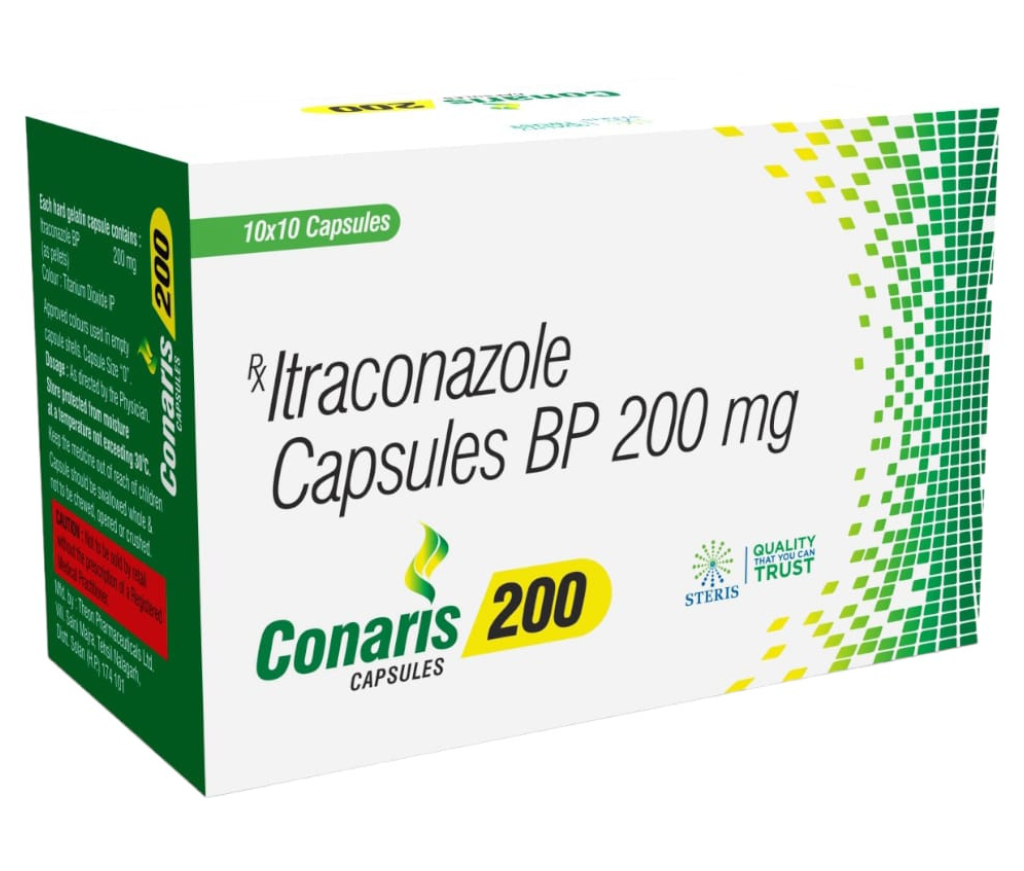
Itraconazole 200 | CONARIS 200
 Item requires a valid prescription
Manufactured By Steris Healthcare Pvt Ltd
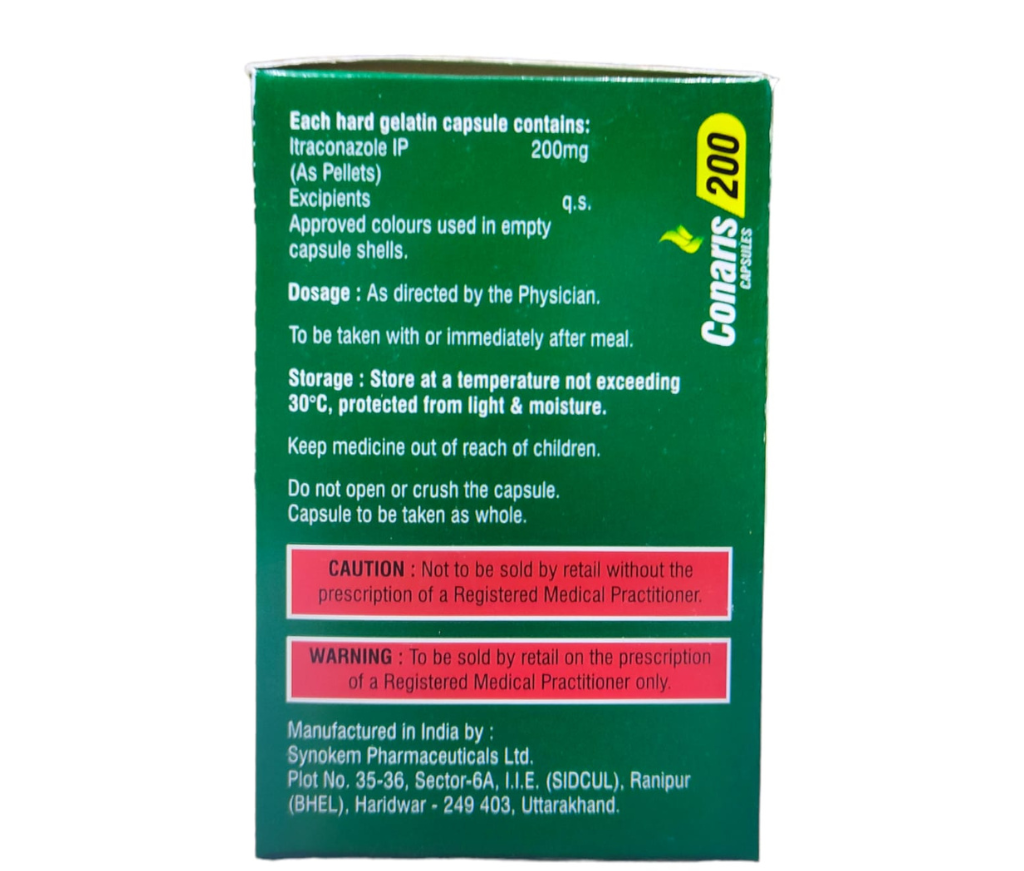
Composition Itraconazole 200 mg
Rs 129.28
MRP Rs 184.69
(30% OFF)
Includes all taxes
Package SIZE
( For 10 Capsule )

100% Authentic
Products

Free
Shipping*

Products
Return Policy
Description:
Itraconazole 200 mg is a doctor-prescribed oral antifungal for serious fungal and yeast infections, ringworm, and nail infections.It works by stopping fungal cell membrane formation, which kills or halts fungal growth. Itraconazole 200 mg is usually taken once or twice daily with food for better absorption, and the treatment duration depends on the infection type and severity. Common side effects include nausea, stomach upset, headache, and rash; rare but serious effects involve liver or heart function changes. It is a prescription-only medicine .
What Is Itraconazole 200mg?
Itraconazole is a broad-spectrum triazole antifungal agent used worldwide to manage both superficial (skin, nail) and systemic (lung, blood) fungal infections. The 200 mg strength is one of the most commonly prescribed doses because it balances effective antifungal blood levels with manageable side effects for most adult patients.
Unlike topical antifungal creams that only act on the surface, Itraconazole works systemically — meaning it circulates through the bloodstream and reaches fungal infections that live deep in nail beds, lung tissue, or other internal sites where topical treatment simply cannot reach.
Clinical Indications Table
| Condition | Common Dosage Pattern | Typical Duration |
|---|---|---|
| Onychomycosis (fungal nail infection) | 200 mg once daily or pulse therapy (200 mg twice daily for 1 week/month) | 6–12 weeks (fingernails), 3–4 months (toenails) |
| Tinea corporis / Tinea cruris (ringworm/jock itch) | 100 mg once daily | 1–2 weeks |
| Oropharyngeal candidiasis (oral thrush) | 200 mg once daily | 1–2 weeks |
| Vaginal candidiasis | 200 mg twice daily | 1 day |
| Histoplasmosis | 200 mg once–twice daily | 6–12 months |
| Blastomycosis | 200 mg once–twice daily | 6–12 months |
| Invasive Aspergillosis (where alternatives fail) | 200 mg twice daily | As advised by specialist |
| Pityriasis versicolor | 200 mg once daily | 1 week |
How Itraconazole 200mg Works
Itraconazole belongs to the triazole class of antifungals. Fungal cells depend on a compound called ergosterol to build and maintain their cell membranes — similar to how human cells rely on cholesterol. Itraconazole blocks an enzyme called lanosterol 14-alpha-demethylase, which fungi need to produce ergosterol.
Without enough ergosterol, the fungal cell membrane becomes leaky, unstable, and unable to function properly. This either kills the fungus outright (fungicidal effect) or stops it from multiplying (fungistatic effect), allowing the body's immune system to clear the remaining infection. Because human cells use a different enzyme pathway for cholesterol production, Itraconazole is selective toward fungal cells — though at high doses it can still interact with certain human enzymes, which is why liver monitoring matters during extended treatment.
Key Benefits of Itraconazole 200mg
- Broad-spectrum coverage — effective against dermatophytes, yeasts (Candida), and dimorphic fungi (Histoplasma, Blastomyces).
- Reaches deep tissue infections — unlike topical treatments, it treats nail bed, lung, and systemic infections.
- Convenient oral dosing — once or twice daily capsules instead of injections for most indications.
- Pulse-dose flexibility — for nail infections, short "pulse therapy" cycles can reduce total drug exposure while remaining effective.
- Long-acting tissue retention — Itraconazole accumulates in skin and nail keratin, so therapeutic effects can continue for weeks after the last dose.
- Established clinical track record — decades of use in treating both common and rare fungal diseases.
Dosage Guidelines
- Itraconazole 200 mg capsules should be taken immediately after a full meal — food significantly improves absorption.
- Swallow capsules whole; do not crush or chew.
- Dosage frequency (once daily vs. twice daily) depends entirely on the type and severity of infection — this must be determined by your treating doctor.
- Do not stop treatment early even if symptoms improve, especially for nail or systemic infections, as fungi can regrow and become resistant.
- Missed dose: take as soon as remembered, but skip if it's almost time for the next dose — never double up.
- Avoid taking with antacids, proton pump inhibitors, or H2 blockers without medical advice, as these reduce absorption.
Common Side Effects
- Nausea or upset stomach
- Headache
- Dizziness
- Diarrhea or constipation
- Mild skin rash
- Fatigue
Serious Side Effects
- Signs of liver problems: yellowing of skin/eyes (jaundice), dark urine, severe fatigue, loss of appetite
- Signs of heart failure: swelling in legs/ankles, sudden weight gain, shortness of breath — particularly relevant in patients with pre-existing heart conditions
- Severe allergic reaction: swelling of face/lips/tongue, difficulty breathing, severe rash
- Hearing changes or ringing in ears (rare)
- Numbness or tingling (peripheral neuropathy) with prolonged use
Substitutes / Alternative Antifungals Comparison
| Medicine | Class | Typical Use Case | Key Difference vs. Itraconazole |
|---|---|---|---|
| Fluconazole | Triazole | Vaginal/oral candidiasis, systemic yeast infections | Better CNS penetration; less effective vs. molds/Aspergillus |
| Terbinafine | Allylamine | Nail & skin dermatophyte infections | More fungicidal for nail infections; different liver interaction profile |
| Voriconazole | Triazole | Invasive aspergillosis (first-line) | Stronger mold coverage; more drug interactions |
| Ketoconazole | Imidazole | Topical/limited oral use | Higher hepatotoxicity risk; largely replaced by triazoles |
Precautions Before Taking Itraconazole 200mg
- Inform your doctor if you have any history of heart failure or cardiac disease — Itraconazole carries specific cardiac safety warnings.
- Disclose all current medications, including OTC drugs and supplements, due to a high potential for drug–drug interactions (statins, certain blood thinners, benzodiazepines, calcium channel blockers, and more).
- Liver function tests may be recommended before and during prolonged treatment.
- Not recommended during pregnancy unless the treating doctor determines the benefit outweighs the risk.
- Breastfeeding mothers should consult their doctor, as the drug passes into breast milk.
- Avoid alcohol during treatment, as it may increase liver strain.
- Inform your doctor of any known allergy to azole antifungals before starting treatment.
AI Mode Summary
Itraconazole 200 mg is a prescription antifungal capsule used to treat fungal infections affecting the nails, skin, mouth, vagina, and lungs. It is commonly prescribed for onychomycosis, ringworm, oral thrush, and systemic fungal diseases such as histoplasmosis. The medicine works by disrupting the fungal cell membrane, taken with food, typically once or twice daily depending on the condition being treated. While generally well tolerated, Itraconazole requires medical supervision because of potential liver and heart-related side effects, and it interacts with several common medications. It should never be taken without a doctor's prescription, and treatment duration should always be completed as advised, even if symptoms improve early.
Conclusion
Itraconazole 200 mg remains one of the most versatile and widely prescribed antifungal medicines available today, valued for its ability to treat both superficial skin and nail infections as well as deeper systemic fungal diseases that are otherwise difficult to manage. Its convenient oral dosing, strong tissue penetration, and broad-spectrum activity make it a preferred choice across dermatology, respiratory medicine, and infectious disease practice. That said, its effectiveness comes with the responsibility of medical supervision — from confirming the correct diagnosis and dosage to monitoring for liver or cardiac side effects during treatment. Anyone considering Itraconazole 200 mg should do so only under the guidance of a qualified healthcare provider, ensuring safe, effective, and complete resolution of the fungal infection.
Frequently Asked Questions
1. What is itraconazole 200 mg used for?
Itraconazole 200 mg is used to treat fungal infections of the nails, skin, mouth, vagina, and lungs, including conditions such as onychomycosis, ringworm, oral thrush, and histoplasmosis.
2. Is itraconazole good for skin?
Yes, Itraconazole is effective for skin fungal infections like ringworm, athlete's foot, and pityriasis versicolor, as it reaches infection sites through the bloodstream, unlike topical creams alone.
3. Can itraconazole damage kidneys?
Itraconazole is primarily processed by the liver rather than the kidneys, so kidney damage is uncommon; however, patients with existing kidney disease should inform their doctor before starting treatment, as dose adjustments may be needed.
4. Can I take itraconazole 200mg twice a day?
Yes, for certain infections such as vaginal candidiasis or severe systemic fungal infections, doctors may prescribe 200 mg twice daily; the frequency always depends on the specific condition being treated.
5. How long does it take for itraconazole 200mg to work?
Improvement in skin or oral infections is often seen within 1–2 weeks, while nail infections may take several months of treatment before visible clearance.
6. Does itraconazole 200mg treat nail fungus completely?
Itraconazole can effectively treat nail fungus, but full visible improvement takes time because new, healthy nail must grow out to replace the infected portion — this can take 3–4 months for toenails.
7. What foods or drinks should be avoided with itraconazole?
Alcohol should generally be avoided due to increased liver strain, and antacids or acid-reducing medicines should not be taken close to the dose since they reduce absorption.
8. Is itraconazole safe for long-term use?
Itraconazole can be used long-term for chronic fungal infections under medical supervision, with periodic liver function monitoring recommended for extended courses.
9. What happens if I miss a dose of itraconazole 200mg?
Take the missed dose as soon as remembered, but skip it if it's nearly time for the next dose — do not double the dose to catch up.
10. Can itraconazole 200mg be taken on an empty stomach?
No, Itraconazole capsules should be taken with a full meal, as food significantly improves absorption and effectiveness.
11. Does itraconazole interact with other medicines?
Yes, Itraconazole has significant interactions with certain statins, blood thinners, calcium channel blockers, and sedatives, so all current medications should be disclosed to the prescribing doctor.
12. Is itraconazole 200mg safe during pregnancy?
Itraconazole is generally not recommended during pregnancy unless specifically advised by a doctor, as safety data for fetal development is limited.
13. What are the early signs of side effects from itraconazole?
Early signs to watch for include nausea, unusual fatigue, dark urine, or yellowing of the skin or eyes, which may indicate liver-related effects requiring medical attention.
14. Can itraconazole cause heart problems?
In rare cases, particularly with higher doses or in patients with existing heart conditions, Itraconazole has been associated with heart failure symptoms such as swelling and breathlessness — patients with cardiac history should discuss this with their doctor.
15. How is itraconazole different from fluconazole?
Itraconazole has a broader spectrum, covering molds and dimorphic fungi in addition to yeasts, while Fluconazole is more commonly used for straightforward yeast infections and has better penetration into the central nervous system.
16. Can itraconazole 200mg be used for lung fungal infections?
Yes, Itraconazole is used to treat systemic fungal lung infections such as histoplasmosis and blastomycosis, usually over a longer treatment course of several months.
17. Is a prescription required to buy itraconazole 200mg?
Yes, Itraconazole is a Schedule H prescription-only medicine and should never be self-administered without medical guidance.

