


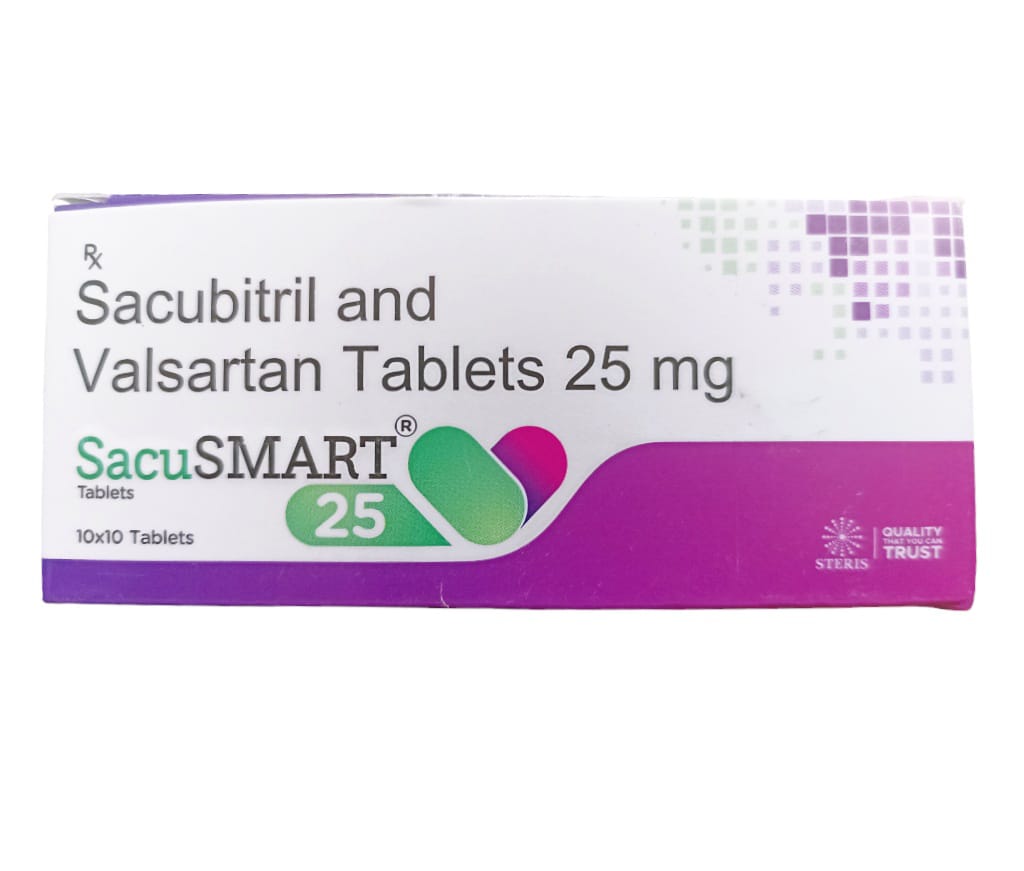
Sacubitril 12 mg Valsartan 13 mg | SACUSMART 25
 Item requires a valid prescription
Manufactured By Steris Healthcare Pvt Ltd
Composition Sacubitril 12 mg Valsartan 13 mg
Rs 108.28
MRP Rs 154.69
(30% OFF)
Includes all taxes
Package SIZE
( For 10 tablets )

100% Authentic
Products

Free
Shipping*

Products
Return Policy
Description:
If your cardiologist has recently prescribed sacubitril valsartan tablets, you are probably searching for clear answers: what is this medicine for, how does it help the heart, and what should you watch out for while taking it. Sacubitril valsartan is one of the most widely prescribed combination medicines for chronic heart failure today, and understanding its uses can help you take it safely and get the most benefit from your treatment plan.
Sacubitril valsartan belongs to a class of drugs called Angiotensin Receptor-Neprilysin Inhibitors, commonly known as ARNIs. It combines two active components — sacubitril, a neprilysin inhibitor, and valsartan, an angiotensin receptor blocker (ARB) — into a single tablet. This dual-action formula was developed specifically to manage chronic heart failure more effectively than older single-agent therapies, and it has become a cornerstone medicine in modern cardiology care across India and globally.
What Is Sacubitril Valsartan Used For?
The primary use of sacubitril valsartan tablets is the long-term management of chronic heart failure, particularly in adults with reduced ejection fraction (HFrEF). In simple terms, it is prescribed when the heart's pumping ability has weakened over time due to conditions like coronary artery disease, prior heart attacks, high blood pressure, or cardiomyopathy.
Doctors prescribe this medicine to:
- Reduce the risk of cardiovascular death in patients with chronic heart failure
- Lower the chances of hospitalization due to worsening heart failure symptoms
- Improve overall heart function and quality of life over time
- Help manage symptoms such as breathlessness, fatigue, and fluid retention associated with weak heart pumping
In several countries, sacubitril valsartan is also approved for managing high blood pressure (hypertension), since the valsartan component independently helps relax blood vessels and lower blood pressure. However, its most established and well-researched use remains chronic heart failure management, where large-scale clinical trials have shown it outperforms standalone ACE inhibitors and ARBs in reducing heart failure-related complications.
How Does Sacubitril Valsartan Work in the Body?
Understanding how this medicine works can help patients feel more confident about their treatment. The sacubitril component blocks an enzyme called neprilysin, which is normally responsible for breaking down natriuretic peptides — hormones that help relax blood vessels, reduce fluid buildup, and ease the workload on the heart. By inhibiting neprilysin, sacubitril allows these protective hormones to stay active longer in the body.
At the same time, the valsartan component blocks angiotensin II receptors, preventing blood vessels from narrowing and reducing the strain on the heart muscle. Together, these two mechanisms work in a complementary way: one preserves beneficial cardiac hormones, while the other blocks harmful vasoconstrictive pathways. This combined approach is why sacubitril valsartan is often more effective than older heart failure medicines that target only one of these pathways.
Who Should Take Sacubitril Valsartan Tablets?
This medicine is generally prescribed for adults diagnosed with symptomatic chronic heart failure, especially those with a reduced ejection fraction confirmed through echocardiography. It is typically introduced after a thorough evaluation by a cardiologist, often replacing or following treatment with an ACE inhibitor or ARB.
It is important to note that sacubitril valsartan is not meant for everyone. Patients should avoid this medicine if they:
- Have a known allergy to sacubitril, valsartan, or any ARNI/ARB medication
- Are currently taking an ACE inhibitor (a mandatory 36-hour washout period is required when switching due to angioedema risk)
- Have a history of angioedema related to previous ACE inhibitor or ARB use
- Are pregnant or planning pregnancy, as the medicine can cause fetal harm
- Have severe liver impairment or certain kidney conditions, unless specifically advised by a physician
Because heart failure treatment is highly individualized, the decision to start, switch to, or adjust sacubitril valsartan should always be made by a qualified cardiologist based on a complete medical history, current medications, kidney function, and blood pressure readings.
Dosage and Administration Overview
Sacubitril valsartan tablets are available in different strength combinations, and the starting dose usually depends on whether a patient was previously on an ACE inhibitor or ARB, as well as their kidney and liver function. Doctors typically begin with a lower strength and gradually increase it every few weeks while monitoring blood pressure, kidney function, and potassium levels, aiming to reach the target maintenance dose that has shown the most cardiovascular benefit in clinical studies.
The tablet is usually taken twice daily, with or without food, at consistent times to maintain steady drug levels in the body. Patients should never adjust their dose or stop the medicine abruptly without consulting their doctor, as sudden discontinuation can worsen heart failure symptoms.
Side Effects and Precautions to Keep in Mind
Like all medications, sacubitril valsartan can cause side effects, though many patients tolerate it well. The most commonly reported effects include low blood pressure (hypotension), elevated potassium levels (hyperkalemia), dizziness, cough, and reduced kidney function. Angioedema, though rare, is a serious side effect that requires immediate medical attention if symptoms like facial swelling, difficulty breathing, or throat tightness occur.
Regular monitoring is an essential part of treatment. Most cardiologists recommend periodic blood tests to check kidney function and potassium levels, along with routine blood pressure checks, especially during the initial dose adjustment phase. Patients should also inform their doctor about all other medications they are taking, since combining sacubitril valsartan with certain drugs — including potassium supplements, other blood pressure medicines, or NSAIDs — may require closer monitoring.
Why Buyer-Intent Patients Are Searching for This Medicine
Many patients and caregivers researching "sacubitril valsartan tablets uses" are often newly prescribed this medicine and want to understand its purpose before starting treatment, or are comparing it with previously used heart failure drugs like enalapril or losartan. Pharmacists and healthcare platforms frequently see this search paired with questions about cost, brand alternatives, and long-term safety — reflecting genuine treatment decision-making rather than casual curiosity. This makes it essential for patients to rely on accurate, doctor-reviewed information rather than informal sources when starting this medication.
Frequently Asked Questions
What is sacubitril valsartan tablet used for?
It is primarily used to treat chronic heart failure with reduced ejection fraction, helping lower the risk of cardiovascular death and heart failure-related hospitalization.
Is sacubitril valsartan the same as Entresto?
Sacubitril valsartan is the generic combination name; Entresto is one of the well-known branded versions of this medicine.
Can sacubitril valsartan be used for high blood pressure?
In some countries, it is approved for hypertension, but its strongest clinical evidence and primary approved use is for chronic heart failure.
How long does it take for sacubitril valsartan to work?
Some patients notice improved breathing and reduced fatigue within a few weeks, though full cardiovascular benefits typically build over several months of consistent use.
Can I take sacubitril valsartan with an ACE inhibitor?
A 36-hour gap is required between stopping an ACE inhibitor and starting sacubitril valsartan due to the serious risk of angioedema.
What should I avoid while taking sacubitril valsartan?
Avoid potassium supplements, certain NSAIDs, and other ACE inhibitors or ARBs unless specifically directed by your doctor, and avoid abrupt discontinuation of the medicine.
Is sacubitril valsartan safe during pregnancy?
it is not recommended during pregnancy due to potential harm to the developing fetus, and effective contraception is advised for women of childbearing age while on this medicine.
Brand Name: SACUSMART 25 (STERIS HEALTHCARE PVT LTD)
Composition Name: Sacubitril 24 mg + Valsartan 26 mg
Formulation: Tablets
Pack Size: Strip of 10 Tablets (10 x 10 Tablets)
Marketed By: Steris Healthcare Pvt Ltd
Regulatory Standard: WHO-GMP Certified
Schedule: Valid Prescription Required (Prescription Only)
Therapeutic Category: Angiotensin Receptor-Neprilysin Inhibitor (ARNI)
If You Need More Information About SACUSMART 25 Click here