


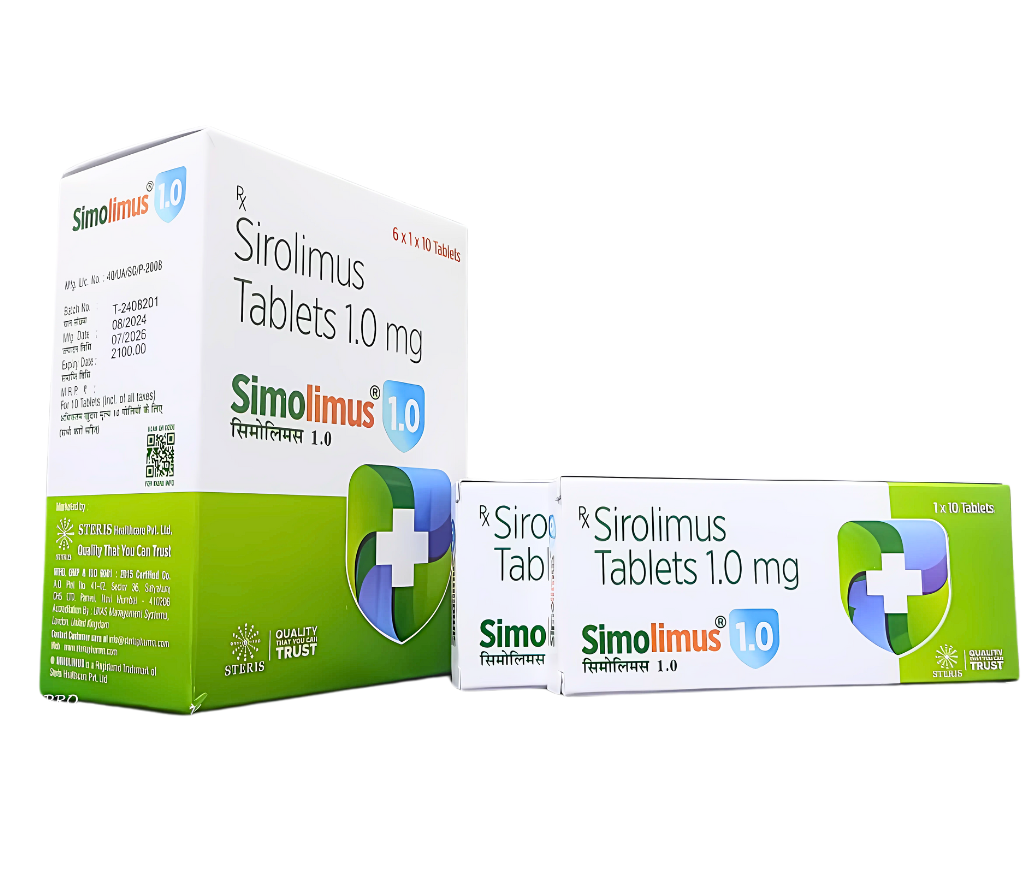
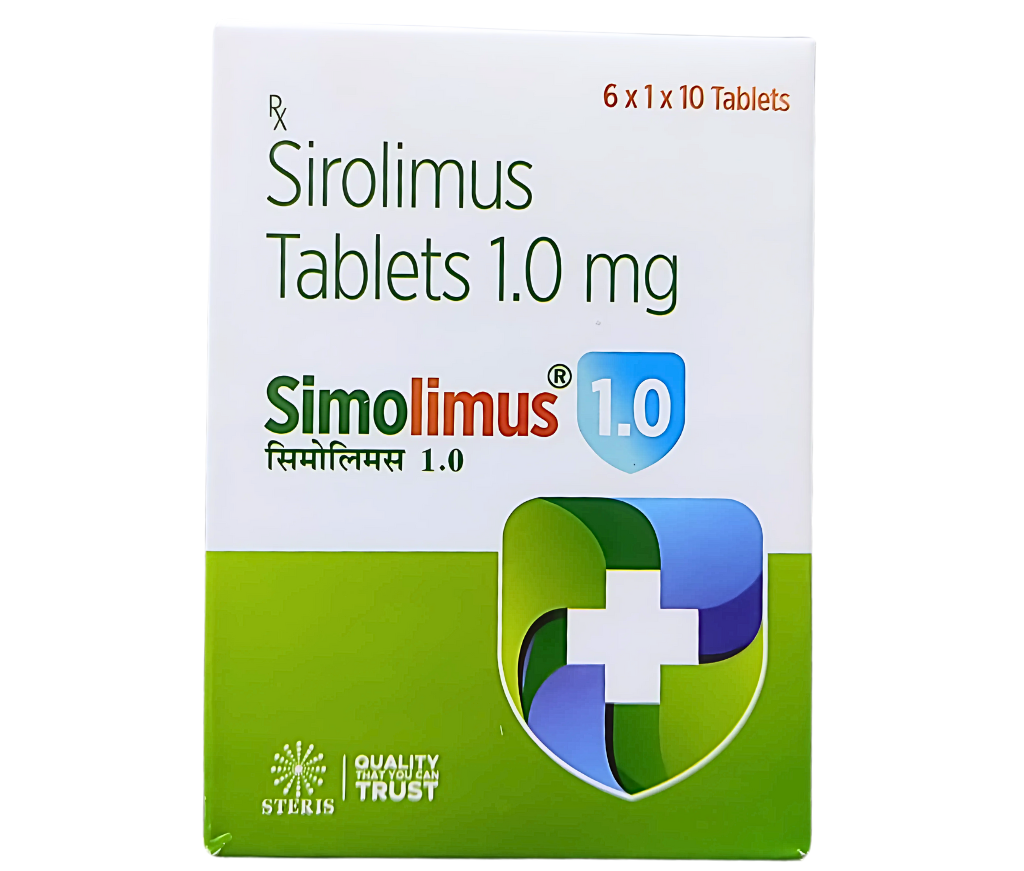
SIMOLIMUS 1.0
 Item requires a valid prescription
Manufactured By Steris Healthcare Pvt Ltd
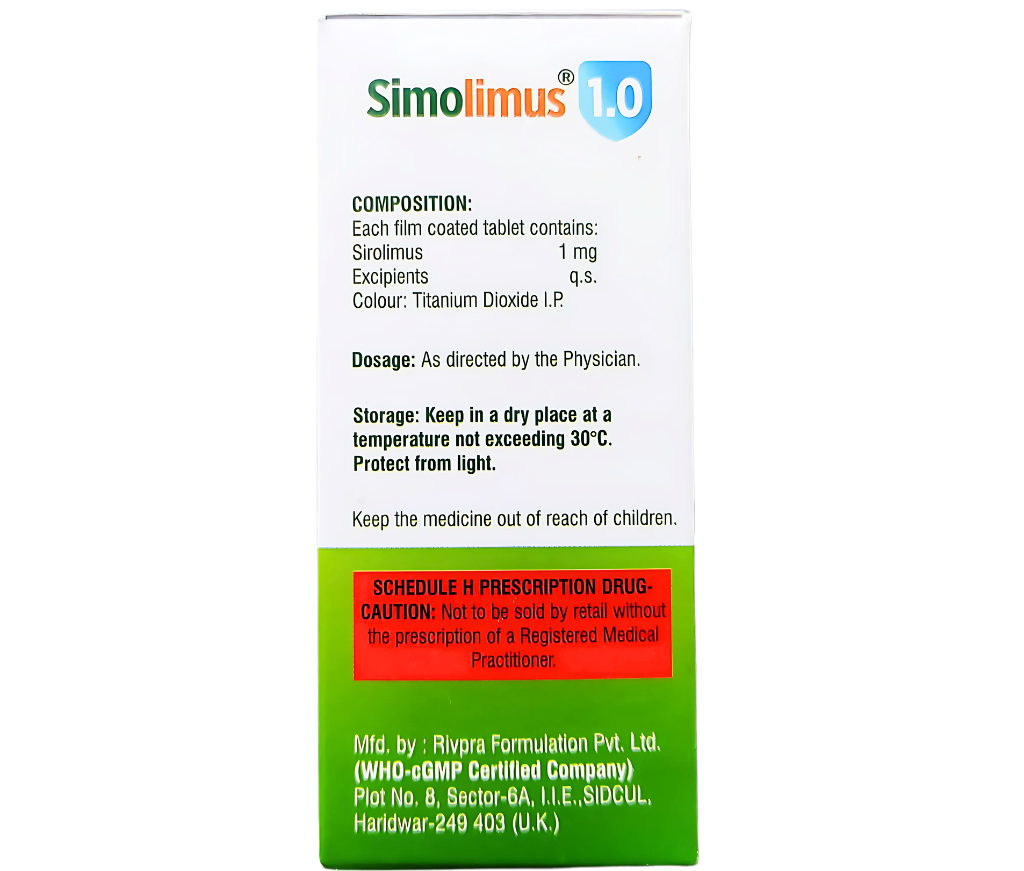
Composition Sirolimus 1mg
Rs 1378.13
MRP Rs 1968.75
(30% OFF)
Includes all taxes
Package SIZE
( FOR 10 TABLET )

100% Authentic
Products

Free
Shipping*

Products
Return Policy
Description:
SIMOLIMUS 1.0 is a prescription medicine containing 1 mg of Sirolimus in an enteric-coated delayed-release tablet formulation. Marketed by Steris Healthcare Pvt. Ltd., this medicine is manufactured under WHO-GMP-certified quality standards to ensure consistent safety, purity, and quality. It is supplied in a strip of 10 tablets and is available only against a valid prescription.
Sirolimus belongs to a class of medicines known as mTOR inhibitors (mammalian target of rapamycin inhibitors). It is primarily prescribed to help prevent organ rejection after kidney transplantation and may also be recommended by specialists for certain other approved medical conditions. Since sirolimus affects the immune system, it should always be taken exactly as directed by a qualified healthcare professional.
What is sirolimus 1 mg?
Sirolimus 1 mg is an immunosuppressant medication that helps reduce the activity of the immune system. It is commonly prescribed after kidney transplantation to lower the risk of the body's immune system attacking the transplanted organ. In some cases, healthcare providers may prescribe sirolimus for other approved medical conditions based on individual patient needs.
The enteric-coated delayed-release formulation is designed to release the medicine at the appropriate stage in the digestive tract, helping optimize absorption according to the product's formulation.
Because this medicine suppresses immune function, patients taking sirolimus require regular medical monitoring, including blood tests, to ensure appropriate drug levels and minimize potential side effects.
Uses of Sirolimus 1 mg
Your healthcare provider may prescribe Sirolimus 1 mg for the following:
- Prevention of kidney transplant rejection
- Long-term immunosuppressive therapy after transplantation
- Selected specialist-approved indications where Sirolimus therapy is clinically appropriate
- Treatment plans requiring mTOR inhibitor therapy under medical supervision
Always use this medicine only for the condition for which it has been prescribed.
How Sirolimus 1 mg Works
Sirolimus works by blocking the activity of the mammalian target of rapamycin (mTOR), a protein involved in cell growth and immune cell activation. By reducing the activity of specific immune cells, Sirolimus decreases the likelihood of transplant rejection while helping maintain the function of the transplanted organ.
Unlike some other immunosuppressive medicines, sirolimus has a unique mechanism of action and is often used in combination with other medications depending on the transplant protocol recommended by the treating physician.
How to Take Sirolimus 1 mg
Follow your doctor's instructions carefully.
General recommendations include:
- Take the tablet exactly as prescribed.
- Swallow the tablet whole with water.
- Do not crush, chew, or break the enteric-coated tablet.
- Take the medicine at the same time every day.
- It may be taken consistently with or without food, as advised by your physician.
- Avoid changing the dosage without consulting your healthcare provider.
Regular blood tests may be required to monitor sirolimus blood levels and treatment response.
Possible Side Effects
Like all medicines, Sirolimus may cause side effects, although not everyone experiences them.
Common side effects may include:
- Headache
- Nausea
- Diarrhea
- Mouth ulcers
- Increased cholesterol levels
- Swelling of hands or feet
- Acne
- High blood pressure
- Delayed wound healing
- Mild infections
Seek immediate medical attention if you experience:
- Difficulty breathing
- Severe allergic reactions
- Persistent fever
- Unusual bleeding
- Severe infections
- Chest pain
- Sudden swelling
- Severe skin reactions
Contact your healthcare provider if any side effects persist or worsen.
Precautions Before Using Sirolimus 1 mg
Inform your doctor if you:
- Have liver disease
- Have high cholesterol
- Have diabetes
- Have an active infection
- Recently received a vaccine
- Are pregnant or planning pregnancy
- Are breastfeeding
- Have undergone recent surgery
Because Sirolimus weakens immune function, patients should avoid unnecessary exposure to contagious illnesses and follow medical advice regarding vaccinations.
Drug Interactions
Tell your healthcare provider about every medicine you take, including prescription medicines, over-the-counter products, vitamins, and herbal supplements.
Important interactions may occur with:
- Certain antibiotics
- Antifungal medicines
- Anti-seizure medications
- HIV medicines
- Other immunosuppressants
- Grapefruit or grapefruit juice
- St. John's Wort
Never start or stop any medicine without consulting your physician.
Storage Instructions
- Store below 25°C.
- Protect from moisture and direct sunlight.
- Keep tablets in their original strip until use.
- Keep out of reach of children.
- Do not use after the expiry date.
Why Choose SIMOLIMUS 1.0?
SIMOLIMUS 1.0 offers several advantages:
- Contains Sirolimus 1 mg
- Enteric-coated delayed-release tablet formulation
- WHO-GMP certified manufacturing standards
- Marketed by Steris Healthcare Pvt Ltd
- Suitable for prescribed immunosuppressive therapy
- Convenient strip of 10 tablets
- Manufactured with stringent quality controls
- Prescription-only medicine for safe medical supervision
Frequently Asked Questions
1. What is Sirolimus 1 mg used for?
Sirolimus 1 mg is mainly prescribed to help prevent organ rejection after kidney transplantation. Your specialist may also prescribe it for other approved medical conditions when clinically appropriate.
2. Is Sirolimus 1mg a steroid?
No. Sirolimus is not a steroid. It belongs to the class of medicines known as mTOR inhibitors and works by suppressing certain immune system activities.
3. Can I buy sirolimus 1 mg without a prescription?
No. SIMOLIMUS 1.0 is a prescription-only medicine and should only be used under the supervision of a qualified healthcare provider.
4. How should I take Sirolimus tablets?
Take the tablet exactly as prescribed, swallow it whole with water, and take it at the same time every day. Do not crush or chew the enteric-coated tablet.
5. Can Sirolimus be taken with food?
Yes, but it should be taken consistently either with food or without food, according to your doctor's instructions, to maintain stable drug levels.
6. Why are regular blood tests required during Sirolimus treatment?
Blood tests help monitor Sirolimus levels, assess organ function, and detect potential side effects early so your doctor can adjust treatment if needed.
7. What foods should I avoid while taking Sirolimus?
Avoid grapefruit and grapefruit juice because they can increase sirolimus levels in the blood and raise the risk of side effects.
8. What should I do if I miss a dose?
Take the missed dose as soon as you remember unless it is almost time for your next scheduled dose. Do not take a double dose. Contact your healthcare provider if you are unsure.
9. Can Sirolimus increase the risk of infections?
Yes. Since sirolimus suppresses the immune system, it can increase susceptibility to infections. Contact your doctor if you develop fever, persistent cough, or signs of infection.
10. How should Sirolimus 1mg be stored?
Store the tablets below 25°C in a cool, dry place away from direct sunlight and moisture. Keep them in their original packaging and out of the reach of children.
Product Information
| Product Details | Information |
|---|---|
| Brand Name | SIMOLIMUS 1.0 |
| Generic Name | Sirolimus 1 mg |
| Composition | Sirolimus 1 mg |
| Dosage Form | Enteric-coated delayed-release tablet |
| Pack Size | Strip of 10 tablets |
| Marketed By | Steris Healthcare Pvt Ltd |
| Quality Standard | WHO-GMP Certified |
| Prescription Status | Valid Prescription Required |
| Storage | Store below 25°C in a cool, dry place away from moisture and sunlight |