


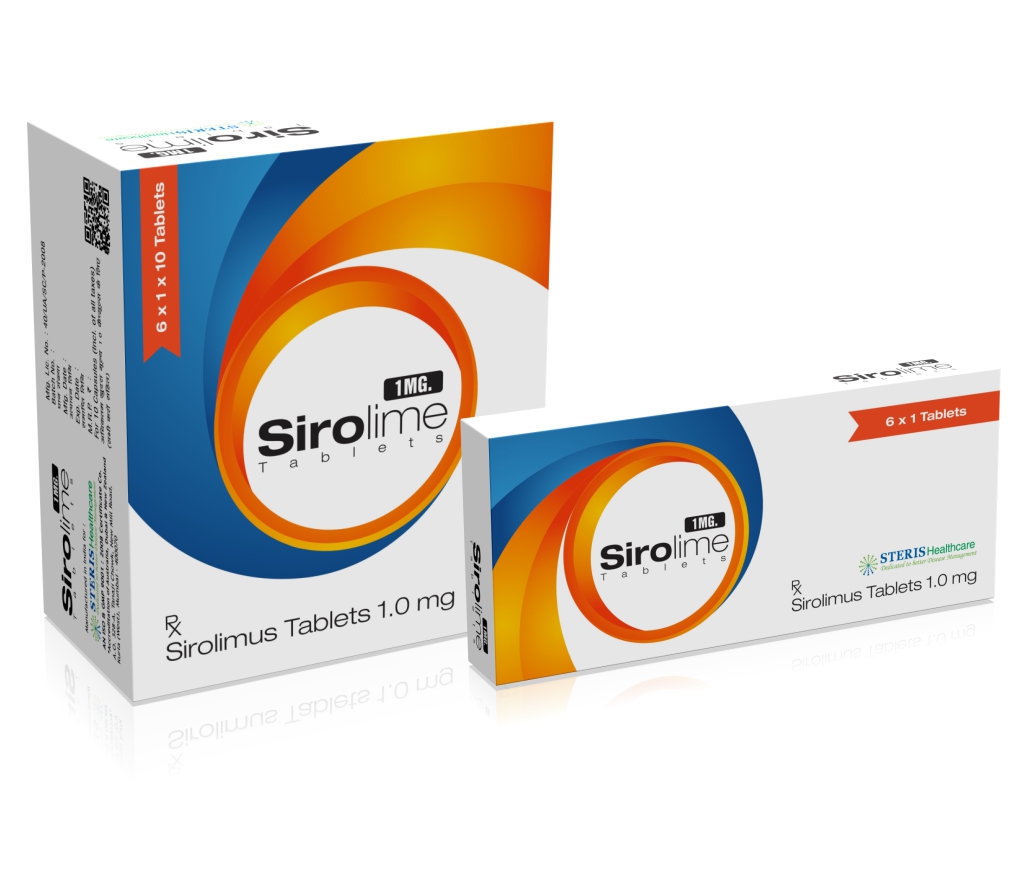
SIROLIME 1
 Item requires a valid prescription
Manufactured By Steris Healthcare Pvt Ltd
Composition Sirolimus (1.0mg)
Rs 1032.94
MRP Rs 1475.63
(30% OFF)
Includes all taxes
Package SIZE
( For 10 Tablets )

100% Authentic
Products

Free
Shipping*

Products
Return Policy
Description:
Sirolimus is a prescription medicine that belongs to a class of drugs called mTOR inhibitors and immunosuppressants. It is primarily used to help prevent rejection after a kidney transplant and is also approved for treating lymphangioleiomyomatosis (LAM), a rare lung disease. Because sirolimus suppresses immune-system activity, it requires careful medical supervision, regular monitoring and attention to potential drug interactions.
For people researching sirolimus uses, benefits, side effects, dosage, price or online availability, it is important to understand that this is not an ordinary over-the-counter medicine. The correct strength and treatment schedule depend on the medical condition, other medicines, laboratory results and the patient's individual response.
What Is Sirolimus?
Sirolimus is an mTOR (mechanistic target of rapamycin) inhibitor that reduces certain immune-system responses. In kidney-transplant patients, this immunosuppressive effect helps prevent the body from attacking and rejecting the transplanted organ. It is also used to treat LAM, where it can help control disease-related abnormal cell growth.
The medicine is available in different oral formulations, including tablets and oral solution. The exact product, strength and formulation should be selected according to the prescribing doctor's instructions.
Unlike medicines that simply treat pain or common infections, sirolimus affects the immune system and can influence several laboratory measurements. Consequently, treatment generally involves ongoing clinical and laboratory monitoring.
Sirolimus Uses
1. Preventing kidney transplant rejection
One of the principal uses of sirolimus is prophylaxis of organ rejection in patients aged 13 years or older receiving renal transplants. The prescribing information specifies that sirolimus is used as part of an immunosuppressive regimen, with other medicines such as cyclosporine and corticosteroids depending on the patient's transplant risk and treatment plan.
A transplanted kidney is recognized as foreign by the immune system. Without appropriate immunosuppression, immune cells can attack the transplanted organ. Sirolimus helps suppress this response.
2. Treatment of lymphangioleiomyomatosis
Sirolimus is also indicated for lymphangioleiomyomatosis (LAM), a rare lung condition. In this setting, its mTOR-inhibiting activity can help slow abnormal cellular activity associated with the disease.
Treatment for LAM is different from its use after transplantation, so the prescribed dose and monitoring strategy must be individualized.
How Does Sirolimus Work?
Sirolimus works by inhibiting the mTOR pathway, an important cellular signaling pathway involved in cell growth, proliferation and immune responses.
After transplantation, suppressing immune activity can reduce the immune response responsible for organ rejection. In LAM, mTOR inhibition helps reduce abnormal cellular growth and activity.
Because the drug has a systemic effect on the immune system and other biological processes, its benefits need to be balanced against the possibility of infections, laboratory abnormalities and other adverse reactions.
Key Benefits of Sirolimus
Helps prevent kidney transplant rejection
For appropriate kidney-transplant patients, sirolimus forms part of an immunosuppressive treatment strategy intended to protect the transplanted kidney from immune-mediated rejection.
Provides an established treatment option for LAM
Sirolimus is an approved treatment option for lymphangioleiomyomatosis, providing an important targeted approach for this rare disease.
Targets the mTOR pathway
Its mechanism provides a different approach from several other immunosuppressive medicines and is particularly relevant to diseases involving abnormal mTOR signaling.
Can be administered orally
Depending on the prescribed product, sirolimus can be administered as an oral tablet or solution. This can provide a practical option for long-term treatment when clinically appropriate.
Sirolimus Dosage and How to Take It
There is no single sirolimus dose that is appropriate for everyone. Dosing depends on the indication, age, body weight, transplant status, other medicines, liver function and blood concentrations.
For kidney-transplant patients, therapeutic drug monitoring is an important part of treatment. The current prescribing information contains different dosing approaches according to immunologic risk and concomitant therapy.
For LAM, the dosage is also determined by the treating physician.
Sirolimus should be taken exactly as prescribed. MedlinePlus advises taking it once daily at approximately the same time and maintaining a consistent relationship with food—either always with food or always without food. Tablets should be swallowed whole rather than split, chewed or crushed.
Do not change the dose or stop sirolimus on your own. Abruptly changing immunosuppressive treatment after transplantation can have serious consequences.
Sirolimus Side Effects
Because sirolimus suppresses immune activity and affects several metabolic pathways, it can cause a range of adverse effects.
The current prescribing information reports commonly occurring adverse reactions in kidney-transplant patients including:
-
Peripheral edema or swelling
-
Increased triglycerides
-
Increased cholesterol
-
High blood pressure
-
Increased creatinine
-
Abdominal pain
-
Diarrhea
-
Headache
-
Fever
-
Urinary tract infection
-
Anemia
-
Nausea
-
Joint pain
-
Low platelet count
In patients receiving sirolimus for LAM, commonly reported adverse reactions include mouth sores (stomatitis), diarrhea, abdominal pain, nausea, respiratory infections, acne, chest pain, swelling, headache, dizziness, muscle pain and elevated cholesterol.
Not everyone experiences these effects, and their severity can vary.
Serious Sirolimus Warnings and Risks
Sirolimus carries important safety warnings. Because it suppresses the immune system, it can make it harder for the body to fight infections and may increase the risk of certain malignancies, including lymphoma and skin cancer.
Contact your healthcare professional promptly if you develop symptoms that could indicate a serious infection, such as:
-
Fever
-
Chills
-
Persistent sore throat
-
Painful or frequent urination
-
Unusual or worsening respiratory symptoms
Skin protection is also important because immunosuppression can increase the risk of skin cancer. Avoid unnecessary or prolonged sun exposure and follow your doctor's recommendations for protective clothing and sunscreen.
Important transplant warning
Current prescribing information states that sirolimus is not recommended to prevent rejection in liver or lung transplant patients because serious risks have been identified in those settings.
This distinction is especially important for anyone searching online for a generic “sirolimus transplant medicine.”
Sirolimus Drug Interactions
Sirolimus has clinically important interactions with other medicines because its blood concentration can be affected by drugs that alter CYP3A4 and P-glycoprotein activity.
Current prescribing information advises avoiding concomitant use with strong CYP3A4/P-gp inducers or inhibitors because they can significantly change sirolimus concentrations. Therapeutic drug monitoring and dose adjustment may also be needed with certain other products.
Before purchasing or taking sirolimus, provide your doctor or pharmacist with a complete list of:
-
Prescription medicines
-
Over-the-counter medicines
-
Vitamins
-
Herbal products
-
Nutritional supplements
Do not start a new supplement or medicine without checking for potential interactions.
Sirolimus and Food
Consistency is important when taking sirolimus. MedlinePlus advises taking it consistently either with food or without food, rather than switching between the two.
Grapefruit and grapefruit juice can interact with sirolimus and should be avoided unless your healthcare professional specifically tells you otherwise.
Monitoring During Sirolimus Treatment
Regular medical monitoring is a key part of safe sirolimus therapy.
Depending on the reason for treatment, your healthcare professional may monitor:
-
Sirolimus blood concentration
-
Kidney function
-
Liver function
-
Blood counts
-
Cholesterol and triglycerides
-
Blood pressure
-
Signs of infection
-
Other treatment-specific laboratory values
The current prescribing information specifically includes therapeutic drug monitoring as part of sirolimus treatment in appropriate patients.
This is one reason purchasing and using sirolimus without medical supervision can be unsafe.
Can You Buy Sirolimus Online?
Sirolimus is a prescription medicine, so purchasing it online should be approached carefully. If you are searching for “buy sirolimus,” “sirolimus price,” “sirolimus tablets online” or “sirolimus medicine price,” the priority should be obtaining the exact product and strength prescribed by your doctor from a legitimate pharmacy.
Online prices can vary according to:
-
Strength
-
Tablet or solution formulation
-
Brand/manufacturer
-
Pack size
-
Pharmacy
-
Location
-
Availability
-
Prescription requirements
A low advertised price should not be the only purchasing criterion. Verify the active ingredient, strength, manufacturer, batch details, expiry date and packaging before accepting a medicine.
Because sirolimus requires careful dosing and monitoring, do not substitute one strength for another simply because it is available or cheaper.
What to Check Before Buying Sirolimus
If your healthcare professional has prescribed sirolimus, use this buyer-intent checklist:
1. Confirm the strength.
Sirolimus is available in multiple strengths, so make sure the product matches your prescription.
2. Confirm the formulation.
Check whether your prescription specifies tablets or oral solution.
3. Verify the manufacturer.
Purchase from a legitimate pharmacy and inspect the manufacturer's information.
4. Check the expiry date.
Do not use expired medicine.
5. Inspect packaging.
Avoid products with damaged, opened or suspicious packaging.
6. Confirm prescription requirements.
Follow the pharmacy's applicable prescription-verification process.
7. Compare the total treatment cost.
A cheaper pack is not necessarily cheaper per prescribed dose.
8. Don't change brands or strengths without professional advice.
For medicines requiring therapeutic monitoring, consistency matters.
Who Should Be Particularly Careful With Sirolimus?
Tell your healthcare professional if you have kidney disease, liver disease, high cholesterol, high blood pressure, diabetes, an active infection or a history of skin cancer.
You should also tell your healthcare team if you are planning surgery, receiving vaccinations or taking other immunosuppressive medicines.
Live vaccines may not be appropriate during sirolimus treatment. The prescribing information advises patients to avoid live vaccines unless directed otherwise by their healthcare professional.
Pregnancy and breastfeeding also require specialist medical advice because sirolimus may pose risks to the developing fetus and breastfed infant.
Frequently Asked Questions
1. What is sirolimus used for?
Sirolimus is primarily used to help prevent rejection of a kidney transplant and to treat lymphangioleiomyomatosis (LAM). It works by inhibiting the mTOR pathway and suppressing certain immune responses.
2. What are the main benefits of sirolimus?
The main benefits are its ability to provide immunosuppression for appropriate kidney-transplant patients and its established role in treating LAM. Its mTOR-inhibiting mechanism makes it an important option in these specific conditions.
3. What are the most common side effects of sirolimus?
Common side effects can include swelling, diarrhea, abdominal pain, headache, high cholesterol or triglycerides, high blood pressure, anemia and other laboratory abnormalities. The exact adverse effects depend on the condition being treated.
4. Does sirolimus weaken the immune system?
Yes. Sirolimus is an immunosuppressant, so it can reduce the body's ability to fight infections and may increase the risk of certain cancers. Patients taking it require appropriate monitoring.
5. How should sirolimus be taken?
Take sirolimus exactly as prescribed and at approximately the same time each day. Maintain a consistent relationship with food—always with food or always without food. Do not change the dose or stop treatment without consulting your healthcare professional.
6. Can I take sirolimus with grapefruit?
Grapefruit and grapefruit juice can affect sirolimus levels. Avoid them unless your doctor or pharmacist specifically confirms that they are appropriate for you.
7. Does sirolimus require blood tests?
Yes. Depending on the indication, doctors may monitor sirolimus blood concentrations and laboratory parameters such as kidney function, blood counts and lipid levels. Therapeutic drug monitoring is specifically incorporated into prescribing guidance.
8. Can I buy sirolimus without a prescription?
Sirolimus is a prescription medicine and should be obtained and used under qualified medical supervision. Do not purchase it from an unverified seller simply because it offers a lower price.
9. Can sirolimus be used after a liver or lung transplant?
Current U.S. prescribing information states that sirolimus is not recommended for prevention of rejection after liver or lung transplantation because serious risks have been identified in those settings.
10. Should I stop sirolimus if I feel well?
No. If sirolimus has been prescribed for transplant immunosuppression or another long-term condition, do not stop it without medical advice. Feeling well does not mean that the underlying condition no longer requires treatment.
Conclusion
Sirolimus is a specialized prescription medicine with important, well-established medical uses—not a medicine for self-treatment. Its primary approved uses include preventing rejection after kidney transplantation and treating lymphangioleiomyomatosis. Its mTOR-inhibiting mechanism provides an important therapeutic option, but the same immune-suppressing effects can increase the risk of infections and certain malignancies.
For anyone with transactional intent searching “buy sirolimus,” “sirolimus price,” “sirolimus tablets online,” “sirolimus uses” or “sirolimus side effects,” the safest approach is to verify the exact strength and formulation prescribed, purchase through a legitimate pharmacy, and maintain regular medical monitoring. Current prescribing information, revised in May 2026, continues to emphasize therapeutic drug monitoring, clinically significant interactions and serious immunosuppression-related warnings.

