


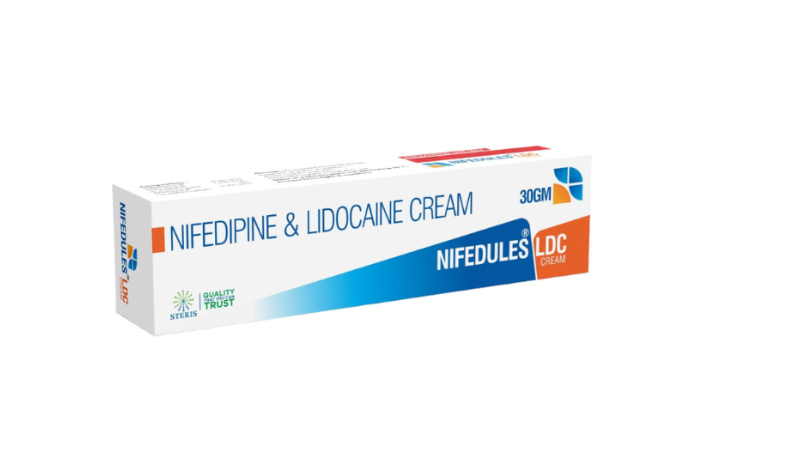



Nifedipine & Lidocaine Cream - Explore...
Jul 19, 2024
What Is Nifedipine & Lidocaine Cream?
Nifedipine & Lidocaine Cream is a topical combination containing two active medicines:
- Nifedipine 0.3% w/w – a calcium-channel blocker that relaxes smooth muscle and reduces anal sphincter pressure.
- Lidocaine 1.5% w/w – a local anesthetic that reduces pain by temporarily blocking pain signals from local nerves.
A 2025 review of the clinical evidence specifically evaluated topical nifedipine 0.3% + lidocaine 1.5% for anal fissures and hemorrhoidal disease. The review concluded that the combination can be a valid treatment option for selected anorectal conditions, although the overall literature remains limited.
Nifedipine & Lidocaine Cream Uses
The primary use of this combination is anal fissure treatment.
An anal fissure is a small tear in the anal lining that can cause sharp or burning pain, especially during and after passing stool. Some patients may also experience bright-red bleeding.
Nifedipine & lidocaine cream may be used to:
- Help relieve pain associated with anal fissures
- Relax the anal sphincter
- Reduce sphincter spasm
- Support healing of an anal fissure
- Improve comfort during bowel movements
- Reduce local discomfort and irritation
- Support conservative treatment of selected chronic anal fissures
Clinical research has evaluated topical nifedipine combined with lidocaine for chronic anal fissure. In a randomized controlled study, patients receiving nifedipine 0.3% plus lidocaine 1.5% twice daily for six weeks had substantially higher fissure-healing rates than the active-control group.
Current clinical guidance also recognizes topical nifedipine 0.3% plus lidocaine 1.5% as one conservative treatment option for chronic anal fissure.
How Does Nifedipine & Lidocaine Cream Work?
The two ingredients have different roles.
Nifedipine
Nifedipine is a calcium-channel blocker. When used topically for anal fissure, it helps relax the internal anal sphincter.
An overly tight anal sphincter can contribute to pain and may reduce blood flow to the area. By reducing sphincter pressure, topical nifedipine may help create conditions that support fissure healing.
Lidocaine
Lidocaine is a local anesthetic. It temporarily reduces the ability of local nerves to transmit pain signals.
This can help make bowel movements more comfortable while the fissure is healing.
Therefore, the combination addresses both pain and sphincter spasm, rather than simply masking discomfort.
Key Benefits of Nifedipine & Lidocaine Cream
1. Helps relieve anal fissure pain
Lidocaine provides local anesthetic action and can reduce the pain associated with an anal fissure.
2. Helps relax the anal sphincter
Topical nifedipine can reduce anal sphincter pressure, which is an important part of conservative fissure treatment.
3. May support fissure healing
Clinical studies have reported improved healing with topical nifedipine-based treatment. A 2025 evidence review also found support for the use of nifedipine 0.3% and lidocaine 1.5% in selected anorectal conditions.
4. May make bowel movements more comfortable
By reducing local pain and sphincter spasm, the cream may make passing stool easier and less painful for people with an anal fissure.
5. Non-surgical treatment option
Topical treatment can provide a conservative option before more invasive treatment is considered. Current guidance recognizes topical nifedipine plus lidocaine as an option for chronic anal fissure.
Is Nifedipine & Lidocaine Cream Used for Piles?
This is an important buyer-intent question.
The combination is primarily associated with anal fissures, although clinical literature has also evaluated topical nifedipine and lidocaine in hemorrhoidal disease.
A 2025 review reported potential benefits for selected hemorrhoidal conditions, including pain associated with thrombosed hemorrhoids.
However, not every case of piles requires nifedipine. Hemorrhoids and anal fissures are different conditions and require different treatment approaches.
If you have rectal bleeding, severe pain, a lump around the anus or recurrent symptoms, a healthcare professional should confirm the diagnosis.
How to Use Nifedipine & Lidocaine Cream
Use the cream only as directed by your doctor or according to the instructions supplied with your specific product.
General application precautions include:
- Clean and gently dry the affected area before application.
- Apply the prescribed amount to the affected anal area.
- Wash your hands before and after application.
- Avoid contact with the eyes, nose and mouth.
- Do not apply more frequently than recommended.
- Do not use the cream on severely damaged or infected skin unless instructed by a healthcare professional.
- Do not stop or extend treatment without medical advice.
Current Indian product information advises cleaning and drying the affected area before application and washing hands before and after use.
Because different products can have different instructions, do not copy the dosage of another nifedipine cream or assume that every formulation should be used in exactly the same way.
How Long Does Nifedipine & Lidocaine Cream Take to Work?
Pain relief may occur relatively quickly because lidocaine provides local anesthetic action. However, fissure healing takes longer.
Treatment duration depends on whether the fissure is acute or chronic, its severity and the patient's response.
In a randomized study, nifedipine 0.3% plus lidocaine 1.5% was administered for six weeks for chronic anal fissure.
A more recent multicenter post-marketing study involving 431 patients reported significant improvements in fissure resolution, pain and bleeding over an eight-week follow-up period, with reported adverse events being mild and self-limiting.
These study durations should not be interpreted as a universal prescription. Your doctor should determine the appropriate duration for your condition.
Nifedipine & Lidocaine Cream Side Effects
Most people tolerate the combination reasonably well, but side effects can occur.
Possible side effects include:
- Mild anal irritation
- Burning or stinging
- Local redness
- Temporary swelling
- Itching
- Headache
- Dizziness
- Other local skin reactions
Current Indian product information identifies anal irritation as a possible adverse effect, while recent clinical surveillance reported that adverse events were generally mild and self-limiting.
When to Seek Medical Advice
Contact a healthcare professional if you experience:
- Severe or persistent irritation
- Significant swelling
- Severe dizziness
- Fainting
- Difficulty breathing
- Facial or throat swelling
- A severe allergic reaction
- Worsening or unexplained rectal bleeding
Nifedipine can have systemic effects if absorbed, so excessive application should be avoided.
Who Should Use Nifedipine & Lidocaine Cream Carefully?
Talk to your doctor before using this medicine if you:
- Are pregnant or breastfeeding
- Have significant heart or blood-pressure problems
- Have an allergy to nifedipine, lidocaine or related medicines
- Are taking medicines that affect blood pressure
- Have unexplained rectal bleeding
- Have recurrent anal pain
- Have an anal abscess or suspected infection
- Have severe or persistent constipation
- Have symptoms that have not been diagnosed
Do not assume every painful anal condition is an anal fissure.
Severe anal pain accompanied by fever, swelling or pus can indicate an abscess and requires medical evaluation.
Nifedipine & Lidocaine Cream for Chronic Anal Fissure
Chronic anal fissures can become difficult to heal because persistent sphincter spasm may interfere with normal recovery.
Topical nifedipine works by reducing sphincter pressure, while lidocaine helps control pain.
A randomized study of 110 patients found substantially greater healing after six weeks with topical nifedipine 0.3% plus lidocaine 1.5% than with the comparator treatment.
More recent evidence continues to support topical calcium-channel-blocker treatment as an important non-surgical option for anal fissure. A 2025 network meta-analysis of 22 randomized controlled trials involving 1,770 participants ranked nifedipine among the treatments with the highest healing rates.
Nifedipine & Lidocaine Cream Price in India
Current Indian online-pharmacy listings show that prices vary significantly between brands and pack sizes.
Prices, stock status, discounts and delivery availability can change, so buyers should verify the current price before ordering.
Where to Buy Nifedipine & Lidocaine Cream Online
If you are looking to buy nifedipine & lidocaine cream online in India, check the product carefully before placing an order.
Verify:
- Nifedipine concentration
- Lidocaine concentration
- Product name
- Manufacturer
- Pack size
- Batch number
- Manufacturing date
- Expiry date
- Packaging and seal
- Storage instructions
- Prescription requirements
- Seller/pharmacy details
Current Indian listings for several nifedipine-lidocaine products identify them as prescription medicines.
Nifedipine & Lidocaine Cream: Quick Facts
| Feature | Information |
|---|---|
| Primary use | Anal fissure |
| Active ingredients | Nifedipine + lidocaine |
| Common listed strength | Nifedipine 0.3% + lidocaine 1.5% |
| Nifedipine role | Relaxes anal sphincter |
| Lidocaine role | Provides local pain relief |
| Route | Topical/rectal application as directed |
| Common side effect | Anal irritation |
| Prescription status | Product-dependent; many Indian listings require prescription |
| Treatment duration | Depends on diagnosis and medical advice |
Frequently Asked Questions About Nifedipine & Lidocaine Cream
1. What is nifedipine and lidocaine cream used for?
Nifedipine & lidocaine cream is primarily used to treat anal fissures. Nifedipine helps relax the anal sphincter, while lidocaine provides local pain relief.
2. Is nifedipine and lidocaine cream good for anal fissures?
It can be an effective conservative treatment option for selected anal fissures. Clinical studies and recent reviews support topical nifedipine-based therapy for fissure healing and symptom relief.
3. Can nifedipine and lidocaine cream be used for piles?
It may be used in selected hemorrhoidal conditions, but its main clinical use is anal fissure. Do not assume that every case of piles requires this medicine.
4. What are the side effects of nifedipine and lidocaine cream?
Possible side effects include local anal irritation, burning, itching or swelling. Some people may experience systemic effects such as dizziness or headache. Persistent or severe symptoms require medical advice.
5. How often should nifedipine and lidocaine cream be applied?
The frequency depends on the specific product and your doctor's instructions. Clinical studies have used twice-daily application for some 0.3% nifedipine/1.5% lidocaine formulations, but patients should follow their own prescription rather than copy a study protocol.
6. How long does nifedipine and lidocaine cream take to heal a fissure?
Pain may improve earlier because of lidocaine, but complete fissure healing generally requires longer treatment. Clinical studies have assessed treatment over several weeks. Your doctor should determine the appropriate duration based on your condition.
7. Can I use nifedipine and lidocaine cream without a prescription?
Do not assume that it is appropriate for self-treatment. Several current Indian pharmacy listings classify nifedipine-lidocaine creams as prescription medicines.
8. Is nifedipine and lidocaine cream safe during pregnancy?
Pregnant or breastfeeding patients should consult their healthcare professional before using this medicine. Do not start a prescription topical medicine during pregnancy solely on the basis of online information.
9. Can nifedipine and lidocaine cream permanently cure an anal fissure?
It should not be marketed as a guaranteed permanent cure. It can help promote healing and relieve symptoms in appropriate patients, but fissures can recur, particularly if constipation or other contributing factors persist.
10. Where can I buy nifedipine and lidocaine cream online in India?
Several Indian online pharmacies currently list nifedipine 0.3% plus lidocaine 1.5% creams under different brand names. Prices and availability vary by brand, pack size and seller. Verify the exact composition and prescription requirements before ordering.
11. How to apply nifedipine and lidocaine cream?
Apply a small amount as directed by your doctor, usually to the affected area after gently cleaning and drying it. Wash hands afterward.
Conclusion
Nifedipine & Lidocaine Cream is a clinically used topical combination for anal fissures, particularly when pain and anal sphincter spasm are prominent. Nifedipine helps relax the internal anal sphincter and may support fissure healing, while lidocaine provides local anesthetic action to reduce pain.
Recent Post
Semaglutide Injection Pen 8 mg: Step-by-Step Dosage & Precautions
BEST semaglutide injection price in india
How Semaglutide Injection 4 mg Helps Control Blood Sugar
What Is Telmisartan and Metoprolol Succinate Combination Used For?
TELMISTRUM TRIO 6.25: Telmisartan, Cilnidipine & Chlorthalidone Uses & Side Effects
TELMISTRUM AZ 16: Telmisartan 40mg & Azelnidipine 16mg Uses, Dosage & Side Effects
What Is Telmisartan and Chlorthalidone Combination Used For?
Telmisartan 40mg + Amlodipine 5mg Tablets: Uses, Dosage & Side Effects
Clarithromycin, Esomeprazole & Amoxicillin Combo Kit: View Uses, Side Effects and Medicines
What Is Amoxicillin Clavulanate with Lactic Acid Bacillus Used For?

